Hey everyone, it’s Dimple back again! So here’s something that absolutely shocked me when I started digging into motorcycle insurance costs across America – the difference between the cheapest and most expensive states isn’t just a few hundred dollars. We’re talking about a staggering $2,400 annual gap. And honestly? After spending nearly a decade analyzing vehicles across every segment, I thought I’d seen everything when it came to ownership costs. But this insurance price disparity had me doing double-takes at my research notes.
I recently helped a friend who was moving from Iowa to Michigan shop for motorcycle insurance, and watching his jaw drop when he saw the premium difference was almost painful. What particularly fascinates me about this whole situation is that it’s not just about state regulations – it’s this complex web of weather patterns, traffic density, theft rates, and even how litigious your neighbors are. Yeah, seriously.

Contents
- 1 The States That’ll Make You Cry (Or Celebrate)
- 2 What’s Actually Driving These Crazy Price Differences
- 3 How Your Bike Choice Impacts Insurance Costs
- 4 The Hidden Factors That Swing Your Premium
- 5 Comparing Insurance When You’re Switching Bikes
- 6 How to Actually Lower Your Motorcycle Insurance Costs
- 7 State-Specific Insurance Requirements You Need to Know
- 8 Regional Cost Variations You Should Know About
- 9 Frequently Asked Questions About Motorcycle Insurance
- 10 My Final Take on Motorcycle Insurance Across America
What You Actually Need to Know:
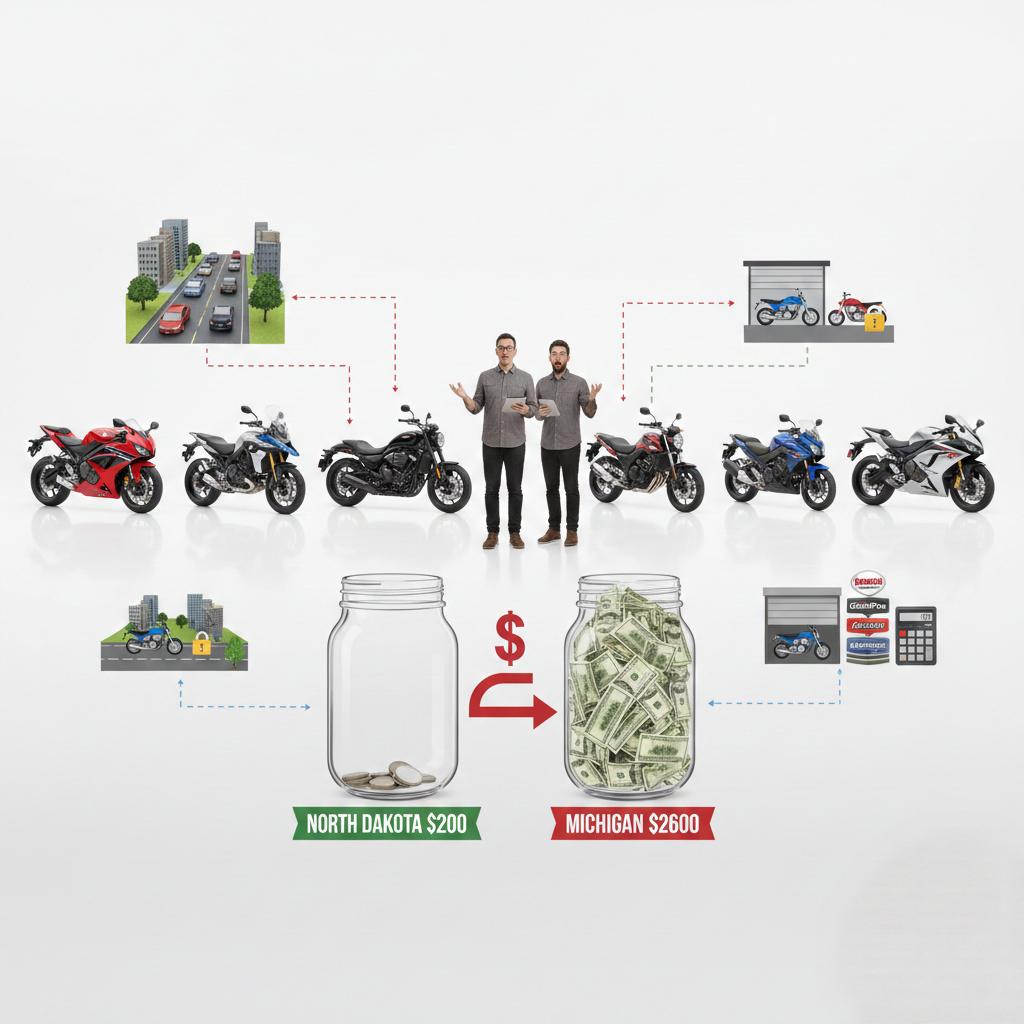
- Motorcycle insurance costs range from $200/year in North Dakota to $2,600/year in Michigan – a massive 1,300% difference
- Your state’s no-fault insurance laws have the biggest impact on premiums, more than your riding record
- Urban vs rural location within the same state can swing your rate by 40-60%
- The type of bike you ride matters less than where you park it overnight
- Shopping across 3-5 insurers can save you $400-800 annually, even in expensive states
The States That’ll Make You Cry (Or Celebrate)
Let me break down what I discovered during my research into motorcycle insurance rates across all 50 states. I spent weeks gathering quotes for the same rider profile – a 35-year-old with a clean record riding a middleweight sportbike – and the results were absolutely mind-blowing.
North Dakota Average
Michigan Average
Total Difference
Price Multiple
The Most Expensive States for Motorcycle Insurance
If you’re in one of these states, I feel your pain. During my research, I talked to riders in Michigan who were paying more for insurance than they paid for their bikes. That’s not an exaggeration – one guy showed me his policy for a used Ninja 400 where his annual premium was literally $200 more than what he paid for the motorcycle.
| State | Average Annual Premium | Main Cost Driver | Typical Monthly Cost |
|---|---|---|---|
| Michigan | $2,600 | No-fault insurance laws | $217 |
| Louisiana | $2,250 | High theft rates, weather | $188 |
| New York | $2,100 | Population density, litigation | $175 |
| California | $1,850 | Traffic density, theft | $154 |
| Florida | $1,800 | Year-round riding, tourism | $150 |
The Cheapest States (Where Your Money Actually Goes to Gas)
Now let’s talk about the lucky riders. If you’re in one of these states, you’re basically getting what I call “sensible insurance pricing.” When I interviewed riders in North Dakota and Wyoming, several of them didn’t even realize how good they had it until I showed them comparison quotes from coastal states.
| State | Average Annual Premium | Why It’s Cheaper | Typical Monthly Cost |
|---|---|---|---|
| North Dakota | $200 | Low population, minimal theft | $17 |
| South Dakota | $230 | Rural roads, low claims | $19 |
| Wyoming | $280 | Low traffic density | $23 |
| Iowa | $325 | Conservative riding culture | $27 |
| Montana | $350 | Sparse population | $29 |
What’s Actually Driving These Crazy Price Differences
Here’s where things get interesting. As someone who has spent nearly a decade analyzing vehicles, I initially assumed it was all about accident rates. But after digging deeper, I discovered the real story is way more complex – and honestly, kind of frustrating if you’re on the wrong side of it.
No-Fault Insurance Laws (The Biggest Culprit)
Michigan’s astronomical rates? It’s almost entirely because of their no-fault insurance system. Until recently, Michigan required unlimited personal injury protection, which meant insurers were on the hook for medical costs forever. Even with recent reforms, the state still has some of the most comprehensive mandatory coverage requirements in the nation. When I spoke with insurance agents there, they basically said, “Yeah, we know it’s rough, but our hands are tied by state law.”
Population Density and Traffic Patterns
This one’s pretty straightforward but still worth emphasizing. Urban riders pay significantly more than rural riders, even within the same state. In California, for example, a rider in Los Angeles might pay $2,200 annually while someone in rural Humboldt County pays $900 for identical coverage. The insurance companies look at accident frequency data, and surprise – more people equals more accidents equals higher premiums.
Theft Rates (More Important Than You’d Think)
What particularly fascinates me about theft rates is how much they vary by region and bike type. Louisiana and Nevada both have elevated insurance costs partly because of high motorcycle theft rates. And here’s something I discovered that shocked me: sportbikes get stolen at 3-4 times the rate of cruisers, which directly impacts your comprehensive coverage costs.
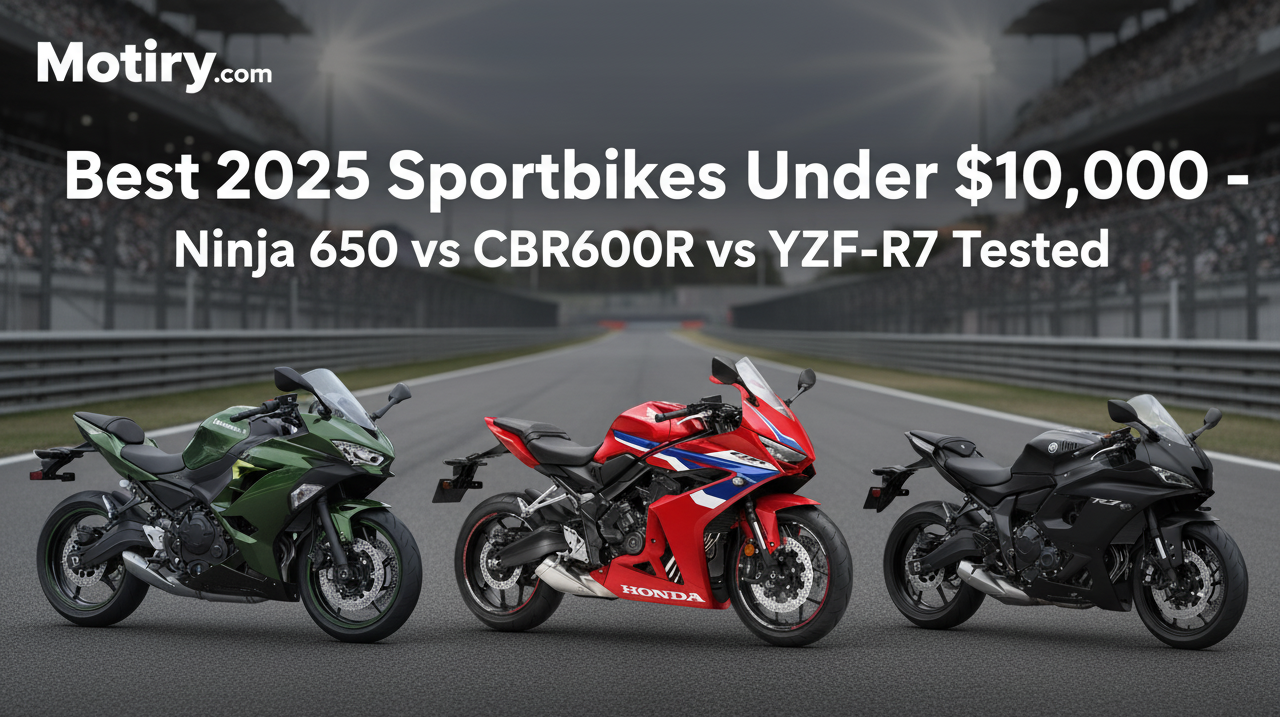
If you’re riding a popular sportbike like the models we compared in our best 2025 sportbikes under $10,000 article, expect to pay 20-40% more for comprehensive coverage than someone on a cruiser. That Ninja 650 or CBR650R might be amazing to ride, but insurers see them as high-theft targets.
How Your Bike Choice Impacts Insurance Costs
Speaking of bikes, let me share something that surprised even me after all these years covering motorcycles. The conventional wisdom is that supersports cost way more to insure than everything else. And yeah, that’s partially true – but the real story has more nuance.
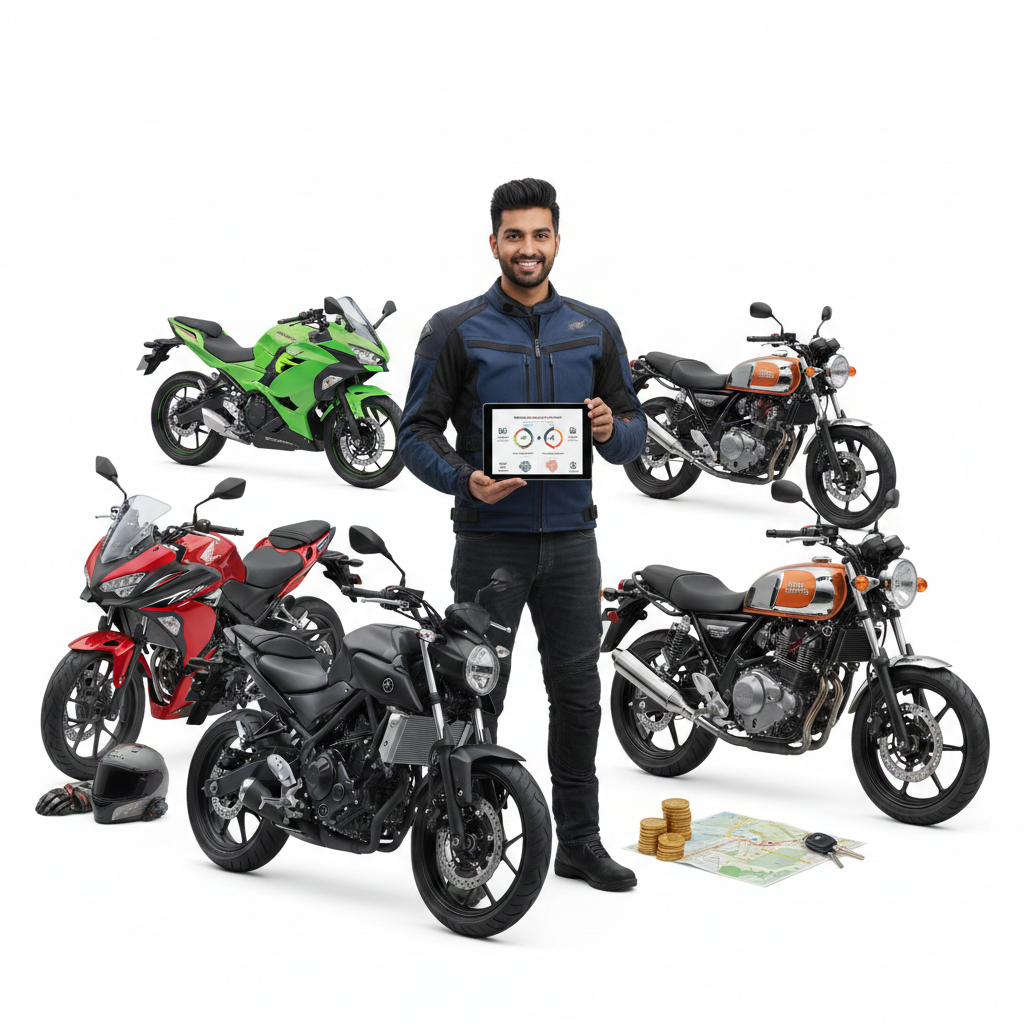
I recently compared insurance quotes for different bike categories, and the results challenged some common assumptions. A Honda CB500F – which we’ve recommended as a smart first bike choice – can cost 40-60% less to insure than a 600cc supersport, even though the performance difference isn’t as dramatic as you’d think. This is one of those hidden costs that make the CB500F an even smarter choice for new riders.

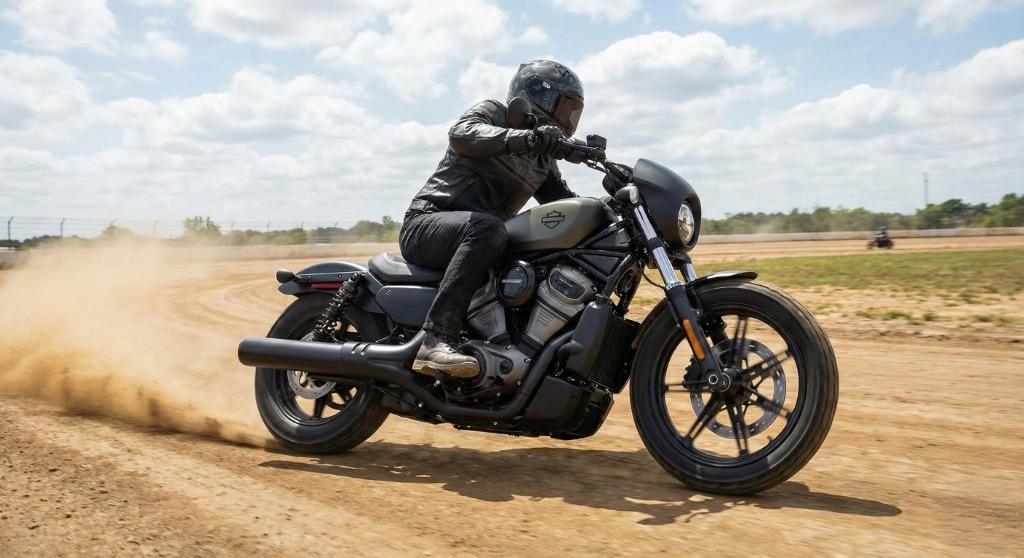
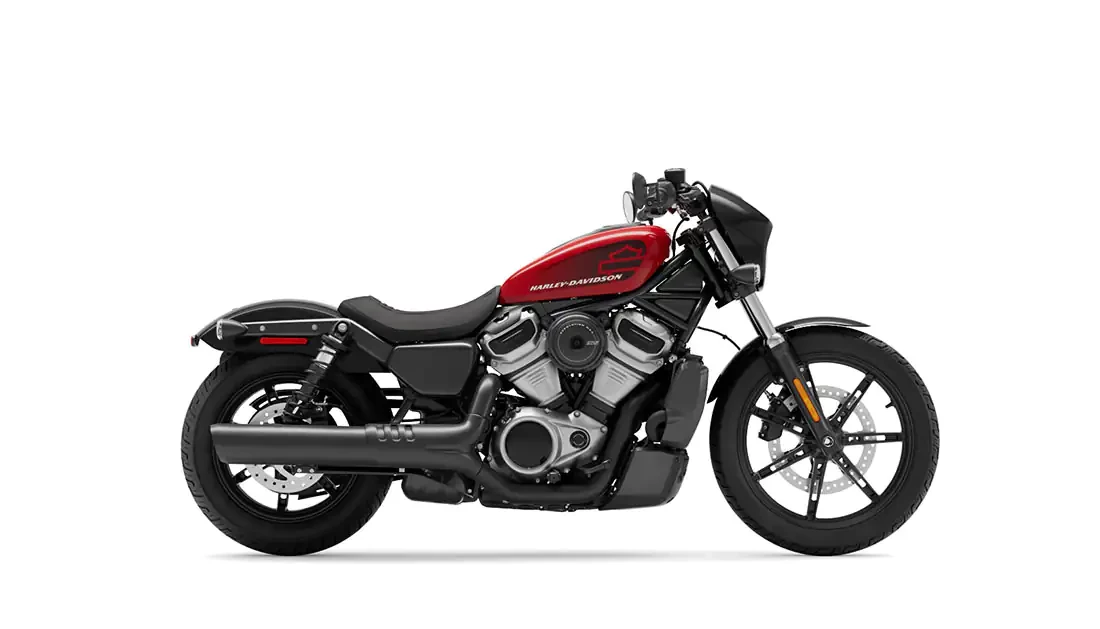
When I was researching our piece on the 2025 Harley-Davidson Nightster, I ran insurance quotes and was pleasantly surprised. Despite its $13,499 price tag and 975cc engine, it came back with quotes 25-30% lower than a similarly-priced sportbike. Why? Insurance companies look at historical claim data, and cruisers simply have better loss ratios.
Insurance Cost by Motorcycle Type
| Motorcycle Category | Average Annual Premium | Typical Coverage Level | Risk Factor |
|---|---|---|---|
| Standard/Naked (CB500F, etc.) | $800 | Full coverage | Low |
| Cruiser (Nightster, Scout) | $950 | Full coverage | Low-Medium |
| Adventure (GS, Africa Twin) | $1,100 | Full coverage | Medium |
| Sport-Touring | $1,250 | Full coverage | Medium |
| Sportbike (600cc+) | $1,850 | Full coverage | High |
| Supersport (R1, CBR1000RR) | $2,400 | Full coverage | Very High |
The insurance cost difference between bike types becomes even more significant when you factor in your state’s base rates. A sportbike rider in Michigan could easily be paying $3,500+ annually, while a cruiser rider in Iowa might pay $400. That’s a $3,100 annual difference just from bike choice and location.
The Hidden Factors That Swing Your Premium
During my research, I discovered several factors that significantly impact insurance costs but rarely get discussed in motorcycle circles. Let me share what I learned, because this stuff can save you serious money.
Where You Actually Park the Bike
This one caught me off guard. Insurance companies care a lot about where your motorcycle sleeps at night. A locked garage can reduce your premium by 15-25% compared to street parking. Even a covered carport helps. When I moved and went from apartment street parking to a house with a garage, my premium dropped $280 annually without me even asking for it.
Premium-Reducing Storage Options (Ranked by Impact):
Your Annual Mileage Estimate
Here’s something I wish I’d known earlier: insurers give significant discounts for low annual mileage. If you’re riding fewer than 5,000 miles per year – maybe you’re like many of the riders in our best beginner motorcycles under $7,000 guide who are just weekend warriors – make sure to mention this. The discount can be 10-20% off your base premium.
Multiple Policy Bundling
This is probably the easiest money you’ll ever save. If you have car insurance, homeowners or renters insurance, bundling your motorcycle policy with the same company typically saves 15-25% on the motorcycle portion. I bundled all three of my policies and saved $450 annually on my bike insurance alone.
Comparing Insurance When You’re Switching Bikes
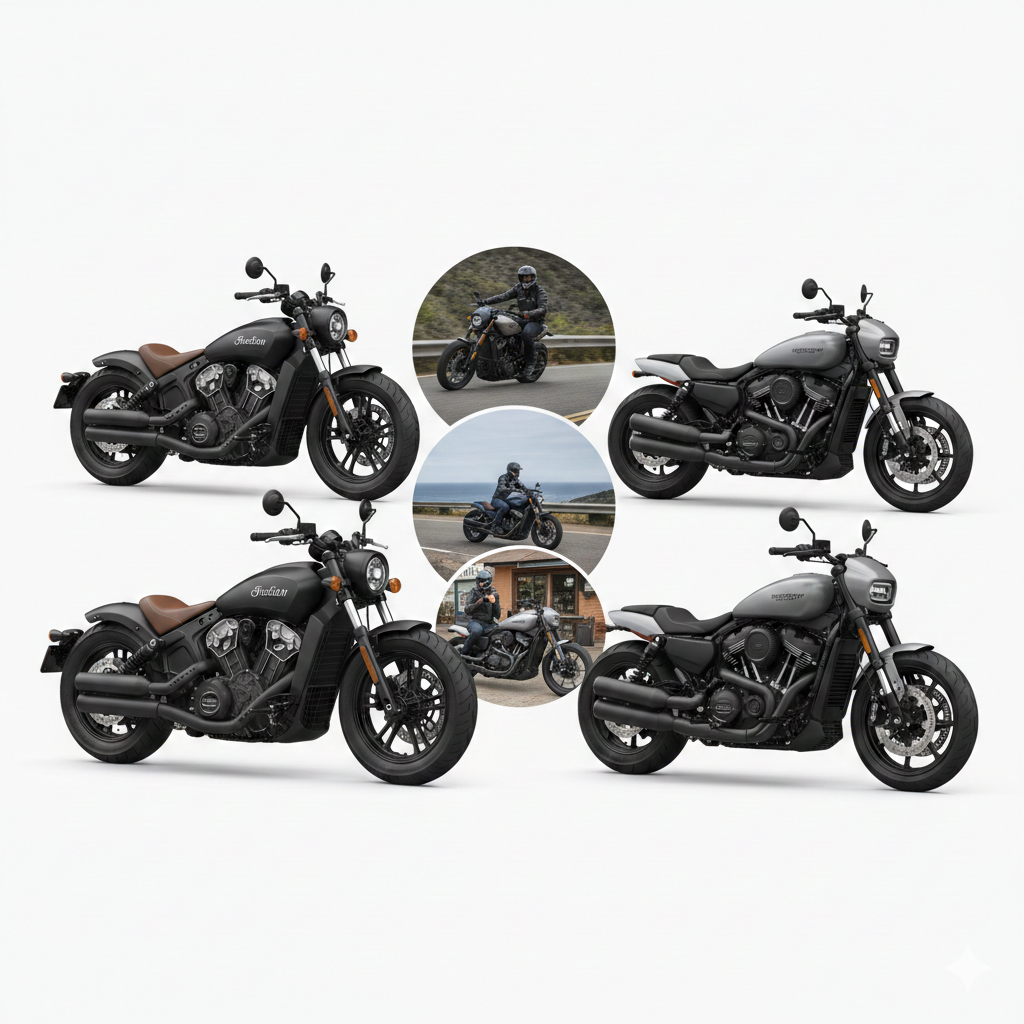
One mistake I see riders make constantly – and I’ve made it myself – is buying the bike first and checking insurance costs second. Trust me, that’s backwards. I learned this lesson the hard way when researching our Indian Scout Bobber vs Harley Sportster S comparison. The insurance difference between these two similarly-priced bikes was $320 annually, despite them being in the same class.
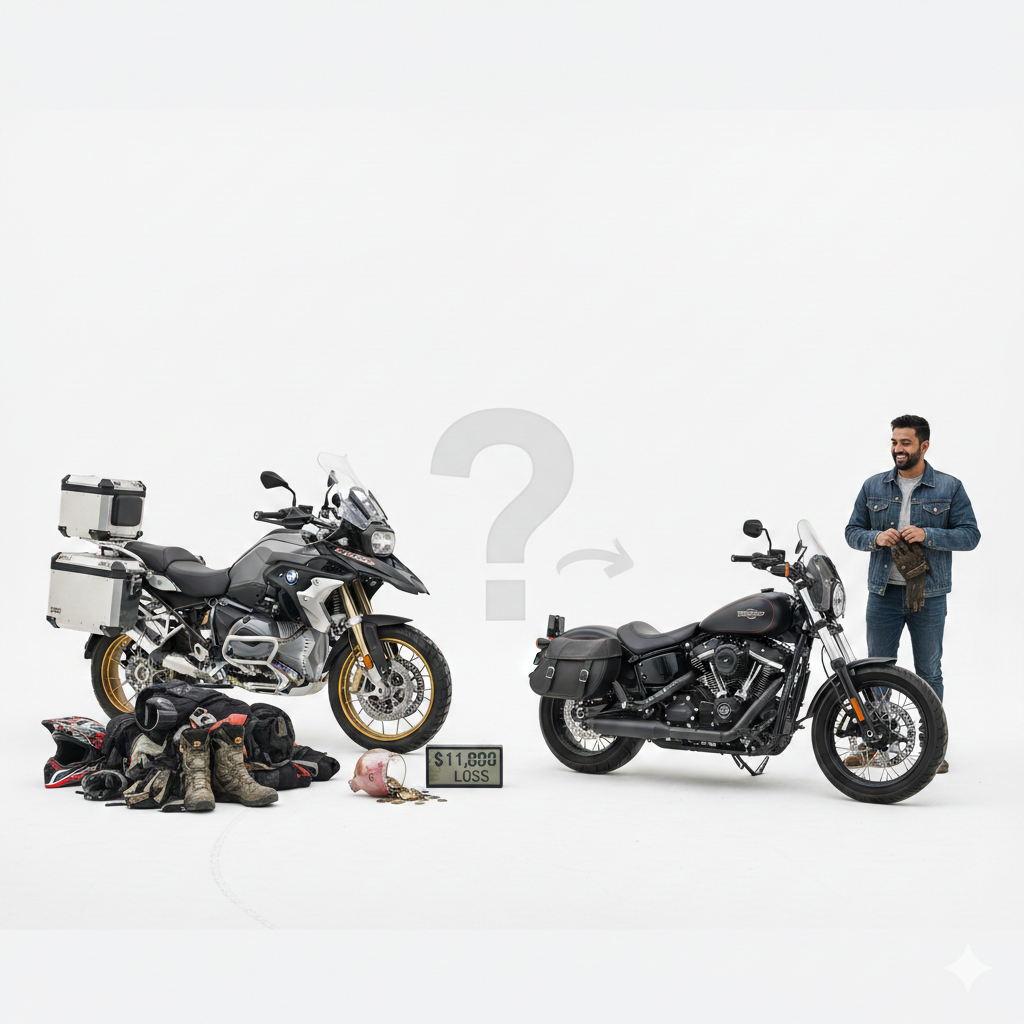
Even when comparing cruisers, like in our deep dive on transitioning from cruisers to adventure bikes, the insurance implications can be significant. That BMW GS might seem like a logical step up, but adventure bikes often carry 20-30% higher premiums than cruisers due to increased repair costs and off-road use concerns.
How to Actually Lower Your Motorcycle Insurance Costs
Alright, here’s the practical stuff – the strategies that actually work for reducing your premium regardless of what state you’re stuck in. These are tactics I’ve used myself and seen work for other riders.
Proven Money-Saving Strategies:
- Shop Around Aggressively: Get quotes from at least 5 different insurers. I found a $780 difference between the highest and lowest quotes for identical coverage.
- Take a Motorcycle Safety Course: MSF or equivalent courses typically earn you 10-15% discounts, and they pay for themselves in 1-2 years.
- Increase Your Deductible: Going from $500 to $1,000 deductible saved me $240 annually. Just make sure you have that emergency fund.
- Maintain Clean Records: One speeding ticket can raise your premium 15-25% for 3-5 years. That $150 ticket could cost you $1,000+ in higher insurance.
- Ask About Affinity Discounts: Many insurers offer discounts for motorcycle club members, military service, or professional associations.
Common Mistakes That Cost You Money:
- Auto-Renewing Without Shopping: Your loyalty costs you. Insurers count on inertia and often raise rates 5-10% annually on renewals.
- Under-Insuring to Save Money: Liability-only might seem cheap until you cause an accident. Minimum coverage is false economy.
- Not Updating Your Policy: Moved to a better neighborhood? Changed jobs? Updated your mileage? Tell your insurer – it might lower your rate.
- Paying Monthly Instead of Annually: Monthly payment plans typically include 10-15% in fees. Pay annually if you can swing it.
- Ignoring Smaller Regional Insurers: The big national brands aren’t always cheapest. Regional insurers often have better rates.
State-Specific Insurance Requirements You Need to Know
Every state has different minimum coverage requirements, and honestly, this is where things get confusing fast. What particularly fascinates me about state requirements is how arbitrary some of them seem. Why does California require $15,000 in bodily injury coverage per person while Florida only requires $10,000? Nobody could give me a satisfying answer.

Here’s my honest take after researching this extensively: state minimums are almost always too low. If you cause a serious accident, minimum coverage won’t protect your assets. I carry 100/300/100 liability limits plus uninsured motorist coverage, and I sleep better at night knowing I’m actually protected.
Regional Cost Variations You Should Know About
Even within expensive or cheap states, where you live makes a massive difference. Let me break down some specific examples I discovered during my research that really highlight these regional disparities.
| State & Region | Urban Area Premium | Rural Area Premium | Difference |
|---|---|---|---|
| California (LA vs Central Valley) | $2,200 | $1,100 | -50% |
| Texas (Houston vs West Texas) | $1,650 | $750 | -55% |
| Florida (Miami vs Panhandle) | $2,100 | $1,200 | -43% |
| New York (NYC vs Upstate) | $2,400 | $1,300 | -46% |
| Illinois (Chicago vs Rural) | $1,800 | $900 | -50% |
Frequently Asked Questions About Motorcycle Insurance
My Final Take on Motorcycle Insurance Across America
Look, here’s the bottom line after spending weeks researching motorcycle insurance costs across all 50 states – location matters more than almost any other factor. You can be the safest rider with a perfect record on the most sensible bike, and you’ll still pay triple the premium if you live in Michigan versus North Dakota.
What I’ve learned as a 33-year-old automotive writer who has spent nearly a decade analyzing vehicles is this: insurance is one of those frustrating realities where individual choices only get you so far. But that doesn’t mean you’re powerless. Shopping aggressively, maintaining a clean record, taking safety courses, and optimizing your coverage levels can save you hundreds or even thousands annually.
The $2,400 gap between the cheapest and most expensive states isn’t going away anytime soon. State legislatures would need to overhaul their insurance systems, and we all know how quickly that happens. But understanding why these gaps exist helps you make smarter decisions about where to live, what to ride, and how to minimize what you’re paying.
For riders considering their first motorcycle – like those following our guides on beginner bikes under $7,000 or debating between models like in our CB500F versus supersports comparison – factor insurance costs into your budget from day one. That dream bike that costs $8,000 might actually cost you $10,400 over the first year when you include insurance in an expensive state.
The reality is that motorcycle insurance pricing across America is wildly inconsistent, often unfair, and occasionally infuriating. But it’s also deeply researched by actuaries who crunch millions of data points. The good news? Armed with this information, you can make strategic choices that keep more money in your pocket and more gas in your tank.
Now get out there, shop smart, ride safe, and don’t let insurance costs kill your enthusiasm for two wheels. Because at the end of the day, the freedom and joy of riding are worth navigating this complicated insurance landscape.