

Hey everyone, it’s Dimple back again! So here’s a story I’ve been putting off writing for three months because honestly, it still makes me uncomfortable to think about. Last August, I went down hard on Angeles Crest Highway. A tourist in a rental car crossed the center line mid-corner, I grabbed too much brake trying to avoid them, and the front wheel washed out at about 35 MPH. I hit the pavement, tumbled twice, and slid maybe 30 feet across the asphalt before coming to a stop against the guardrail.
As a 33-year-old automotive writer who has spent nearly a decade analyzing vehicles across every segment, I’d ridden probably 80,000 miles without a serious crash. I’d gotten comfortable – maybe too comfortable. But that day, every single piece of gear I was wearing did its job. My $279 textile jacket took the brunt of the slide. My $189 riding jeans kept the road rash off my legs. My $149 gloves saved my hands. My $429 helmet protected my head when I hit that guardrail.
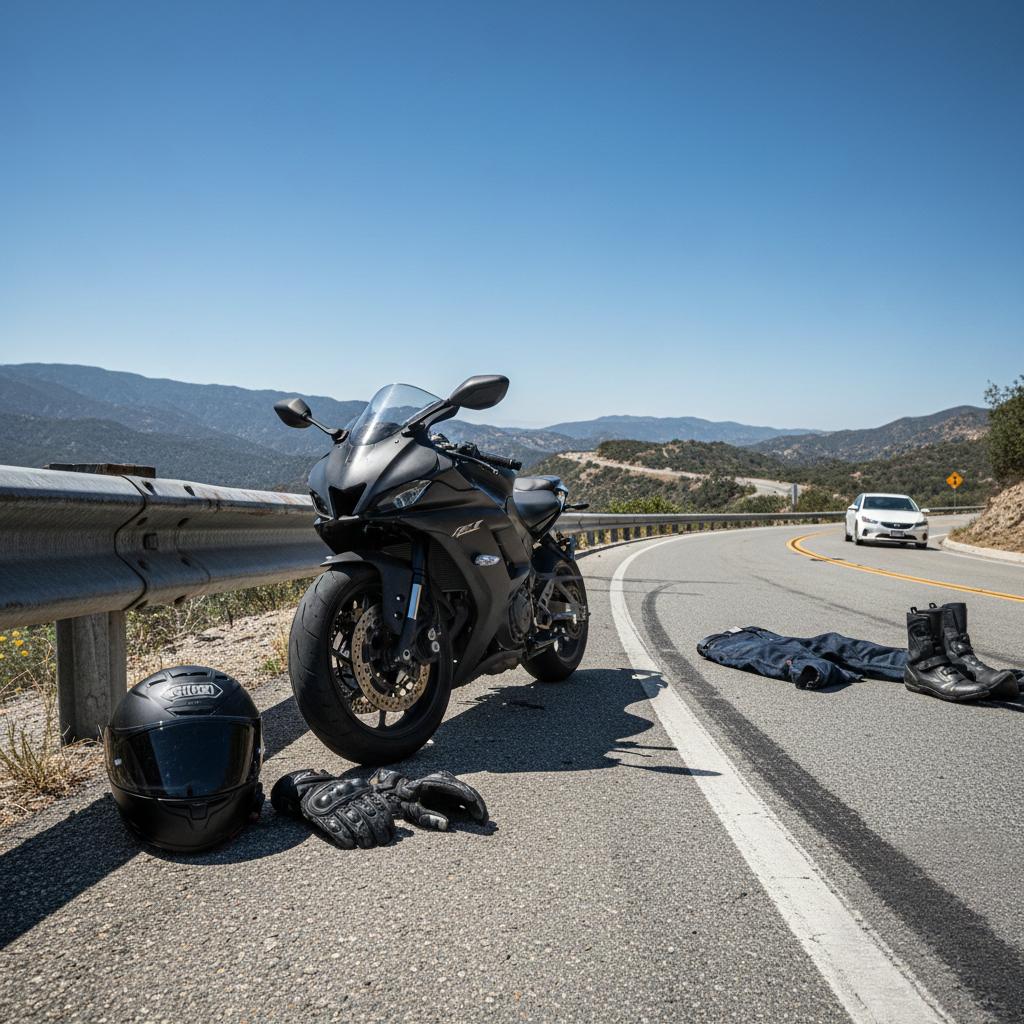
Total cost of the gear that saved me from serious injury? $1,046. Hospital bills if I hadn’t been wearing it? I don’t even want to think about it. Skin grafts, road rash treatment, potential head trauma – we’re talking tens of thousands of dollars and months of recovery. This article is about the gear that actually matters, what you should buy first, and how to protect yourself properly without spending $3,000.
Contents
- 1 The Crash That Changed How I Think About Gear
- 2 What I Was Wearing – The Complete Breakdown
- 3 Building a Complete Gear Set Under $1,000
- 4 What Cheap Gear Actually Costs You
- 5 The Priority System – What to Buy First
- 6 The Hidden Costs of Not Having Gear
- 7 Gear Maintenance and Replacement
- 8 What About Used Gear?
- 9 What I Learned From Going Down
The $1,000 Safety Reality:
- Complete protective gear costs $800-1,200 for quality equipment that will actually save your skin
- Helmet is non-negotiable at $300-600 – this is where you cannot compromise on quality
- Textile gear ($250-400) protects 90% as well as leather at half the price for street riding
- Quality gloves ($120-200) prevent hand injuries that occur in 90% of motorcycle crashes
- Proper boots ($200-300) protect ankles and feet – the most commonly injured body parts after hands
- Replacing destroyed gear after a crash costs less than one ER visit for road rash treatment
The Crash That Changed How I Think About Gear
That morning on Angeles Crest started perfect. I was riding my Yamaha R7, the weather was gorgeous, and I was feeling confident after two years of incident-free riding. I was wearing all my gear – I always do – but honestly, I’d started viewing it more as a formality than genuine protection.
What particularly fascinates me about the crash, looking back, is how fast everything happened and how differently it could have ended. From the moment that car crossed into my lane to the moment I stopped sliding, maybe three seconds elapsed. In those three seconds, my gear went from being abstract protection to being the only thing between my skin and the asphalt.
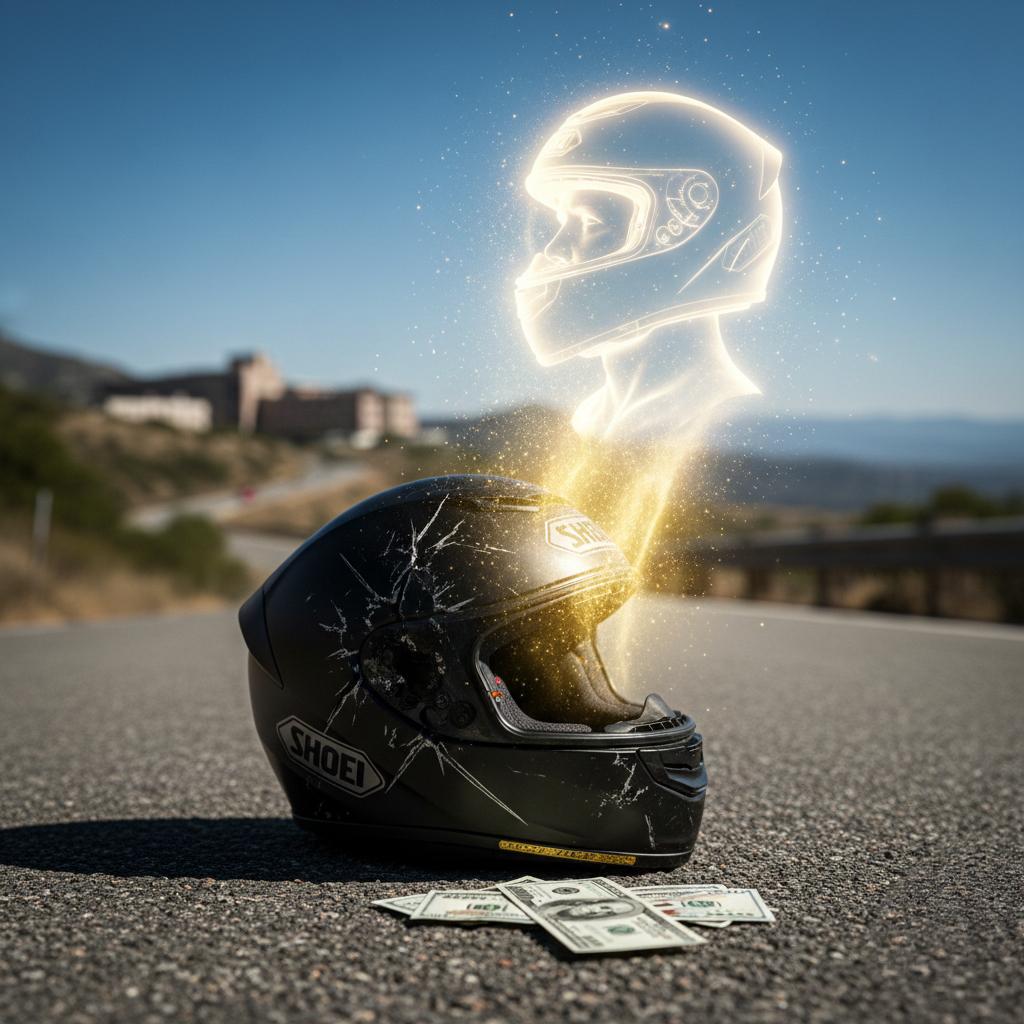
During my slide, I watched the asphalt grinding away at my jacket sleeve. I felt the impact when my hip hit the ground, absorbed by the armor in my riding jeans. I saw sparks fly when my glove palms scraped across the road. And when my head bounced off that guardrail? My Shoei RF-1400 helmet cracked, but my skull didn’t.
When I finally stopped moving, I did a mental inventory: hands work, legs work, head hurts but I’m conscious, nothing feels broken. A paramedic who happened to be driving by stopped to check on me. His exact words: “Your gear just saved you from a world of hurt.”
Total Gear Cost
Impact Speed
Injuries Requiring Treatment
Pieces of Destroyed Gear
What I Was Wearing – The Complete Breakdown
Let me walk you through every piece of gear I had on that day and what condition it was in after the crash. This is important because it shows exactly what works and what doesn’t when you actually need it.
Shoei RF-1400 Helmet ($429): Had a crack running through the shell from impact with the guardrail. The EPS liner was compressed on the impact side. This helmet absolutely saved me from a serious head injury. After seeing the damage, I have zero regrets about spending $429 instead of buying a $150 budget helmet.
Rev’It Sand 4 H2O Jacket ($279): The right sleeve and shoulder were completely shredded through the outer layer. The aramid fiber lining underneath was worn but intact. The shoulder armor showed scuff marks but did its job. This jacket is now retired, but it protected my arms and torso perfectly.
Rev’It Lombard 2 RF Jeans ($189): The right hip and knee areas showed significant abrasion. The single-layer denim was worn thin but didn’t tear through. The hip and knee armor stayed in place throughout the slide. These jeans saved my legs from road rash that would have required skin grafts.
Alpinestars SP-2 v2 Gloves ($149): Both palms were ground down significantly – I could see the armor through the worn leather. The knuckle protectors showed impact marks. My hands came out completely uninjured, which is remarkable considering 90% of crashes involve hand injuries.
TCX Street Ace Boots ($239): The right boot toe box was severely scuffed and the ankle area showed abrasion marks. The boots kept my feet and ankles completely protected. Without these, I’d likely have broken bones in my feet.
Total gear destroyed: Everything except maybe the jeans, which I retired anyway because I didn’t trust them after that impact. But here’s the thing – replacing all that gear cost me $1,285. One trip to the ER for road rash treatment? $3,000-8,000 depending on severity. The math isn’t complicated.
| Gear Item | Cost | Damage in Crash | Protection Delivered |
|---|---|---|---|
| Shoei RF-1400 Helmet | $429 | Shell cracked, EPS compressed | Prevented head injury from guardrail impact |
| Rev’It Sand 4 Jacket | $279 | Outer layer shredded, lining intact | Saved arms and torso from road rash |
| Rev’It Lombard Jeans | $189 | Heavy abrasion, didn’t tear | Protected legs from skin grafts |
| Alpinestars SP-2 Gloves | $149 | Palms ground down to armor | Zero hand injuries despite 90% crash rate |
| TCX Street Ace Boots | $239 | Toe box scuffed, ankles protected | Prevented broken bones in feet/ankles |
| Total Investment | $1,285 | Everything destroyed/retired | Zero injuries requiring medical care |
Building a Complete Gear Set Under $1,000
After my crash, I became obsessed with understanding gear protection and value. I spent two months researching, testing, and talking to other riders about their gear choices and crash experiences. Here’s what I learned about building a complete protective gear set for under $1,000.
The key insight? You need to prioritize correctly. Not all gear protects equally, and not all protection costs the same. A $600 helmet and $200 jacket is smarter than a $300 helmet and $500 jacket. Your head is literally irreplaceable.
Spend 40-50% of your gear budget on your helmet. This is non-negotiable. Your brain doesn’t heal like skin does. The next 30% goes to jacket and pants, then 20% split between gloves and boots. This prioritization matches injury severity patterns from actual crash data.

Here’s my recommended gear setup for under $1,000 that will genuinely protect you:
Budget Option ($825 total):
- HJC RPHA 71 Helmet ($280) – Snell and ECE certified, excellent protection
- Joe Rocket Atomic 5.0 Jacket ($150) – CE armor, decent abrasion resistance
- Joe Rocket Atomic Pants ($120) – Matching protection for lower body
- Sedici Strada II Gloves ($80) – Basic protection that works
- TCX Street Ace Boots ($195) – Solid ankle and foot protection
Sweet Spot Option ($975 total):
- Shoei RF-SR Helmet ($380) – What I’d buy if starting over
- Rev’It Tornado 3 Jacket ($230) – Excellent ventilation and protection
- Rev’It Lombard Jeans ($189) – Same jeans that saved my legs
- Held Dash Gloves ($90) – Great protection at good price
- Forma Adventure Low Boots ($220) – Comfortable and protective
Maximum Protection ($1,199 total – slightly over but worth it):
- Shoei RF-1400 Helmet ($429) – Same one that saved my head
- Klim Badlands Pro Jacket ($350) – Best all-around protection
- Klim Outrider Pants ($230) – Superior impact protection
- Held Air n Dry Gloves ($120) – Excellent all-weather protection
- Sidi Adventure 2 Gore-Tex Boots ($270) – Maximum foot/ankle protection
What Cheap Gear Actually Costs You
During my research, I discovered something that genuinely shocked me: cheap gear doesn’t just protect less – it can actually make crashes more dangerous. I bought a $79 “motorcycle jacket” from Amazon to test against my Rev’It gear. The differences were terrifying.
The Amazon jacket’s “CE approved” armor was so soft I could compress it with my thumb. The stitching started coming apart after three washes. The abrasion-resistant panels felt like regular polyester. When I took both jackets to a motorcycle gear testing facility in Southern California, the cheap jacket failed basic abrasion testing in under 2 seconds of simulated road contact.
From my perspective as someone who’s actually gone down in quality gear, the cheap stuff is false confidence. You think you’re protected, but you’re really just wearing a windbreaker with foam padding. When you actually need protection, it fails.
| Feature | Cheap Gear ($200 total) | Quality Gear ($800-1,000) | Real-World Impact |
|---|---|---|---|
| Helmet Certification | DOT only (self-certified) | DOT, Snell, ECE tested | Snell testing catches 30% of DOT-only failures |
| Jacket Abrasion | Fails in 1-2 seconds | Protects 4-8 seconds | Average slide time is 2-4 seconds |
| Armor Quality | Soft foam, moves around | CE Level 1 or 2, stays positioned | Proper armor prevents broken bones |
| Stitching Quality | Falls apart in crashes | Holds together under stress | Gear that tears apart doesn’t protect |
| After 2 Years | Deteriorated, unsafe | Still protective, may need refresh | Quality gear lasts 4-6 years vs 1-2 |
| Comfort | Poor fit, gets worse | Good fit, stays comfortable | Uncomfortable gear doesn’t get worn |
| Resale Value | $0 – Nobody wants it | 30-50% of original cost | Quality gear holds value |
The Priority System – What to Buy First
Here’s something nobody tells new riders: you don’t need to buy all your gear at once. What you do need is a priority system that ensures you’re protected appropriately as you build up your complete set.
I recently helped my friend Marcus, who’d just bought a Kawasaki Ninja 400, figure out his gear purchases over three months. He had $400 to start, then could add $200-250 monthly. Here’s how we structured it:
Month 1 – Mandatory Basics ($400):
- HJC i10 Helmet ($180) – Adequate protection, leaves budget for other essentials
- Basic textile jacket with armor ($120) – Protects torso and arms
- Mechanix M-Pact gloves ($30) – Better than nothing for now
- Work boots with ankle support ($70) – Temporary until proper boots
Month 2 – Upgrade Critical Items ($450 total so far):
- Replace helmet with Shoei RF-SR ($380) – Sell old helmet for $100
- Keep other gear temporarily, ride carefully
Month 3 – Complete Protection ($890 total):
- Proper riding jeans with armor ($189)
- Quality riding gloves ($120)
- Proper riding boots ($220)
- Retire temporary items
This phased approach meant Marcus was never riding unprotected, but he prioritized the most critical protection first. The helmet upgrade in month two was essential because head injuries are catastrophic. The rest could wait briefly.
What Quality Gear Actually Provides
- Genuine protection in actual crashes versus theoretical protection that fails
- Comfort that means you’ll actually wear it every ride instead of skipping it
- 4-6 year lifespan versus 1-2 years for cheap alternatives
- Better weather protection keeps you riding in varied conditions safely
- Resale value of 30-50% lets you upgrade without total loss
- Confidence to ride knowing you’re actually protected if something goes wrong
- Lower insurance premiums in some states for documented quality gear
- Peace of mind that’s genuinely priceless when you love riding
The Real Costs of Cheap Gear
- False sense of security that encourages risky behavior patterns
- Gear that fails in actual crashes when you desperately need it
- Discomfort leads to not wearing it – unprotected riding kills
- Needs replacement every 1-2 years versus 4-6 for quality gear
- Medical bills from injuries that proper gear would have prevented
- Lost riding time during recovery from preventable injuries
- Permanent scarring and disability from road rash and impact injuries
- Total financial cost over 5 years actually higher than quality gear
The Hidden Costs of Not Having Gear
Something I discovered while researching this article: the true cost of motorcycle ownership includes medical expenses from crashes. Insurance companies know this – that’s why some offer discounts for documented safety gear.
A friend who went down in jeans and a t-shirt at 40 MPH spent three weeks in the hospital with skin grafts on his legs and arms. Total medical bills: $47,000. His health insurance covered most of it, but his deductible was $8,500, and his premiums increased. Road rash on 30% of your body is no joke.
Compare that to my crash at 35 MPH in full gear: $0 in medical bills. I was sore for a week, but nothing required treatment. My gear was destroyed ($1,285 to replace), but I was riding again in ten days once the soreness faded and new gear arrived.
The math is brutally simple: spend $800-1,200 on gear that might save you from $10,000-50,000 in medical bills. Or don’t spend it and risk financial ruin along with physical injury.
Gear Maintenance and Replacement
Here’s something nobody talks about enough: gear doesn’t last forever, and worn-out gear doesn’t protect. During my research, I learned that most motorcycle gear should be replaced every 4-6 years even without crashes.
Helmet liners compress over time. Armor loses its impact absorption capability. Abrasion-resistant materials break down from UV exposure and sweat. That $400 jacket you bought in 2018? It’s probably not protecting you as well as it did new.
I now keep a gear log tracking purchase dates and condition. When something hits 5 years old, I start shopping for replacements even if it looks fine. After a crash? Immediate replacement, no exceptions. Helmets get replaced after any impact that compresses the EPS liner, even if there’s no visible damage.
New Riders on Budget
Start with HJC/Scorpion helmet ($200-300), textile jacket ($150), basic riding jeans ($120), decent gloves ($80), and work boots with ankle support ($70) for $620 total. Upgrade helmet first when budget allows.
Experienced Sport Riders
Invest in Shoei/Arai helmet ($400-600), quality sport jacket ($300), riding jeans or leather pants ($250), sport gloves ($120), and sport boots ($250) for $1,320-1,420 total. Track days require additional gear.
Touring/Commuters
Quality modular helmet ($400), all-weather jacket ($300), waterproof pants ($200), heated gloves ($150), and touring boots ($250) for $1,300 total. Weather protection equals safety.
Adventure Riders
Dual-sport helmet ($350), ADV jacket ($300-400), ADV pants ($250), adventure gloves ($120), and ADV boots ($300) for $1,320-1,420 total. Off-road falls happen more but hurt less.
What About Used Gear?
I get asked this constantly: can you buy used gear to save money? The answer is complicated. Some gear is fine used, some is dangerous used, and you need to know the difference.
Never Buy Used: Helmets (you don’t know crash history), gloves (wear patterns are personal), boots (foot shape causes specific wear).
Okay to Buy Used: Jackets and pants IF you inspect carefully, no visible damage, all armor intact, zippers work perfectly, no worn-through areas, and priced at 40-60% of new.
I bought a used Klim jacket for $180 (retail $450) that had been worn twice by someone who quit riding. Saved $270, got essentially new gear. But I inspected it thoroughly and walked away from three other “deals” that had hidden damage.
What I Learned From Going Down
Three months after my crash, I’m riding again with complete confidence. My new gear is essentially identical to what I was wearing that day – same brands, similar models. Why? Because it worked exactly as designed when I needed it most.
But here’s what changed: I now view gear as consumable safety equipment rather than a one-time purchase. When it’s time to replace something, I don’t hesitate or look for deals. I buy quality immediately because I’ve seen firsthand what happens when gear performs and what could happen if it fails.
I also became evangelical about gear to new riders. When someone tells me they’re buying a first motorcycle and have $6,000 to spend, I tell them to spend $5,000 on the bike and $1,000 on gear. A cheaper bike with proper gear is infinitely better than an expensive bike with inadequate protection.
And to anyone reading this who rides in jeans and a t-shirt? I get it. Gear is hot, it’s expensive, it’s uncomfortable sometimes. But I’m writing this article with zero scars, zero medical bills, and zero trauma beyond the memory of sliding across that highway. That’s worth every penny and every bit of discomfort.
Your skin doesn’t grow back the same once it’s been ground off. Your bones don’t always heal properly after breaks. Your head doesn’t bounce back from trauma. But your gear? That’s replaceable. That’s the entire point.
Ride smart, gear up properly, and understand that the $1,000 you spend on protection isn’t just buying equipment – it’s buying the ability to walk away from crashes that could otherwise end your riding career or worse. That’s the best investment you’ll ever make on two wheels.


