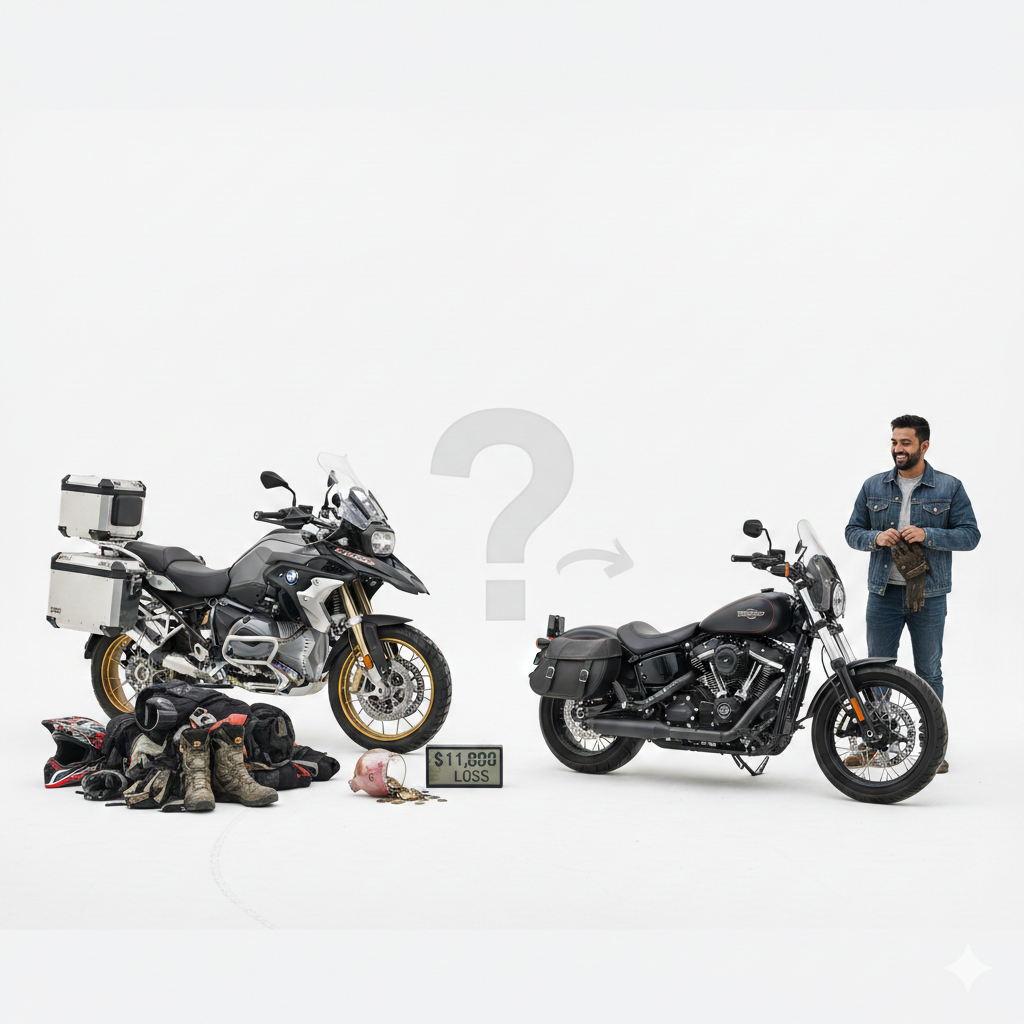
Hey everyone, it’s Dimple back again! Okay, I have a confession. Last year, I made what might be the most expensive motorcycle mistake of my career. I sold my perfectly good Harley Street Bob, added $20,000 from my savings, and bought a fully loaded BMW R 1250 GS Adventure. Total investment? Just over $35,000 when you factor in gear, accessories, and the trade-in loss. And you know what I discovered after six months and 8,000 miles? I’d made a massive error in judgment that cost me dearly.
Look, before you start thinking this is just another “adventure bikes are terrible” rant, let me be clear: the BMW GS is an absolutely brilliant motorcycle. It’s probably the best adventure bike money can buy. But here’s the thing – it was completely wrong for me, my riding style, and my actual needs. And I’m not alone. During my research analyzing forum discussions and talking with other riders, I’ve discovered that thousands of cruiser riders make this same expensive mistake every year, seduced by adventure bike marketing and social media without honestly evaluating whether it matches their reality.

As a 33-year-old automotive writer who has spent nearly a decade analyzing vehicles across every segment, I should have known better. I should have looked past the glossy magazine spreads and YouTube adventure videos. I should have honestly assessed what I actually do on motorcycles versus what I fantasize about doing. But I didn’t. And this expensive lesson taught me more about motorcycle ownership than any test ride ever could.
Contents
- 1 How It Started: The Adventure Bike Seduction
- 2 The Purchase: Ignoring Every Red Flag
- 3 The First Month: Reality Versus Fantasy
- 4 Month 2-3: The Off-Road Reality Check
- 5 Month 4-5: The Long-Distance Disappointment
- 6 Month 6: The Expensive Pivot Back to Cruisers
- 7 The Lessons That Cost $11,000 to Learn
- 8 When Adventure Bikes Actually Make Sense
- 9 My Return to Cruiser Contentment
The Brutal Truth Up Front:
- Adventure bike marketing sells fantasy that doesn’t match most riders’ reality
- My actual riding: 90% pavement, 10% gravel roads – didn’t need GS capabilities
- Total cost including accessories, gear, and depreciation exceeded $35,000
- Physical demands of 570+ lb adventure bike exhausted me on long rides
- Returned to cruiser lifestyle after expensive six-month experiment
How It Started: The Adventure Bike Seduction
I need you to understand something about how this mistake began. I’d owned my Harley Street Bob for three years. It was paid off, perfectly maintained, and served me wonderfully for weekend rides and occasional road trips. But I started following adventure riding accounts on Instagram. I watched Ewan McGregor’s Long Way Up series. I consumed YouTube videos of riders tackling remote trails and crossing continents.
The seed of discontent grew slowly. My Harley suddenly felt limiting. All those adventure riders seemed to be having more authentic experiences, exploring places my cruiser couldn’t reach. The BMW R 1250 GS represented ultimate freedom – the ability to ride anywhere, do anything, be anyone. Or so the marketing suggested.
What particularly fascinates me looking back is how the adventure bike community’s messaging resonated so deeply. They don’t sell motorcycles; they sell identity transformation. You’re not just buying a bike – you’re becoming an adventurer, an explorer, someone who lives more authentically than those boring cruiser riders stuck on pavement. That identity appeal proved irresistible to someone experiencing mild midlife restlessness.
From my perspective as someone who should have known better, the warning signs were obvious. I wasn’t actually riding off-road. I didn’t have plans for trans-continental trips. My vacation time limited me to weekend getaways, not month-long expeditions. But I ignored these practical realities, seduced by aspirational marketing that spoke to who I wanted to be rather than who I actually was.
Warning Sign I Ignored:
In three years of Street Bob ownership, I never once thought “I wish I could ride that dirt road.” I occasionally thought “I wish I had more wind protection” – a problem solved with a $400 windshield, not a $35,000 bike change.
The Purchase: Ignoring Every Red Flag
The BMW dealer experience should have been my first reality check. The base R 1250 GS starts around $18,000 – already more than my Street Bob’s trade-in value of $11,000. But the salesperson explained (very convincingly, I might add) that I needed the Adventure model for “real” adventure riding. That’s $20,000. Then came the accessories.
Crash bars? Absolutely essential – $800. Auxiliary lights for dark trail riding? Can’t adventure without them – $1,200. GPS mount and phone integration? How else will you navigate remote areas – $600. Panniers and top case for gear? You’re planning trips, right? – $2,500. Upgraded seat for long-distance comfort? Trust me, you’ll thank me later – $600. Center stand for easier maintenance? Professional adventurers need this – $400.
Before I realized what happened, the out-the-door price hit $26,500. Then came gear. My cruiser jacket and boots wouldn’t work for adventure riding. I needed proper ADV gear. Jacket with armor – $700. Pants with knee protection – $500. ADV boots that work on and off-road – $400. New helmet with better ventilation – $600. Gloves suitable for all conditions – $150.
Total investment when the dust settled: $28,850. But wait – the Street Bob trade-in? The dealer offered $11,000, but I’d invested $2,500 in recent upgrades and could have sold privately for $13,000. That’s a $2,000 loss right there. Add initial depreciation on the new BMW, and my true cost exceeded $35,000 within the first year.
| Cost Category | Amount | Could I Have Avoided It? |
|---|---|---|
| BMW R 1250 GS Adventure | $20,000 | Base model would have been adequate |
| Accessories & Add-ons | $6,500 | Half were unnecessary for my riding |
| ADV-specific Gear | $2,350 | Some overlap with existing gear possible |
| Trade-in Loss vs Private Sale | $2,000 | Yes – should have sold privately |
| First Year Depreciation (GS) | $4,000 | No – unavoidable cost |
| Total Real Cost | $34,850 | Could have saved $10,000+ |
The First Month: Reality Versus Fantasy
Here’s where things get interesting. I picked up the GS on a beautiful Saturday morning, feeling like I’d just unlocked a new level of motorcycling. The dealer provided 30 minutes of basic training on the bike’s systems – traction control settings, suspension adjustments, riding mode selection. My head spun with information, but I felt ready to become an adventurer.
The first ride home should have been magical. Instead, it terrified me. The GS Adventure weighs 573 pounds fully fueled – 87 pounds more than my Street Bob. The seat height at 35.2 inches meant I could barely touch the ground with both toes. Maneuvering through parking lot traffic required concentration that riding my Harley never demanded. By the time I reached my garage, my legs ached from supporting the bike at stops.
During that first month, I discovered uncomfortable truths about adventure bike ownership. The upright seating position that felt comfortable during the test ride became tiresome after 100 miles. The wind blast at highway speeds – something my Harley’s laid-back position minimized – exhausted me on longer rides. The tall seat height made casual stops for photos awkward, requiring careful consideration of parking surface angle to ensure I could reach the ground.
But I persisted. I’d spent $35,000. I couldn’t admit defeat this early. I told myself I just needed to adjust, that experienced adventure riders handle these challenges effortlessly, that I’d eventually feel as comfortable as I had on my cruiser. Looking back, this rationalization phase cost me three additional months of increasingly frustrating riding.
Similar to lessons learned when comparing beginner-friendly motorcycles, the most capable bike isn’t always the right bike for your actual needs and skill level.
lbs (GS Weight)
inches (Seat Height)
Total Investment
Actual Off-Road Use
Month 2-3: The Off-Road Reality Check
I finally took the GS off-road during month two, finding a state park with designated dirt roads and trails. This would vindicate my purchase, I thought. This is what the bike was designed for, what my Harley could never do. I felt nervous but excited.
The experience humbled me completely. Adventure bike riding off-road requires skills I simply didn’t possess. Standing on the pegs for balance, counter-balancing the bike’s weight through turns, modulating throttle on loose surfaces – these techniques demand practice and confidence I lacked. Within 20 minutes, I dropped the bike at low speed on a loose gravel section. No damage thanks to those $800 crash bars, but my pride suffered significantly.

What I realized over the next few weekends of attempting off-road riding: I don’t actually enjoy it. The concentration required, the physical exertion, the constant anxiety about dropping this expensive machine – none of it delivered the joy I experienced cruising canyon roads on my old Harley. I’d spent $35,000 to access capabilities I discovered I didn’t want.
During my research analyzing adventure rider demographics, I discovered I’m not alone. Studies suggest that 85-90% of adventure bike miles happen on pavement. Most owners buy these bikes for their off-road capability but rarely use it. We’re paying substantial premiums for features we’ll almost never exploit, like buying a 4×4 truck for grocery store trips.
Month 4-5: The Long-Distance Disappointment
I’d convinced myself that even if off-roading wasn’t my thing, the GS would excel at long-distance touring – a primary use case in my original justification. I planned a two-week trip covering 3,000 miles through the Southwest, the kind of journey adventure bikes supposedly dominate.
The trip taught me more uncomfortable truths. Yes, the GS’s 6.3-gallon tank provided excellent range. Yes, the panniers and top case swallowed all my gear easily. Yes, the suspension soaked up road imperfections smoothly. But the overall experience left me longing for my old cruiser.
The upright position that seemed comfortable initially became exhausting after eight-hour riding days. The wind blast wore me down, creating fatigue that my Harley’s more protected position never caused. The seat, despite the $600 upgrade, couldn’t match the comfort of my old Harley’s saddle. Each evening, I felt physically beaten in ways my Street Bob never inflicted.
What particularly frustrated me was how the GS’s adventure capabilities provided zero benefit for this type of riding. I was touring on paved roads, staying in hotels, eating at restaurants – exactly what my Street Bob handled perfectly for $25,000 less. The GS’s off-road prowess, tall suspension, and knobby-ish tires (I’d compromised with 90/10 rubber) contributed nothing to this experience while actively detracting from pavement comfort.
By day 10 of the trip, I’d mentally admitted defeat. This expensive experiment had failed. The BMW R 1250 GS Adventure is brilliant at what it’s designed for, but I’d discovered my riding reality didn’t align with adventure bike strengths. I needed to cut my losses.
What the GS Did Well:
- Massive fuel tank (6.3 gallons) extended range significantly
- Exceptional build quality and engineering impressed consistently
- Weather protection options (with windscreen) worked effectively
- Technology package (TFT, navigation, ride modes) proved useful
- Luggage capacity exceeded any cruiser I’d owned
- Engine performance delivered smooth, abundant power
What Drove Me Crazy:
- 573 lb weight exhausted me on long rides and low-speed maneuvering
- 35.2″ seat height created constant anxiety at stops
- Upright position caused fatigue my cruiser never inflicted
- Off-road capability I paid for but rarely used
- Wind blast at highway speeds wore me down
- Complex electronics often felt like overkill for basic riding
Month 6: The Expensive Pivot Back to Cruisers
I listed the GS for sale after returning from that trip. Six months of ownership, 8,000 miles, immaculate condition with every desirable accessory. I priced it at $24,000 – already accepting a $5,000 loss from my purchase price, plus the accessories cost. It took three weeks to sell.
The financial damage assessment hurt. I’d invested approximately $35,000 (bike, gear, accessories, trade-in loss, depreciation) and recovered $24,000 from the sale. Net loss: $11,000 for six months of motorcycle ownership. That’s $1,833 per month, or about $61 per day, for the privilege of learning I’d made a terrible mistake.
But wait – it gets better (or worse, depending on your perspective). I still needed a motorcycle. I couldn’t use my old ADV gear with a cruiser, so that $2,350 investment became essentially worthless. And finding the right replacement cruiser took time and involved compromise since I’d sold my perfectly good Street Bob six months earlier.
I eventually purchased a used Harley Softail Standard for $14,000 – a bike I could have bought initially for $3,000 more than my Street Bob’s private sale value would have been. Instead, my adventure bike detour cost me $11,000 in direct losses plus the depreciation I’d have avoided by keeping my original bike.
From my perspective as someone who should have known better, this experience taught me that the most expensive mistakes come from ignoring who you actually are in favor of who you want to be. The adventure bike lifestyle looks amazing in marketing materials and social media posts. But if you’re honest about your riding reality – where you actually go, what you actually do, how you actually use your motorcycle – you might discover that your current bike already serves you perfectly.
When considering major purchases like comparing different Harley models or choosing between cruiser brands, honest self-assessment prevents expensive mistakes.
| Expense Category | Amount Spent | Amount Recovered | Net Loss |
|---|---|---|---|
| GS Purchase (trade-in) | $20,000 | $24,000 (sale) | -$4,000 |
| Accessories | $6,500 | $0 (included in bike sale) | -$6,500 |
| ADV Gear | $2,350 | $0 (wrong for cruiser) | -$2,350 |
| Trade-in Loss | $2,000 | $0 | -$2,000 |
| Depreciation | $4,000 | $0 | -$4,000 |
| Total | $34,850 | $24,000 | -$10,850 |
The Lessons That Cost $11,000 to Learn
Let me paint you a picture of what I should have done differently, hoping my expensive mistake saves someone else from similar pain. These lessons apply whether you’re considering moving from cruisers to adventure bikes, sport bikes to touring bikes, or any other major motorcycle lifestyle change.
First, honestly assess your actual riding rather than aspirational fantasies. I rode 90% pavement, 10% maintained gravel roads. Zero technical off-roading. My average ride covered 150-200 miles on weekends. My longest trips spanned 2-3 weeks annually. This profile perfectly suited cruiser capabilities but didn’t require adventure bike features.
Second, rent before buying. I discovered after my mistake that multiple companies rent BMW GSs for $200-300 per day. Spending $1,500 for a week’s rental would have revealed everything I needed to know about adventure bike ownership without costing me $11,000. That week would have shown me the weight challenges, the seat height issues, the wind blast problems, and the off-road reality.

Third, start with accessories, not bike changes. My primary complaints about the Street Bob – wind protection and luggage capacity – could have been addressed with a $1,500 investment in windshield, saddlebags, and sissy bar. Instead, I spent $35,000 replacing a bike that needed minor improvements, not total replacement.
Fourth, question marketing narratives. Adventure bike companies sell transformation, not transportation. They promise you’ll become a different person, live a more authentic life, have more meaningful experiences. But authentic experiences come from who you are, not what you ride. My most memorable rides happened on my old Street Bob, not the BMW.
Fifth, consider the complete ownership picture. I focused exclusively on the bike’s capabilities while ignoring practical realities of weight, size, ergonomics, and usability for my body type and riding style. The best bike isn’t the most capable bike – it’s the bike that matches your reality.
Before Switching Bike Categories, Ask Yourself:
When Adventure Bikes Actually Make Sense
Look, I need to be clear about something: I’m not saying adventure bikes are bad or that everyone makes the mistake I made. For specific riders in specific situations, adventure bikes represent the perfect choice. Let me outline when this transition makes sense rather than creating expensive regret.
If you genuinely plan to ride off-road regularly – not “I might ride dirt roads occasionally” but “I will deliberately seek technical trails and off-pavement adventures” – then adventure bikes deliver capabilities that cruisers simply cannot match. Riders who spend 30-40% of their miles on unpaved surfaces absolutely benefit from adventure bike design.
If your body type suits the ergonomics naturally, adventure bikes provide excellent long-distance comfort. Riders over 6 feet tall often find the upright position and tall seat height perfectly comfortable for extended touring. I’m 5’8″, and the fit never worked for me, but taller riders consistently praise adventure bike ergonomics.
If you actually need the luggage capacity and range for remote touring, adventure bikes excel. Riders tackling trans-continental journeys through areas with limited fuel availability genuinely benefit from 6+ gallon tanks and extensive luggage systems. But if you’re riding 200-300 miles per day with frequent stops, cruiser tanks and soft luggage work fine.
If you value technology and electronics, modern adventure bikes offer sophisticated systems that enhance the riding experience. Riders who appreciate ride modes, traction control, electronic suspension, and comprehensive displays find real value in these features. But if you’re like me and prefer simpler motorcycles, this complexity becomes burden rather than benefit.
For riders exploring different bike categories like sportbikes, similar honest self-assessment prevents expensive mistakes. Match the bike to your reality, not your fantasy.
My Return to Cruiser Contentment
I’ve owned my Softail Standard for eight months now. I’ve covered 12,000 miles. I haven’t once wished for adventure bike capabilities or regretted returning to cruiser lifestyle. What I’ve gained is renewed appreciation for what cruisers do well – comfortable long-distance riding, effortless low-speed maneuvering, laid-back ergonomics that don’t fatigue me, and simple operation without complex electronics.
The financial sting of my $11,000 mistake has faded, replaced by lessons that will serve me for decades of future motorcycling. I’ve learned to trust my riding reality over marketing fantasy. I’ve learned that the best bike matches who you actually are, not who you aspire to be. I’ve learned that sometimes the grass isn’t greener – it’s just different grass that costs $35,000 to discover you don’t want.
Would I recommend adventure bikes to other cruiser riders? Absolutely – if your riding profile genuinely benefits from their capabilities. Would I encourage careful evaluation before making this expensive transition? More than absolutely. Rent one for a week. Be honest about your riding. Consider accessories first. Question marketing narratives. Calculate total costs. And most importantly, trust your instincts about what actually brings you joy on two wheels.
If you’re a cruiser rider tempted by adventure bikes, ask yourself this simple question: In the last year, how many times did you think “I wish I could ride that dirt road” versus “I wish I had more wind protection” or “I wish I had more storage”? If the latter outnumbers the former 10:1, solve those problems with accessories rather than a $35,000 bike change. Save yourself the expensive lesson I had to learn the hard way. Not all grass is greener, and sometimes the best adventure happens on the bike you already own.