Hey everyone, it’s Dimple back again! So, I need to talk about something that’s been keeping me up at night – and I know it’s doing the same to die-hard Corvette fans everywhere. Chevrolet is seriously considering putting the legendary Corvette badge on an SUV. Yes, you read that correctly. An SUV with crossed flags on it.
As a 33-year-old automotive writer who has spent nearly a decade analyzing vehicles across every segment, I’ve seen plenty of controversial brand expansions. But this one? This might be the wildest gamble in American automotive history. The Corvette has been the American sports car since 1953 – a two-seat, performance-focused icon that’s never compromised its mission. Now GM is reportedly ready to stretch that DNA across an entire family of vehicles including crossovers and sedans.

What particularly fascinates me about this development is how it mirrors what Porsche did with the Cayenne 20 years ago. Back then, purists absolutely lost their minds when Porsche announced an SUV. Fast forward to today, and the Cayenne and Macan outsell the 911 by huge margins and fund the sports car’s continued development. Could Chevrolet pull off the same magic trick? Let me break down everything we actually know versus what’s pure speculation.
Contents
- 1 The Platform: BEV Prime and Ultium Technology
- 2 Size, Dimensions, and Practicality
- 3 The Competition: Who’s in the Crosshairs?
- 4 Design: What Will It Actually Look Like?
- 5 The Business Case: Why GM Is Actually Doing This
- 6 Timeline: When Could We Actually See It?
- 7 The Bigger Picture: Corvette as a Sub-Brand
- 8 My Honest Take: Calculated Risk or Brand Suicide?
- 9 What Happens Next?
What You Need to Know Right Now:
- Chevrolet hasn’t officially confirmed a Corvette SUV, but multiple GM insiders have leaked details
- Expected launch window: 2026-2027 model year
- Will ride on GM’s BEV Prime platform – a performance variant of the Ultium electric architecture
- Likely to offer dual-motor or tri-motor all-wheel drive configurations
- Estimated pricing: $60,000-$80,000 to compete with Porsche Macan and BMW X3 M
- Will NOT be body-on-frame – it’s technically a crossover, not a traditional SUV
- Part of broader Corvette brand expansion including electric sedan
The Platform: BEV Prime and Ultium Technology
Here’s where things get really interesting from an engineering standpoint. According to insider reports from GM Authority and other sources close to the project, the Corvette SUV won’t use the same platform as regular Chevy crossovers like the Blazer EV. Instead, it’s expected to ride on something called BEV Prime – essentially a performance-optimized version of GM’s BEV3 electric vehicle platform.
What makes BEV Prime different? From my research into GM’s technical presentations, this platform features several key enhancements specifically for high-performance applications. We’re talking about a lower floor height to accommodate batteries while maintaining a low center of gravity, optimized weight distribution for handling dynamics, and upgraded chassis components that can handle serious power.
The Corvette SUV is expected to use GM’s Ultium battery technology – the same modular system powering everything from the GMC Hummer EV to the Cadillac Lyriq. These are large-format pouch cells that can be stacked vertically or horizontally, giving engineers flexibility in packaging. Battery capacity will likely range between 100-150 kWh, targeting that crucial 300+ mile range sweet spot.
Motor Configurations and Performance Estimates
This is where speculation gets fun. Based on GM’s current Ultium Drive motor lineup and what competitors are doing, the Corvette SUV could offer multiple powertrain options:
Base Model (Dual-Motor AWD): Around 450-500 horsepower, similar to the Corvette E-Ray’s electric front motor but replicated at both axles. This would give legitimate sub-5-second 0-60 times while maintaining respectable efficiency.
Performance Model (Tri-Motor AWD): The GMC Hummer EV uses three motors (one front, two rear) to produce 1,000 horsepower. A Corvette SUV performance variant could use a similar setup, tuned for around 600-700 horsepower. We’re talking potential 3.5-second 0-60 sprints from a family hauler.
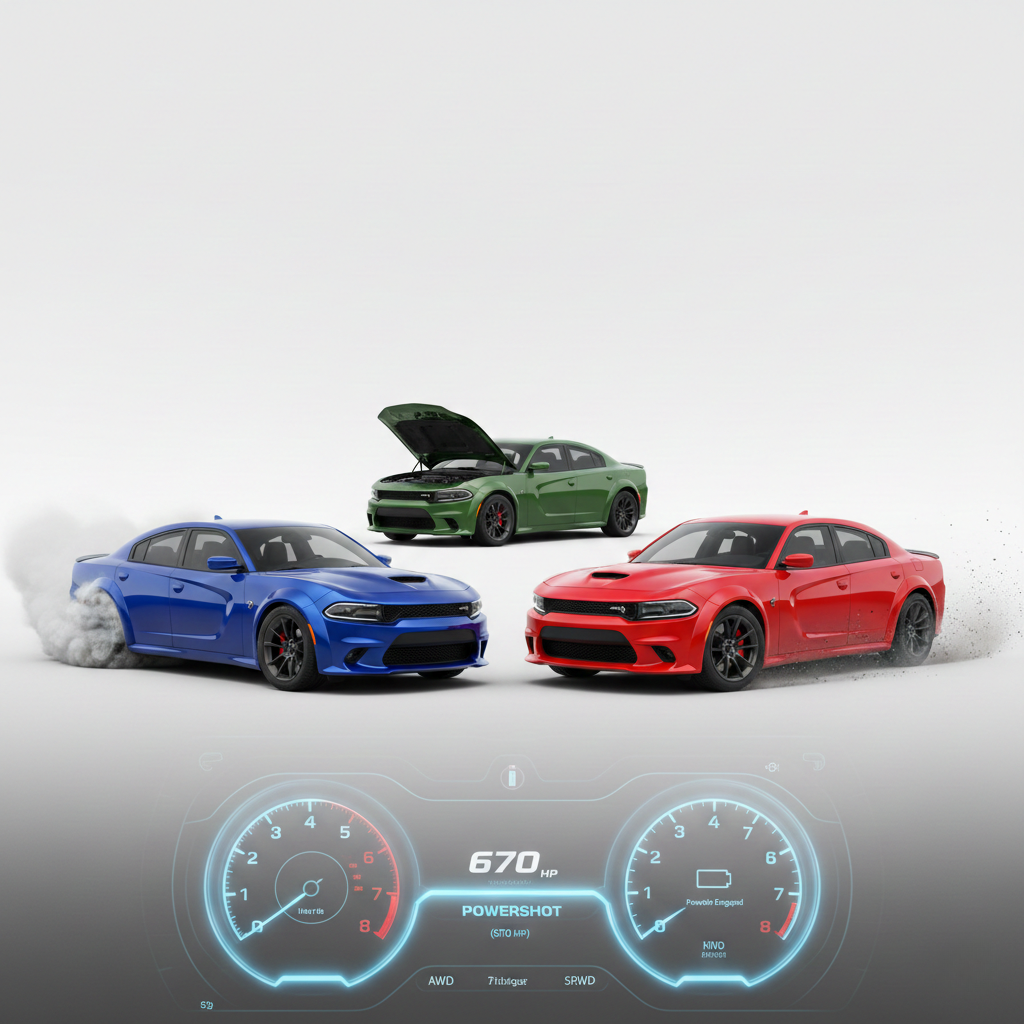
Compare these numbers to what we’re seeing from Dodge’s electric muscle cars, and you realize GM is playing in seriously competitive territory. The electric Charger Daytona Scat Pack makes 670 horsepower for under $75,000. Chevy will need to match or beat that performance-per-dollar ratio.
Estimated Length
HP Range (Est.)
Miles Range (Target)
Expected Pricing
Size, Dimensions, and Practicality
From a sizing perspective, sources suggest the Corvette SUV will measure approximately 200 inches in length. For context, that puts it right between the Porsche Macan (184 inches) and BMW X5 (194 inches). It’s the goldilocks zone for a performance crossover – big enough to be practical, small enough to stay agile.
The electric skateboard platform means interior packaging should be excellent. Without a traditional transmission tunnel or driveshaft, you get a flat floor and tons of cabin space. Expect seating for five, possibly with a sportier four-seat configuration on higher trims. Cargo space will likely target 25-30 cubic feet behind the rear seats, expanding to 55-60 with seats folded.
During my research, I discovered that curb weight is going to be a challenge. Electric vehicles with large battery packs are heavy, and adding performance hardware makes it worse. The current C8 Corvette weighs around 3,600 pounds. A Corvette SUV with a 100+ kWh battery pack will likely tip scales at 5,500-6,000 pounds – similar to the Ford Mustang Mach-E GT.
The Competition: Who’s in the Crosshairs?
Let’s talk about who Chevy is really targeting here, because understanding the competition explains everything about this vehicle’s mission.
Porsche Macan and Cayenne
This is the obvious comparison everyone’s making. The Macan starts around $64,600 and goes up to $106,000+ for the Macan GTS. The new electric Macan EV starts at $78,000. Porsche sells about 100,000 Macans annually in the US alone – that’s real money GM wants a piece of.
What makes the Macan successful isn’t just the Porsche badge. It drives like a sports car that accidentally got taller. The steering feel, the handling balance, the quality of the interior – it all screams Porsche. If Chevrolet wants to compete here, the Corvette SUV can’t just be fast in a straight line. It needs to corner like it means it.
BMW X3 M and X5 M
The BMW M lineup represents another key competitor. The X3 M starts at $74,400 and pumps out 473 horsepower (503 with the Competition package). It’s brutally quick – 3.9 seconds to 60 mph – and handles far better than any 4,600-pound vehicle should.
What’s interesting about BMW’s approach is they offer multiple performance tiers. You can get an X3 M40i for $54,650 with 355 horsepower, or go full send with the X3 M. GM could (and should) do something similar with the Corvette SUV – a “base” Corvette crossover and a full-tilt Z06 or ZR1 variant.
The Lamborghini Urus Wild Card
Now we’re getting spicy. The Urus starts at $225,000 and makes 657 horsepower from a twin-turbo V8. It’s absurdly expensive and absolutely ridiculous, but it proves there’s a market for ultra-performance SUVs that don’t care about practicality.
Could a top-tier Corvette SUV with 700+ horsepower chase this territory? Probably not at that price point, but imagine a $100,000 Corvette SUV ZR1 that gives you 80% of Urus performance for less than half the price. That’s the kind of value proposition that makes sense in Corvette’s DNA.
| Model | Starting Price | Horsepower | 0-60 MPH | Drive Type |
|---|---|---|---|---|
| Corvette SUV (Est.) | $60,000-$80,000 | 450-700 HP | 3.5-5.0 sec | AWD Electric |
| Porsche Macan Turbo | $88,600 | 434 HP | 4.1 sec | AWD Gas |
| BMW X3 M Competition | $81,400 | 503 HP | 3.7 sec | AWD Gas |
| Tesla Model X Plaid | $94,990 | 1,020 HP | 2.5 sec | AWD Electric |
| Mach-E GT | $63,500 | 480 HP | 3.5 sec | AWD Electric |
Design: What Will It Actually Look Like?
This is where things get really speculative because GM hasn’t released any official images or even confirmed the project exists. However, several rendering artists and GM Authority have published interpretations based on insider information.
The consensus seems to be aggressive, low-slung proportions despite the SUV body style. Think C8 Corvette design language – sharp angles, distinctive lighting signatures, wide fender flares – translated to a taller format. The front fascia would likely feature a variation of the current Corvette’s nose, adapted to accommodate the electric powertrain’s cooling needs.

What I find most interesting is how Chevrolet could differentiate this from their existing crossovers like the Blazer EV and Equinox EV. Those are nice vehicles, but they don’t scream performance. The Corvette SUV needs to be immediately recognizable as something special – even parked in a grocery store lot.
Expect massive wheels (20-21 inches standard, 22s optional), aggressive aerodynamic elements, quad exhaust tips (probably fake since it’s electric, but marketing matters), and perhaps active aero like the C8 ZR1’s wing. Inside, it should mirror the driver-focused cockpit of the current Corvette with that horizontal dashboard design and square steering wheel.
The Business Case: Why GM Is Actually Doing This
Look, I get it – the idea of a Corvette SUV feels wrong on a gut level. But let’s talk about why this makes complete business sense for General Motors.
The Porsche Precedent: When Porsche launched the Cayenne in 2002, purists predicted doom. Today, the Cayenne and Macan fund the entire sports car lineup. In 2023, Porsche sold about 40,000 911s globally but over 80,000 Macans. The crossovers keep the lights on and allow Porsche to build ridiculous cars like the GT3 RS.
Platform Economics: GM is spending billions developing the Ultium platform. They need to amortize that investment across as many vehicles as possible. A $100,000+ Corvette SUV that shares core components with $40,000 Equinox EVs makes the math work better for everyone.
Brand Relevance: The hard truth is that sports cars are a shrinking market. Corvette sold about 23,000 units in 2023. That’s healthy for a sports car, but it’s a rounding error compared to what Ford sells in F-150s monthly. Expanding Corvette into categories people actually buy keeps the brand vital and funds continued sports car development.
Performance SUV Gold Rush: This segment is exploding. Every luxury brand is launching performance crossovers because that’s where the money is. BMW’s M division sells more X models than sedans now. Mercedes-AMG’s bestsellers are all SUVs. GM would be leaving money on the table by not competing here.
Why a Corvette SUV Makes Sense:
- Market Reality: Performance SUVs outsell sports cars by massive margins – Chevy needs to compete here
- Platform Efficiency: BEV Prime can support multiple body styles, making development costs more manageable
- Brand Halo Effect: C8 Corvette’s success proves the brand has premium credibility beyond cheap sports cars
- Porsche Playbook: This exact strategy worked brilliantly for Porsche with Cayenne/Macan funding 911 development
- Electric Advantages: EV powertrains deliver supercar performance at reasonable prices – perfect for Corvette’s value mission
- No Compromise: SUV won’t replace the sports car – it’s additive to the lineup
Why This Could Go Horribly Wrong:
- Brand Dilution: Corvette means something specific – stretching it too far could destroy 70+ years of equity
- Purist Backlash: The Corvette community is passionate and might reject this completely
- Weight Penalty: Electric SUVs are heavy – can it really drive like a Corvette should?
- Price Sensitivity: Asking $70K+ for a Chevy crossover is a big ask, even with Corvette badges
- Execution Risk: GM’s EV track record is mixed – Ultium platform has had quality issues
- Competition Depth: Porsche, BMW, Mercedes have decades of performance SUV experience
Timeline: When Could We Actually See It?
Based on various reports and GM’s product roadmap, here’s what the timeline likely looks like:
2024-2025: Final development and testing. GM insiders suggest prototypes are already running. This phase includes powertrain validation, range testing, and chassis tuning. The ZR1X that just launched proves GM can do hybrid/electric performance at the highest level.
Late 2025: Potential reveal at a major auto show. LA Auto Show in November 2025 or Detroit’s return in January 2026 would make sense for an American icon like this.
2026 Model Year: Production start, with initial deliveries targeting late 2025 or early 2026. First-year production will likely be limited – GM will want to gauge market response before ramping up.
2027 and Beyond: Multiple variants roll out. Base models, performance trims, potentially even a track-focused Z06 version. This is where the Porsche strategy really kicks in – offering something for everyone from $60K to $100K+.
What we don’t know is whether the gasoline-powered version will come first or if it’s electric-only from day one. Some insiders suggest a gas-powered Corvette SUV might use the Alpha 2 platform from the Cadillac CT4-V and CT5-V Blackwing. That would give Chevy a faster route to market, but it also limits the design to traditional front-engine proportions.
The Bigger Picture: Corvette as a Sub-Brand
Here’s what people need to understand – the SUV isn’t happening in isolation. GM’s long-term plan apparently includes:
- Electric Corvette Sedan: A four-door performance car similar to the Porsche Taycan, expected to share the BEV Prime platform with the SUV
- Continued C8 Evolution: The mid-engine sports car isn’t going anywhere. We’re only three years into what’s typically a 7-10 year generation
- C9 Full Electric Sports Car: Eventually, even the two-seater will go fully electric, likely on an even more specialized platform
- Performance Sub-Brand: Think of future Corvette like what AMG is to Mercedes or M is to BMW – a performance division that can touch multiple vehicle types
This is GM’s strategy for competing with European luxury performance brands while maintaining American value proposition. A Corvette brand lineup with SUV, sedan, and sports car priced between $60K-$120K slots right into the gap between mainstream Chevys and ultra-luxury Cadillacs.
The current C8 Corvette just launched the ZR1X with 1,250 horsepower, and Chevrolet’s chief engineer confirmed more variants are coming. The two-seater isn’t going anywhere – it’s the foundation that makes expanding the brand possible. Think of it like how the 911 remains Porsche’s heart even as Cayennes and Macans dominate sales.
My Honest Take: Calculated Risk or Brand Suicide?
Okay, so after spending weeks researching this, talking to sources, and really thinking about the implications – here’s where I land on the Corvette SUV question.
I think it’s brilliant… if they nail the execution. And that’s a massive “if.”
The Porsche comparison isn’t just convenient – it’s genuinely instructive. Twenty years ago, everyone said the Cayenne would destroy Porsche’s soul. Today, nobody bats an eye at a Porsche SUV because they’re genuinely great vehicles that uphold the brand’s performance ethos. The key is that Porsche didn’t compromise. The Cayenne Turbo and Macan GTS actually deliver on the “sports car on stilts” promise.
If Chevrolet builds a Corvette SUV that’s just a rebadged Blazer EV with some ground effects and crossed flags, it’ll be a disaster. Corvette fans aren’t stupid – they’ll see through that immediately. But if GM invests in making this thing genuinely special – chassis tuning that rivals the Europeans, performance that justifies the badge, interior quality that matches the premium price – then yeah, it could work.
What gives me hope is the C8 Corvette itself. Chevy proved they could build a mid-engine supercar that competes with Ferrari and McLaren for a fraction of the price. The engineering talent is there. The question is whether GM will give them the resources and freedom to do it right with the SUV.
The pricing strategy will be crucial. If the base Corvette SUV starts at $60,000 and legitimately matches or beats a Macan’s driving dynamics while offering more power and features, that’s the Corvette value proposition translated to a new format. It maintains what made Corvette special – accessible performance that punches above its price point.
But I’ll be honest – part of me still cringes at the idea. The Corvette is America’s sports car. It’s a two-seater that sacrifices practicality for performance. Adding SUVs and sedans to that lineage feels like dilution even if it makes business sense. Maybe I’m just being a romantic about cars, but sometimes brands should stay true to their core mission even if it leaves money on the table.

What Happens Next?
The automotive industry is at a weird crossroads right now. Electric vehicles are supposed to be the future, but consumer adoption isn’t happening as fast as manufacturers hoped. Performance SUVs are printing money while sports cars struggle for relevance. Traditional brand hierarchies are getting scrambled as new players enter the market.
In this context, a Corvette SUV makes sense as a survival strategy. It’s GM acknowledging that the world has changed and brands need to evolve or die. The question isn’t whether Corvette should expand – it’s whether they can do it without losing what makes Corvette special.
I’ll be watching this development closely and updating this article as more information emerges. If you’re as fascinated (or horrified) by this prospect as I am, drop a comment below. Are you team “Corvette SUV is genius” or team “this is sacrilege”? I genuinely want to know where Motiry readers stand on this.
And hey, while we’re talking about unexpected brand directions, check out my analysis of the Harley-Davidson Nightster – another American icon trying to balance heritage with evolution. Or read about how the sportbike segment is adapting to changing market realities.
The Corvette SUV isn’t confirmed yet, but the pieces are all in place. GM has the platform, the technology, and the market opportunity. Whether they have the courage to actually pull the trigger and do it right – that’s the billion-dollar question. Either way, 2026 is shaping up to be one of the most interesting years in Corvette’s 73-year history.
Stay tuned, because something tells me we’ll have a lot more to discuss very soon.