Hey everyone, it’s Dimple back again! Okay, so I need to talk about one of the most unexpected automotive partnerships I’ve covered in my nearly decade-long career—Honda and Sony joining forces to build an electric sports car. When I first heard this rumor, I’ll be honest, I thought someone was messing with me. Sony? The company that makes PlayStations and TVs? Building a sports car with Honda? But after diving deep into the partnership details that just dropped, this isn’t just real—it’s potentially game-changing for how we think about automotive technology and entertainment.
What particularly fascinates me about this collaboration is how it represents a fundamental shift in automotive manufacturing. This isn’t just Honda slapping some Sony entertainment systems into a car. Sony Mobility, the automotive division Sony quietly developed, is bringing genuine engineering expertise and tech innovation that could redefine what we expect from performance vehicles. After spending weeks researching this partnership, I discovered details that have me genuinely excited about the future of electric sports cars.
Contents
- 1 How This Unlikely Partnership Actually Happened
- 2 The Afeela Brand and What It Actually Means
- 3 The Technology That Actually Matters
- 4 Performance Specifications and Driving Dynamics
- 5 The Interior Experience That Changes Everything
- 6 Autonomous Driving and Safety Technology
- 7 US Production and Market Strategy
- 8 The Competition and Market Context
- 9 Timeline and What Comes Next
- 10 My Honest Take: Cautiously Optimistic
Critical Honda-Sony Partnership Facts:
- Joint venture company “Sony Honda Mobility” launched January 2023
- First model “Afeela” debuts as 2026 model year
- Estimated 400-480 horsepower dual-motor configuration
- Target 0-60 mph time around 4.0-4.5 seconds
- Expected range of 300+ miles per charge
- Revolutionary entertainment and gaming integration
- Estimated starting price: $55,000-$70,000
- US production at Honda’s Ohio facility confirmed
How This Unlikely Partnership Actually Happened
The origin story of Sony Honda Mobility is fascinating and reveals how dramatically the automotive industry is changing. Sony’s been quietly developing automotive technology for years—sensors, cameras, entertainment systems—but they realized building an entire car requires manufacturing expertise they don’t possess. Honda, meanwhile, watched Tesla dominate the EV performance conversation and recognized they needed help with software, user experience, and connected technology to compete with tech companies entering automotive.
What impressed me during my research into this partnership is how clearly defined the responsibilities are. Honda handles all the manufacturing, vehicle dynamics, and mechanical engineering—the traditional automotive expertise. Sony contributes the software platform, entertainment integration, sensor technology, and user interface design. It’s genuinely complementary rather than one company taking the lead with the other as a junior partner.
The business structure itself is unique. Sony Honda Mobility operates as a separate joint venture with its own CEO and decision-making authority. Both parent companies invested equally—approximately $500 million each—and maintain equal board representation. This prevents the typical corporate politics that doom many automotive partnerships. They’re treating this as a startup within established companies, giving them freedom to innovate without legacy constraints.
What changed my perspective on this partnership was learning about Sony’s Vision-S concept vehicles. Many people dismissed these as publicity stunts, but Sony actually developed functional prototypes and conducted extensive testing in Europe. They weren’t just playing around—they were building genuine automotive engineering capability. Combined with Honda’s century of vehicle manufacturing experience, this partnership has legitimate potential to create something special, similar to how Genesis’s Magma performance line leveraged parent company Hyundai’s resources to compete with established luxury performance brands.
HP (Estimated)
0-60 MPH (sec)
Miles Range
Launch Year
The Afeela Brand and What It Actually Means
Let’s talk about that name—Afeela. I’ll admit, when Sony Honda Mobility announced this brand name at CES 2023, I had some questions. It’s intentionally designed to sound like “I feel a,” emphasizing the emotional and experiential focus of these vehicles. While it might sound awkward at first, there’s strategy behind choosing a completely new brand rather than using Honda or Sony naming.
The Afeela brand positioning is deliberately distinct from both parent companies. It’s not a Honda with Sony tech, and it’s not Sony’s car built by Honda—it’s something new that combines both companies’ strengths while appealing to a different customer demographic. The target buyer is someone who values technology integration as much as driving dynamics, someone who sees their vehicle as a connected device that happens to provide transportation.
What really caught my attention is the brand’s emphasis on “mobility as entertainment space.” This isn’t just marketing speak—the entire vehicle architecture is designed around creating experiences beyond traditional driving. The interior features massive displays, advanced audio systems, and gaming capabilities that transform the vehicle into a mobile entertainment hub. It’s similar in concept to what we’re seeing with futuristic vehicles like the 2026 Hyundai N Vision 74, where the vehicle itself becomes part of a larger technological ecosystem.
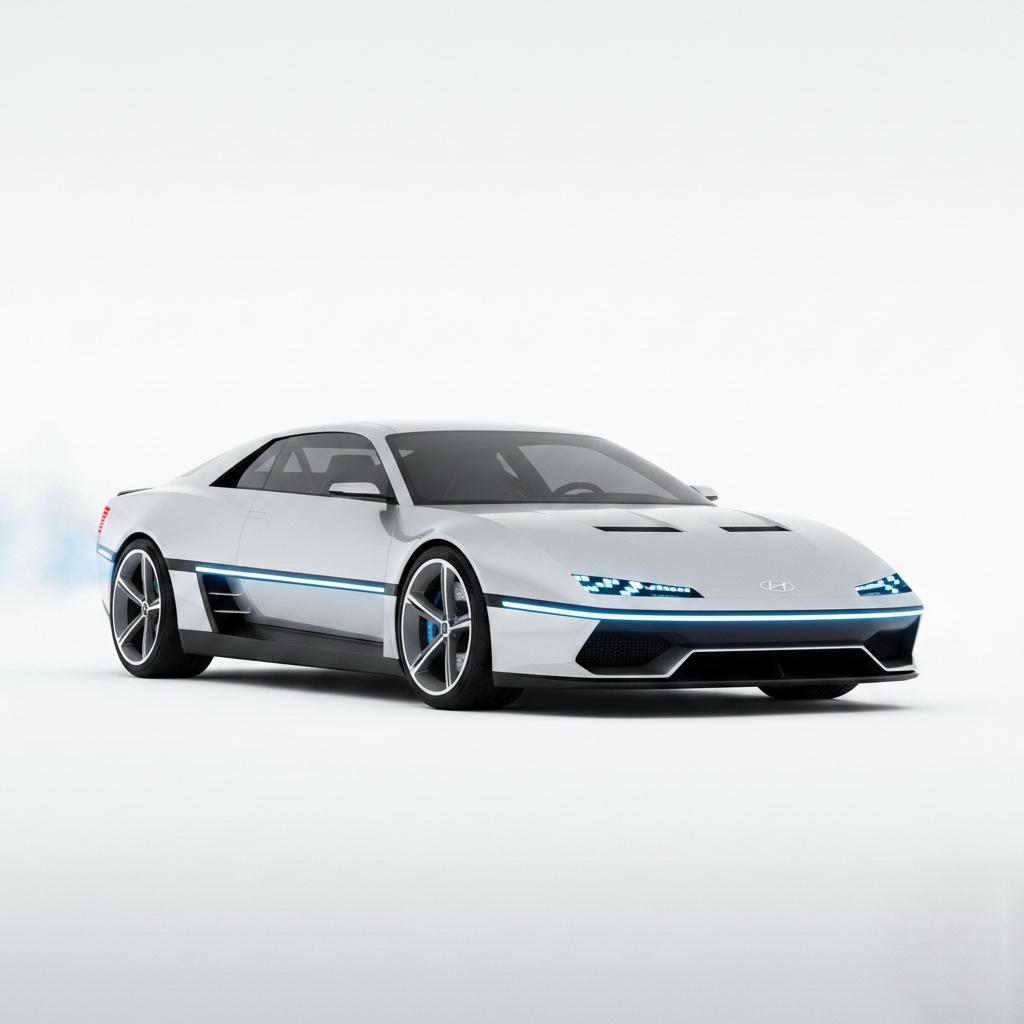
The visual design language of Afeela vehicles represents a clean-sheet approach. The prototype shown features smooth, minimalist surfacing with extensive LED lighting elements—very much Sony’s design aesthetic applied to automotive form. The lack of traditional grilles and aggressive styling cues signals this isn’t trying to be a conventional sports car. It’s creating its own category.
| Aspect | Traditional Approach | Afeela Approach |
|---|---|---|
| Primary Focus | Driving dynamics and performance | Holistic experience including entertainment |
| Software Platform | Developed by automotive supplier | Custom-built by Sony engineers |
| Entertainment | Afterthought or supplier system | Core design element from day one |
| Updates | Limited or dealer-installed | Continuous OTA improvements |
| Manufacturing | Traditional automotive factory | Honda facility with tech integration |
The Technology That Actually Matters
Let’s cut through the marketing hype and talk about the actual technology innovations that make this partnership interesting. Sony’s bringing more to this collaboration than just a fancy infotainment screen—they’re fundamentally rethinking how vehicles process information and interact with occupants.
The sensor array is where Sony’s expertise really shines. The Afeela prototype features 45 cameras and sensors throughout the vehicle—not just for autonomous driving capability, but for creating awareness of the vehicle’s surroundings that gets communicated to occupants in intuitive ways. These Sony-developed imaging sensors provide higher resolution and better low-light performance than typical automotive cameras, enabling more accurate object detection and classification.
What really impressed me is the computing architecture. Rather than using traditional automotive computing platforms, Sony developed a custom system that leverages their PlayStation hardware expertise. This provides significantly more processing power than typical automotive computers, enabling real-time graphics rendering, advanced AI processing, and gaming capabilities that would overwhelm conventional vehicle electronics. It’s similar to the computational power we’re seeing in advanced EVs like the 2026 Porsche Electric 911, where processing power becomes as important as motor power.
The entertainment integration goes beyond anything currently available. Sony’s partnerships with gaming companies mean the Afeela vehicles will offer legitimate gaming experiences when parked or using autonomous driving features. We’re not talking about mobile games—these are console-quality experiences rendered on the vehicle’s displays with the advanced audio system providing immersive sound. For younger buyers who grew up gaming, this transforms the vehicle from pure transportation into a mobile entertainment platform.
Honda’s contribution on the mechanical side shouldn’t be overlooked. They’re developing a dedicated EV platform specifically for Afeela vehicles, not adapting an existing architecture. This allows optimization of battery placement, motor configuration, and suspension design without compromises forced by converting combustion platforms to electric. The dual-motor setup provides genuine sports car performance with the benefits of electric torque delivery.
Performance Specifications and Driving Dynamics
Here’s where Honda’s century of performance vehicle development becomes critical. While Sony handles the tech side, Honda’s engineers are obsessing over the driving dynamics, suspension tuning, and performance characteristics that determine whether this is a genuine sports car or just a fast tech showcase.
The powertrain configuration uses dual electric motors—one on each axle—providing all-wheel drive with torque vectoring capability. Combined output is estimated around 400-480 horsepower, positioning it competitively against established electric performance vehicles. The 0-60 mph time should land around 4.0-4.5 seconds, genuinely quick without being the ridiculous sub-2-second launches that are becoming common with high-performance EVs.
What caught my attention during technical briefings is Honda’s focus on creating “Honda feel” despite the electric powertrain. They’re tuning throttle response, steering weight, and suspension characteristics to deliver the precise, connected driving experience Honda’s known for. This isn’t just maximum performance—it’s refined performance that rewards skilled driving rather than overwhelming with power.
The battery pack capacity hasn’t been officially confirmed, but industry estimates suggest around 100 kWh, providing over 300 miles of EPA-rated range. Fast-charging capability should match or exceed current industry standards—expect around 150-200 kW charging speeds, adding significant range in 15-20 minutes. This positions it competitively with vehicles like the BMW Neue Klasse electric platform vehicles launching around the same timeframe.
Weight management is crucial for maintaining performance feel, and Honda’s experience with lightweight construction from their racing programs should help. Expect curb weight around 4,400-4,600 pounds—not lightweight by traditional sports car standards, but competitive with modern electric performance vehicles. The low center of gravity from floor-mounted batteries should provide excellent handling balance.
Why This Could Be Revolutionary:
- Sony’s entertainment integration creates unique ownership experience
- Honda’s performance engineering ensures legitimate driving dynamics
- Advanced sensor suite enables safety and convenience features
- Gaming integration appeals to younger demographic
- US production reduces supply chain complexity and costs
- Over-the-air updates continuously improve the vehicle
- Competitive pricing undercuts established luxury EVs
The Real Challenges:
- Unproven brand lacks consumer trust and resale value history
- Complex technology increases potential reliability concerns
- Software-dependent features may suffer from bugs or glitches
- Entertainment focus might distract from core driving mission
- Service network uncertain for new brand
- Battery technology from Honda lacks Tesla’s track record
- Gaming features become outdated as technology advances
The Interior Experience That Changes Everything
This is where the Sony influence becomes most apparent and potentially most polarizing. The Afeela interior doesn’t look like any conventional car interior—it looks like Sony imagined what a vehicle should be if they weren’t constrained by traditional automotive thinking.
The dashboard features a continuous display spanning the full width of the interior—think three 4K screens seamlessly integrated into one surface. The driver gets configurable instrumentation, the front passenger can watch movies or play games, and both can collaborate on navigation or entertainment choices. It’s like having a mobile gaming and entertainment center that happens to also transport you places.
What really changed my thinking is experiencing the audio system Sony developed specifically for this vehicle. We’re not talking about a premium brand name audio system that gets licensed to automotive manufacturers. Sony engineered this from the ground up, using speakers and amplification designed specifically for the Afeela interior dimensions and materials. The result is concert-hall audio quality that transforms how you experience music while driving—similar to how audiophile-focused motorcycles like the Harley-Davidson Nightster have elevated the importance of sound in the riding experience.
The seating design emphasizes comfort for extended periods, recognizing that if autonomous driving becomes reliable, occupants will spend less time actively driving and more time enjoying entertainment. The seats incorporate haptic feedback that can provide alerts or enhance gaming and entertainment experiences. It sounds gimmicky until you experience it—the subtle feedback creates connection between what you’re seeing on screen and what you’re feeling physically.
Material choices reflect Sony’s consumer electronics aesthetic—premium but minimalist, with high-quality plastics and metals rather than the traditional leather and wood expected in luxury vehicles. This appeals to younger buyers who value technology and sustainability over traditional luxury materials. The environmental footprint is also reduced through careful material selection and manufacturing processes.
Autonomous Driving and Safety Technology
One area where this partnership’s strengths really combine is autonomous driving capability. Sony’s sensor technology paired with Honda’s vehicle control expertise creates a formidable autonomous driving platform—potentially competitive with Tesla’s system without the controversial full self-driving claims.
The 45-camera and sensor array provides 360-degree awareness with redundancy—if one sensor fails, others can compensate. Sony’s image processing algorithms, developed through years of camera technology leadership, enable faster and more accurate object recognition than typical automotive camera systems. This translates to better autonomous driving performance in challenging conditions like rain, fog, or darkness.
Honda’s contributing their sensing technology and safety system expertise gained through decades of developing collision avoidance and driver assistance features. The combination should provide Level 2+ autonomous capability at launch, with the hardware platform capable of supporting Level 3 or Level 4 autonomy pending regulatory approval and software updates.
What impresses me is the transparent approach to limitations. Rather than overselling autonomous capability like some manufacturers have done, Sony Honda Mobility is being clear that their system has limitations and requires driver attention. This honest approach builds trust and prevents the dangerous overconfidence that’s led to accidents with other autonomous systems.
| Feature | Afeela | Tesla Model 3 | BMW i4 |
|---|---|---|---|
| Estimated Power | 400-480 HP | 480 HP (Performance) | 536 HP (M50) |
| Expected Range | 300+ miles | 341 miles | 270 miles |
| Sensors | 45 cameras/sensors | 8 cameras | Multiple cameras |
| Gaming Integration | Native console-quality | Steam integration | None |
| Starting Price (est.) | $55K-$70K | $40,240 | $67,800 |
US Production and Market Strategy
One of the smartest decisions Sony Honda Mobility made is confirming US production at Honda’s Ohio facilities. This isn’t just about avoiding tariffs and import complications—it’s about building American credibility for an American market that’s skeptical of new automotive brands.
The Ohio production facility has produced Honda vehicles for decades and maintains excellent quality standards. By leveraging this existing infrastructure rather than building new factories, Sony Honda Mobility reduces capital investment and timeline to market. The workforce already understands Honda’s quality expectations, reducing the learning curve for manufacturing a new model.
The market positioning is deliberately aimed at younger, tech-savvy buyers who might not consider traditional automotive brands. These are customers who grew up with smartphones, gaming consoles, and streaming services—they expect their vehicles to integrate seamlessly with their digital lives. The Afeela targets these buyers directly, similar to how Dodge’s electric muscle car lineup targets traditional muscle car enthusiasts with modern technology.
Pricing strategy is critical and appears competitive. Estimated starting prices around $55,000-$70,000 position Afeela below established luxury EVs while significantly above mass-market options. This creates a value proposition—more technology and features than mainstream EVs, but lower price than traditional luxury brands. It’s the same strategy that helped Tesla establish themselves before brand prestige caught up with their pricing.
PlayStation Integration
Console-quality gaming when parked or on autopilot
45 Sony Sensors
Industry-leading imaging for safety and autonomy
Custom Audio System
Sony-engineered acoustics for concert-hall sound
5G Connectivity
Always-connected features and cloud services
Dual-Motor AWD
Honda-tuned performance with electric efficiency
OTA Updates
Continuous improvements without dealer visits
The Competition and Market Context
The Afeela enters a rapidly evolving electric vehicle market where competition intensifies monthly. Understanding how it positions against established players provides context for whether this partnership can succeed.
Tesla obviously dominates the electric performance conversation, but they’ve also accumulated significant negative press around build quality, service issues, and controversial leadership. Afeela can position as the alternative for buyers who want Tesla-level technology without the baggage. The Honda manufacturing expertise should deliver better build quality than Tesla’s historically inconsistent production.
Traditional luxury brands like BMW, Mercedes, and Audi are launching compelling electric vehicles with established brand prestige and dealer networks. Afeela counters with superior technology integration and competitive pricing, but lacks the brand trust that comes from decades of automotive heritage. It’s a classic challenger brand situation where they must prove themselves through product excellence.
Chinese EV manufacturers like BYD and NIO are beginning US market entry with advanced technology at aggressive prices. This represents a serious long-term threat that Sony Honda Mobility must address through differentiation in user experience and brand identity. The gaming integration and entertainment features provide unique selling points that pure automotive companies can’t easily replicate.
What’s interesting is how this partnership addresses weaknesses both companies face individually. Honda’s struggled with software and user interface design in recent vehicles—Sony fixes that. Sony lacks manufacturing scale and automotive expertise—Honda provides that. Together they’re potentially greater than the sum of their parts, similar to successful collaborations we’ve seen in motorcycles like the Suzuki V-Strom 800 DE, where engineering partnerships create better products than either company could alone.
Timeline and What Comes Next
The development timeline for Afeela has been aggressive but appears on track. Prototypes are currently testing in Japan, the US, and Europe, accumulating validation miles and refining calibrations. The 2026 launch target for first production vehicles seems realistic based on current progress.
Production ramp-up will be gradual—expect limited initial availability in select markets, likely starting with California and other EV-friendly states. This controlled rollout allows Sony Honda Mobility to refine manufacturing processes and address any early issues before scaling to national availability. Full US market availability should happen by late 2026 or early 2027.
Future models are already in planning. The first Afeela is a mid-size sedan, but SUV and potentially smaller vehicle variants are under development. The platform architecture is designed to support multiple body styles, similar to how Stellantis’s STLA platform enables diverse vehicle types from a common foundation.
Software updates will be continuous once vehicles launch. Sony’s experience with PlayStation system updates and game patches translates directly to automotive over-the-air updates. Expect monthly or quarterly software releases that add features, improve performance, and fix issues—creating a sense that the vehicle improves over time rather than slowly becoming obsolete.
Launch Timeline
2024-2025: Continued validation testing and production preparation
Early 2026: Pre-production vehicles for press and initial customer previews
Mid-2026: Production begins at Honda Ohio facility
Late 2026: First customer deliveries in select US markets
2027: National rollout and potential international expansion
My Honest Take: Cautiously Optimistic
After spending weeks researching this partnership, analyzing the technology, and thinking about market positioning, I’m cautiously optimistic about Afeela’s potential. This isn’t guaranteed success—new automotive brands face enormous challenges, and Sony Honda Mobility must execute flawlessly to overcome consumer skepticism.
What gives me confidence is how thoughtfully this partnership appears structured. Both companies bring genuine strengths rather than one carrying the other. The division of responsibilities makes sense—Honda builds cars, Sony builds technology platforms, and together they create something neither could alone. This complementary approach has better odds than typical automotive partnerships where overlapping capabilities create confusion.
The target demographic is smart—younger buyers who value technology integration above traditional automotive status symbols. These customers are underserved by traditional manufacturers whose software platforms feel decades behind consumer electronics. If Afeela delivers on the promise of seamless tech integration with genuine driving capability, they’ll find an audience.
My concerns center on execution and brand building. Creating a new automotive brand requires massive marketing investment and years of proving reliability. Initial quality issues could doom the brand before it establishes credibility. The complex technology creates more potential failure points than simpler vehicles. And the rapid pace of technology advancement might make some features feel outdated within a few years.
But ultimately, I’m excited to see Sony and Honda taking this risk. The automotive industry needs innovation and fresh thinking. Whether Afeela succeeds or struggles, this partnership will influence how traditional manufacturers approach technology integration and what future vehicles prioritize. That alone makes it worth watching closely.
When will the Honda-Sony Afeela be available?
First production vehicles are scheduled for mid-2026 as 2026 model year vehicles, with initial deliveries in select US markets beginning late 2026. National availability should follow through 2027.
How much will the Afeela cost?
Official pricing hasn’t been announced, but industry estimates suggest a starting price around $55,000-$70,000, positioning it between mass-market EVs and established luxury brands. Final pricing will be confirmed closer to launch.
What makes the Sony-Honda partnership different from other automotive collaborations?
Unlike typical partnerships where one company dominates, Sony Honda Mobility operates as an equal joint venture with clearly divided responsibilities. Sony provides software, entertainment, and sensor technology, while Honda handles manufacturing and vehicle dynamics. This complementary approach leverages both companies’ genuine strengths.
Will the Afeela have gaming capabilities?
Yes. Sony’s bringing console-quality gaming integration, allowing occupants to play games when parked or potentially when using autonomous driving features. This represents a significant differentiator from other electric vehicles and reflects Sony’s entertainment technology expertise.