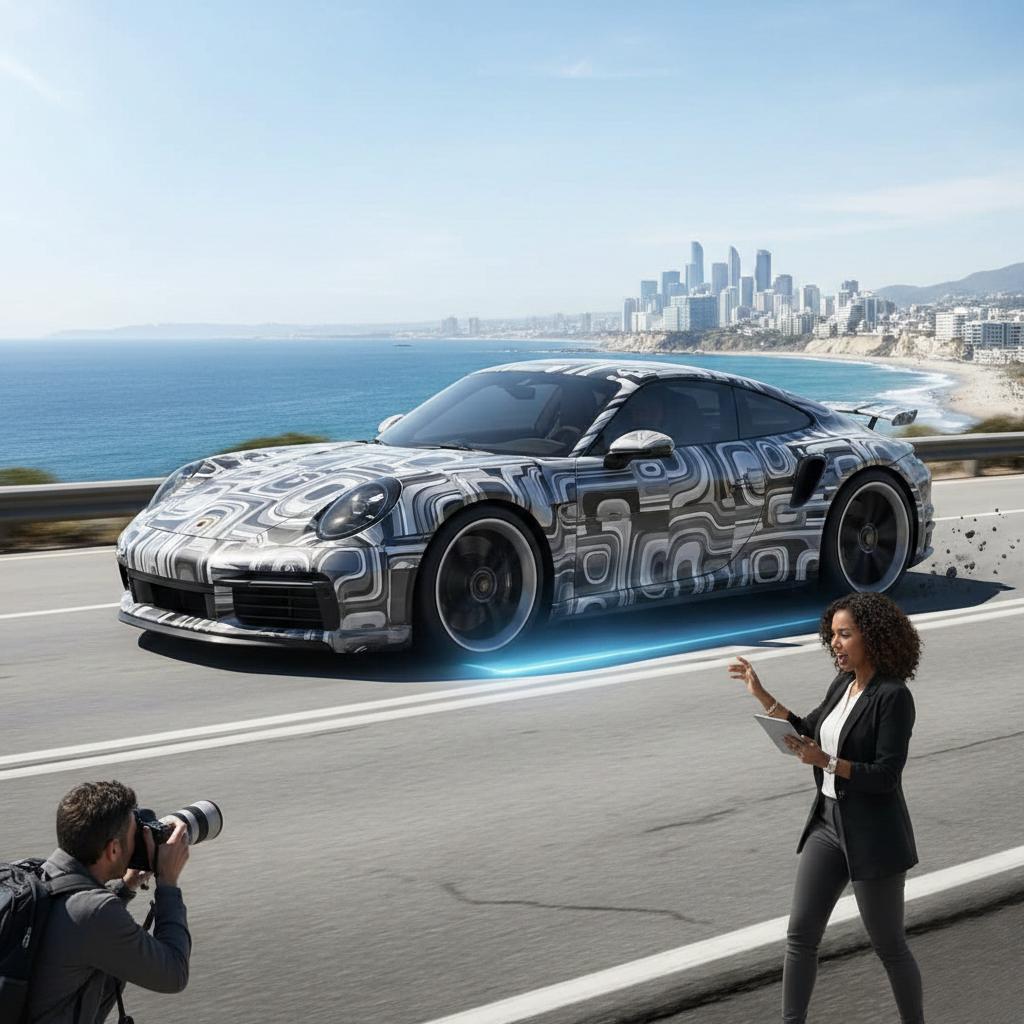
Hey everyone, it’s Dimple back again! I need to tell you about something that’s genuinely got me excited – and I don’t say that lightly. Genesis, the Korean luxury brand that seemed to appear out of nowhere eight years ago, is about to do something that could fundamentally reshape the performance luxury segment. They’re launching Magma, a performance sub-brand aimed squarely at BMW M, Mercedes-AMG, and Audi Sport.
As a 33-year-old automotive writer who has spent nearly a decade analyzing vehicles across every segment, I’ve seen plenty of automakers promise to take on the German performance establishment. Most fail spectacularly. But Genesis? They’ve already proven they can punch way above their weight with models like the G70 and GV70. Now they’re backing their performance ambitions with an actual racing program at Le Mans and a lineup of Magma variants across every model they make.

What particularly fascinates me about this development is the timing and the execution. Genesis isn’t just slapping some orange paint and bigger brakes on existing models. They’re building a complete performance ecosystem – racing program, production vehicles, and a distinct brand identity that’s uniquely Korean rather than copying European formulas. Let me break down everything we know about this bold challenge to the German performance hierarchy.
Contents
- 1 The First Strike: GV60 Magma Specifications and Performance
- 2 Design Language: Athletic Elegance Meets Volcanic Fury
- 3 The Competition: Taking On German Giants
- 4 Genesis Magma Racing: Proving Performance on Track
- 5 The Complete Magma Roadmap: Every Model Gets Performance
- 6 Pricing Strategy: The Genesis Value Proposition
- 7 The Motorcycle Connection: Performance Sub-Brands Done Right
- 8 My Honest Take: Can Genesis Pull This Off?
- 9 The Bottom Line: A Performance Brand Worth Watching
Everything You Need to Know About Genesis Magma:
- GV60 Magma debuts as the first production model – expected 700+ horsepower from dual electric motors
- Every Genesis model will eventually receive a Magma performance variant
- Genesis Magma Racing debuts at 2026 World Endurance Championship (WEC) including Le Mans
- Pricing expected to start around $75,000-$80,000 for the GV60 Magma
- Signature Magma orange paint inspired by Korean volcanic landscapes
- Performance targets Hyundai Ioniq 5 N levels (641 HP) but with luxury refinement
- Launch timeline: Korea Q3 2025, Europe Q4 2025, US early 2026
The First Strike: GV60 Magma Specifications and Performance
Let’s start with the model that’s leading this charge – the Genesis GV60 Magma. This electric crossover will be the first production vehicle wearing the Magma badge, and honestly, the specs are wild.
The standard GV60 Performance already makes 483 horsepower, which is plenty fast with a 0-60 time of 3.7 seconds. But Genesis Chief Creative Officer Luc Donckerwolke told InsideEVs that the Magma version will have “a couple hundred horsepower more” than that figure. Multiple sources now suggest we’re looking at over 700 horsepower from a dual-motor setup – potentially exceeding even the 641-horsepower Hyundai Ioniq 5 N that shares the same E-GMP platform.
Here’s what we know about the powertrain and performance:
Power Output: 700+ horsepower (official figures TBD)
Battery Capacity: 84 kWh usable
Architecture: 800-volt system enabling ultra-fast charging
Estimated Range: 278 miles WLTC (likely 250 miles EPA)
Charging Speed: 10-80% in approximately 18 minutes
0-60 MPH: Under 3.0 seconds (estimated)
Drive System: Dual-motor all-wheel drive
During my research, I discovered that Genesis completed extensive global testing in Sweden, California, New Zealand, and Korea. The Arctic Circle testing reveals serious commitment to chassis tuning – they’re not just relying on straight-line electric thrust. Donckerwolke emphasized that “the instant delivery means you have to tune the chassis extremely well, because if you don’t do it right, you are emphasizing the lack of quality of your chassis.”
That’s exactly the right philosophy for a luxury performance brand. Power is cheap in EVs. Making that power feel controlled and refined? That’s where the real engineering happens.
HP (Est.)
0-60 MPH
Miles Range (WLTC)
Expected Price
Design Language: Athletic Elegance Meets Volcanic Fury
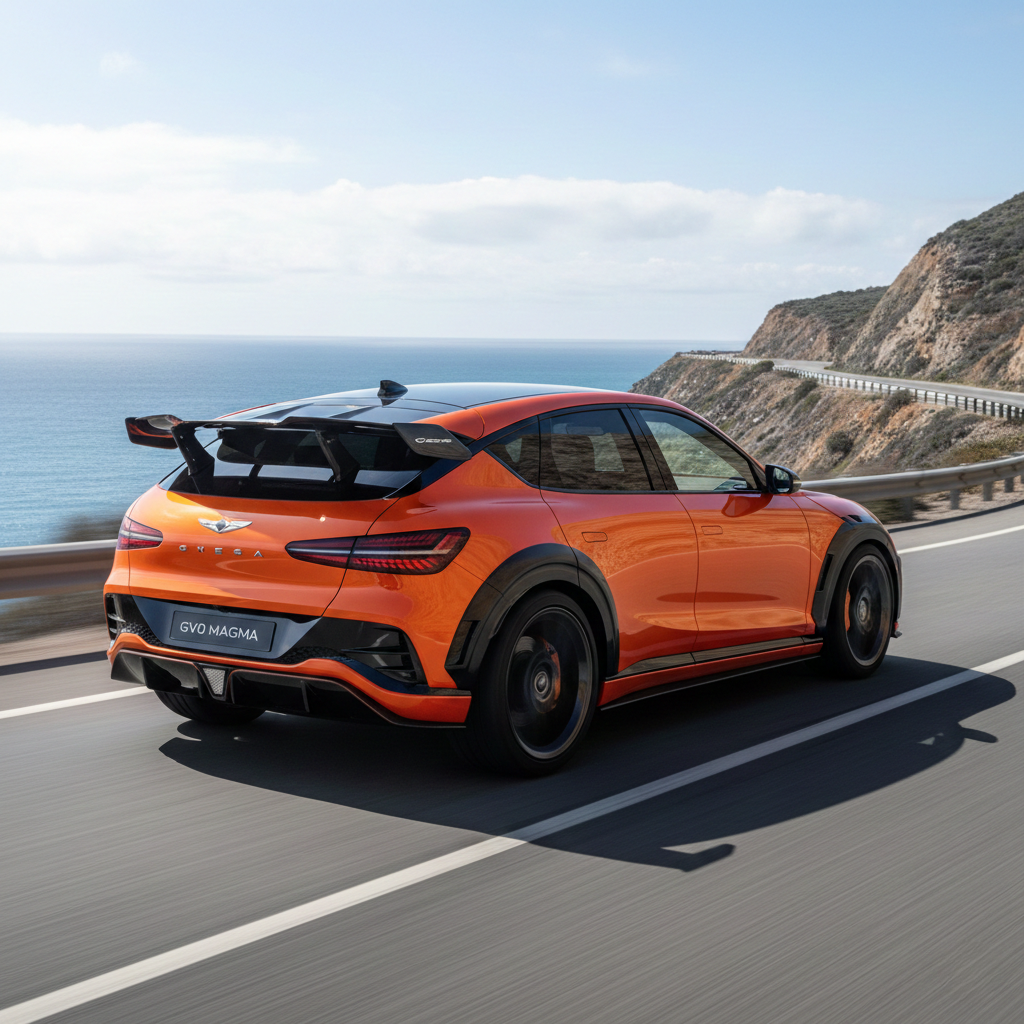
The GV60 Magma looks absolutely menacing in person – I’ve seen the spy photos and concept images, and the production version maintains most of that aggression. The signature Magma orange paint is inspired by Korea’s volcanic landscape, and it’s genuinely striking. Not everyone will love it, but that’s kind of the point.
Key visual updates include:
- Lowered stance by approximately 20mm for improved aerodynamics
- Vented fender flares housing wider 21-inch wheels wrapped in performance rubber
- Redesigned front bumper with larger cooling intakes for battery thermal management
- Rear diffuser integrated into a new rear bumper design
- Prominent rear wing (possibly dual-element) for high-speed stability
- Roof vanes directing airflow to rear aerodynamic elements
- Orange brake calipers visible through the wheels – a Magma signature
Inside, Genesis isn’t going full race car. The interior features Alcantara, quilted leather, and carbon fiber inserts with distinctive blue weaving. It’s luxury first, performance second – which is exactly how it should be for a brand competing with Mercedes-AMG rather than hardcore track weapons.
There’s also a “Magma-exclusive sound system” that Genesis promises will provide “a rich, dynamic auditory experience.” Given how EV manufacturers struggle to give their cars character without engine sound, this could be crucial for emotional appeal. Look at how Dodge’s Fratzonic exhaust system on the electric Charger tries to solve this same problem.
The Competition: Taking On German Giants
Let’s be honest about what Genesis is attempting here – they’re going after the most established performance luxury brands in the world. BMW M has been doing this since 1972. Mercedes-AMG traces its roots to 1967. These aren’t startups you can disrupt overnight.
But Genesis has some advantages. The GV60 Magma doesn’t have a direct German competitor yet. BMW’s X1 M doesn’t exist (though the X2 M35i comes close at 312 HP). Mercedes hasn’t made an electric AMG compact crossover. Audi’s e-tron performance models top out around 500 HP.
The real competition comes from unexpected places:
Tesla Model Y Performance
The updated Model Y Performance makes 456 horsepower and hits 60 mph in 3.5 seconds, starting at $52,490. It’s faster than it needs to be and cheaper than the Genesis will be. But it lacks the luxury refinement and build quality Genesis provides.
Cadillac Lyriq-V
Cadillac’s performance EV makes a claimed 615 horsepower and hits 60 in 3.3 seconds. Starting around $78,000, it’s the closest American competitor to what Genesis is attempting. Both are luxury brands trying to prove they can do performance EVs.
Hyundai Ioniq 5 N
This is the most interesting comparison. The Ioniq 5 N shares the GV60’s platform and makes 641 horsepower. It’s brilliant to drive – genuinely one of the best performance EVs you can buy. But it starts at $66,000 and lacks the luxury positioning Genesis offers. The GV60 Magma needs to justify its premium by being notably more refined while matching or exceeding N performance.
Porsche Macan Electric
The new electric Macan starts at $78,000 and climbs to over $100,000 for the Turbo model. This is probably the closest spiritual competitor – German luxury meets electric performance. Genesis will undercut Porsche pricing while offering comparable specs.
| Model | Horsepower | 0-60 MPH | Starting Price | Range |
|---|---|---|---|---|
| Genesis GV60 Magma | 700+ HP (Est.) | <3.0 sec (Est.) | $75-80K (Est.) | ~250 miles EPA |
| Hyundai Ioniq 5 N | 641 HP | 3.0 sec | $66,000 | 221 miles EPA |
| Tesla Model Y Performance | 456 HP | 3.5 sec | $52,490 | 285 miles EPA |
| Cadillac Lyriq-V | 615 HP | 3.3 sec | ~$78,000 | TBD |
| Porsche Macan Electric | 335-630 HP | 3.3-5.7 sec | $78-110K | 266-308 miles |
Genesis Magma Racing: Proving Performance on Track
Here’s what separates Genesis from other wannabe performance brands – they’re actually going racing at the highest level. The GMR-001 Hypercar will compete in the 2026 FIA World Endurance Championship, including the 24 Hours of Le Mans, followed by IMSA competition in 2027.
This isn’t a marketing exercise. Genesis partnered with ORECA Motorsport and IDEC Sport – serious endurance racing specialists – and hired championship-winning personnel from Hyundai Motorsport’s WRC program. Team Principal Cyril Abiteboul brings Formula 1 and WEC experience. The technical leadership comes directly from Hyundai’s rally-winning operation.

The GMR-001 features a newly developed V8 engine inspired by Hyundai’s WRC technology. That gasoline racing heritage will inform future Magma road cars, even the electric ones. Lessons learned in thermal management, aerodynamics, and chassis dynamics at Le Mans translate directly to production vehicles.
What I love about the livery is how distinctly Korean it is. That gradient from vibrant orange to deep red, with “Magma” written in Hangul script (마그마), celebrates Korean heritage instead of copying European racing aesthetics. It’s confident cultural identity expressed through motorsport.
Genesis is doing exactly what Ford did with the Mustang GTD – using racing to validate performance credentials. It works. Customers want to buy from brands that prove themselves in competition.
The Complete Magma Roadmap: Every Model Gets Performance
Genesis hasn’t just committed to one Magma model. Chief Creative Officer Luc Donckerwolke confirmed that “ultimately Genesis aims to develop a high-end variant of each model within the existing lineup.” That means we’re getting:
Already Confirmed or Shown:
- GV60 Magma: First production model, late 2025/early 2026
- Electrified G80 Magma: Concept shown, production timeline TBD
- GV80 Coupe Magma: Concept variant revealed
- G80 Magma Special: Gas-powered sedan with widebody kit, lowered suspension
Expected Future Magma Models:
- GV70 Magma: Best-selling Genesis model gets performance treatment
- Electrified GV70 Magma: Electric variant of the compact SUV
- G70 Magma: Compact sports sedan competing with BMW M3
- G90 Magma: Full-size luxury sedan with performance edge
- Magma Sports Car: Confirmed by Donckerwolke, potentially based on X concept series
What’s smart about Genesis’s approach is that not every Magma will be hardcore. Donckerwolke explained that the character depends on the vehicle type. A G90 Magma won’t be a track weapon – it’ll emphasize refined high-speed cruising with enhanced power. The GV70 Magma will likely split the difference between comfort and aggression.
This flexibility shows maturity. BMW M understands that an M5 serves a different purpose than an M2. Mercedes-AMG knows an S63 isn’t an A45. Genesis is applying that same philosophy from day one.
Why Genesis Magma Could Actually Work:
- Racing Credibility: Le Mans and IMSA programs provide legitimate performance validation
- Platform Advantage: E-GMP architecture proven with Ioniq 5 N – Genesis knows the formula works
- Value Positioning: Undercutting German competitors on price while matching performance
- Fresh Perspective: Korean design identity offers alternative to German/Italian aesthetics
- Hyundai N Experience: Parent company already succeeded with performance sub-brand
- Timing: Launching as electric performance SUVs explode in popularity
- Complete Ecosystem: Racing, production cars, distinct brand identity all launching together
The Challenges Genesis Faces:
- Brand Heritage: BMW M and Mercedes-AMG have 50+ years of performance history
- Dealer Network: Genesis still building out standalone dealerships in many markets
- Resale Values: Luxury brands need years to establish strong residuals
- Platform Sharing: Hard to justify $80K Genesis when $66K Hyundai is mechanically similar
- Service Perception: Performance customers expect specialized service – does Genesis network deliver?
- Track Record: Zero production Magma vehicles exist yet – promises need execution
- EV Range Anxiety: 250-mile EPA range on GV60 Magma less than competitors
Pricing Strategy: The Genesis Value Proposition
Genesis built its reputation on offering Mercedes-level luxury at Lexus-level pricing. The Magma lineup needs to follow that same philosophy against BMW M and Mercedes-AMG.
Based on current GV60 Performance pricing ($70,900) and competitive positioning, here’s what I expect:
GV60 Magma: $75,000-$80,000
This undercuts the Porsche Macan Electric significantly while offering more power than Tesla Model Y Performance. It’s expensive enough to feel premium but still delivers that Genesis value equation.
GV70 Magma: $65,000-$70,000 (estimated)
Competing with BMW X3 M Competition ($81,400) and Mercedes-AMG GLC 63, Genesis could price aggressively here and still make healthy margins.
G70 Magma: $55,000-$60,000 (estimated)
The sports sedan targeting BMW M3 ($76,400+) and Mercedes-AMG C63. If Genesis delivers 90% of the performance for 75% of the price, it’s compelling.
There’s also possibility of less expensive Magma variants. Not everyone wants maximum performance – some buyers want Magma styling and branding with slightly detuned powertrains at lower prices. BMW does this with M Sport packages. Genesis could too.
The Motorcycle Connection: Performance Sub-Brands Done Right
You know what this reminds me of? How Harley-Davidson approaches its performance models. They don’t try to be sport bikes. They enhance what Harley does well – torque, presence, character – and apply it to riders who want more edge.
Similarly, I’ve been covering the sportbike segment for years, and the brands that succeed at performance aren’t necessarily the fastest on paper. Yamaha’s R7, Kawasaki’s Ninja 650 – these bikes win by nailing the complete package rather than chasing peak numbers.

Genesis seems to understand this. Donckerwolke explicitly said the GV60 Magma “is not a track car” and emphasized “homogeneous usability rather than something that feels much too aggressive on a normal drive.” That’s the right philosophy for a luxury performance brand.
Electric vehicles are reshaping performance hierarchies. When a $66,000 Hyundai can hit 60 mph in 3.0 seconds, traditional performance pricing structures collapse. Genesis needs to justify luxury pricing through refinement, materials, and ownership experience rather than just specs. That’s exactly what BMW is attempting with Neue Klasse and what Mercedes-AMG faces as it transitions to EVs.
My Honest Take: Can Genesis Pull This Off?
After diving deep into everything Genesis is doing with Magma, I’m cautiously optimistic. Here’s why:
They’re doing this the right way. Genesis isn’t just slapping orange paint on existing models and calling it performance. They’re racing at Le Mans. They’re doing Arctic testing. They’re building complete Magma identities for each vehicle type. That’s how you build a legitimate performance brand.
The platform credentials are there. The Ioniq 5 N proves the E-GMP architecture can deliver thrilling performance. Genesis has Hyundai Motorsport’s championship-winning expertise to draw on. The technical foundation is solid.
Timing is perfect. Electric performance SUVs are exploding right now, and Genesis is entering before German brands fully commit. The GV60 Magma could own this segment for 12-18 months before BMW and Mercedes respond.
But… there are real challenges. Can Genesis justify an $80,000 electric crossover when mechanically similar Hyundai costs $66,000? Will performance customers accept a relatively new luxury brand over established German names? Can Genesis dealers provide the service experience M and AMG customers expect?
What gives me hope is Genesis’s track record. Eight years ago, nobody took them seriously. “Just another Hyundai,” people said. Today, the G70 wins comparison tests against 3 Series. The GV70 outsells competitors. Genesis consistently delivers quality that exceeds expectations.
If they apply that same overachieving mentality to Magma – actually delivering on promises, sweating the details, undercutting competition on price while matching or beating performance – then yeah, this could work. The German brands should be nervous.
The Bottom Line: A Performance Brand Worth Watching
Genesis Magma represents one of the boldest moves in the automotive industry right now. A brand that didn’t exist eight years ago is challenging performance dynasties that have been around for half a century. They’re doing it with electric vehicles. They’re backing it with Le Mans racing. They’re bringing Korean cultural identity to a segment dominated by German engineering aesthetics.
It’s audacious. It might fail. But if Genesis executes on even 80% of what they’re promising, the performance luxury landscape will never be the same.
The GV60 Magma debuts soon, and I cannot wait to drive it. If you’re as intrigued by this as I am, keep watching Motiry – I’ll be covering every development as Genesis takes on the giants. This is automotive history being written in real-time, and honestly? It’s about time someone shook up the German performance establishment.
What do you think – can Genesis pull this off, or is Magma trying to punch above its weight class? Drop your thoughts in the comments below. And if you’re interested in how other brands are approaching performance in the electric era, check out my coverage of Chevrolet’s Corvette brand expansion and Mazda’s PHEV strategy.
The future of performance is being redefined right now, and Genesis just threw down the gauntlet. Let’s see if the Germans are ready for this fight.