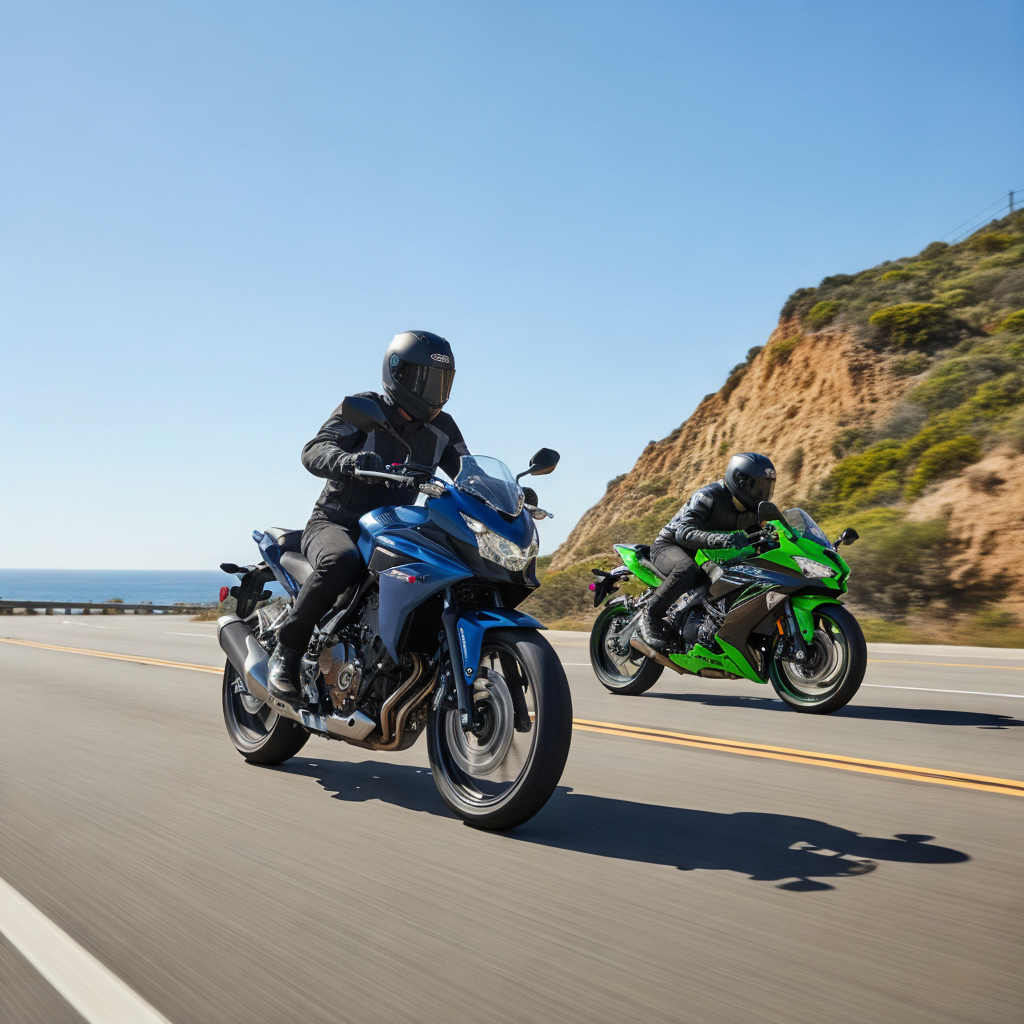
Hey everyone, it’s Dimple back again! You know what conversation I keep having with new riders? They walk into dealerships absolutely convinced they need a 600cc supersport as their first bike. I get it – those machines look incredible, sound amazing, and promise the world. But here’s the thing: after nearly a decade analyzing motorcycles across every segment, I’ve watched too many beginners struggle with bikes that are too much, too soon. And that’s precisely why I want to talk about the Honda CB500F today.
Look, I’m not here to crush anyone’s dreams. But if you’re reading this in 2025 and thinking about your first motorcycle, the CB500F deserves way more attention than it’s getting. This isn’t about settling for less – it’s about choosing smarter. And trust me, by the end of this article, you’ll understand why displacement isn’t everything.
Contents
- 1 The 600cc Supersport Trap (And Why Dealerships Love It)
- 2 Why the Honda CB500F Changes Everything
- 3 The Real-World Cost Analysis Nobody Talks About
- 4 Learning to Ride Right vs. Learning to Survive
- 5 Head-to-Head: CB500F vs. Common Beginner Supersports
- 6 What the CB500F Does Better Than You’d Expect
- 7 The Bigger Picture: What Happens After Your First Year
- 8 Common Questions I Get About Starting on the CB500F
- 9 My Honest Take After Nearly a Decade Covering Motorcycles
- 10 Where the Honda CB500F Sits in the 2025 Market
- 11 Final Thoughts: Choose Growth Over Ego
What You Actually Need to Know:
- The Honda CB500F delivers 47 HP that’s actually usable on public roads (unlike most 600cc bikes)
- Insurance costs are typically 40-60% lower than supersports for new riders
- Real-world fuel economy hits 60+ MPG versus 35-40 MPG for 600cc bikes
- The upright riding position won’t destroy your wrists and back on daily rides
- Resale value remains strong because it’s actually practical for most riders
The 600cc Supersport Trap (And Why Dealerships Love It)

Let me be completely honest with you. When I started really digging into the beginner motorcycle market, I discovered something that honestly made me a little angry. The entire industry has been pushing new riders toward 600cc supersports for decades, and it’s not because these bikes are ideal for learning. It’s because they’re expensive, they require frequent service, and frankly, many new riders end up trading them in within a year – sometimes after a crash that could have been avoided on a more manageable machine.
Here’s what nobody tells you about starting on a 600cc supersport: the first 6,000 RPM (where you’ll spend most of your time as a new rider) delivers less usable power than a middleweight like the CB500F. Then suddenly, around 8,000 RPM, you get this explosive power delivery that’s designed for track use. For experienced riders, that’s thrilling. For beginners trying to merge onto a highway or navigate a tricky intersection? That’s terrifying.
Why the Honda CB500F Changes Everything
The CB500F represents something that’s become increasingly rare in motorcycling: common sense wrapped in genuine capability. Honda built this bike with a clear philosophy – make it accessible enough for beginners while being engaging enough that you won’t outgrow it in six months. And honestly? They nailed it.
The Engine: Power That Builds Confidence Instead of Fear
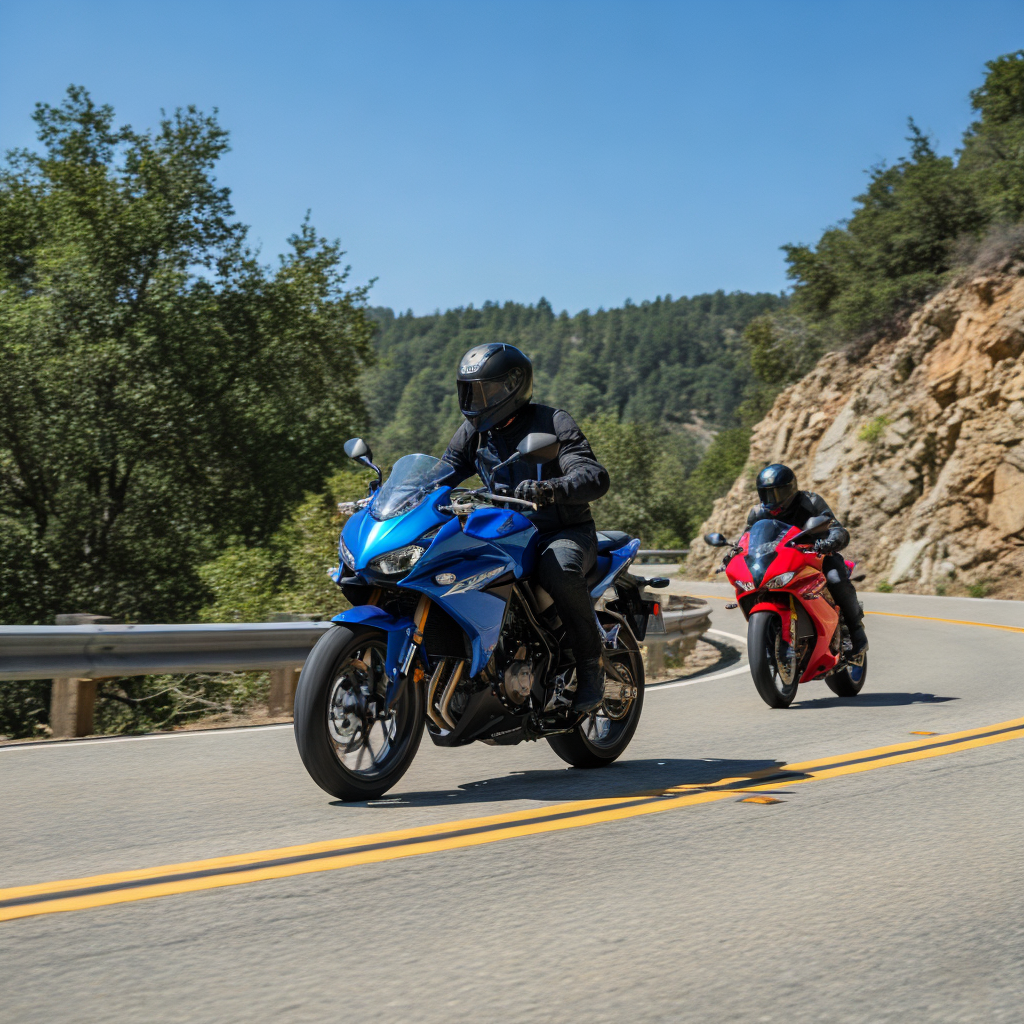
The 471cc parallel-twin engine in the CB500F is, and I’m choosing my words carefully here, perfect for learning and growing. It produces 47 horsepower and 32 lb-ft of torque, delivered in the smoothest, most predictable way possible. What makes this special isn’t the peak numbers – it’s how that power is supplied.
Unlike a 600cc supersport that lurks docile until you hit the power band and then explodes, the CB500F gives you linear, predictable acceleration from idle to redline. You twist the throttle, the bike accelerates proportionally. Sounds simple, right? But this characteristic is absolutely crucial when you’re learning clutch control, smooth shifting, and throttle modulation in corners.
HP @ 8,500 RPM
lb-ft Torque
Parallel-Twin
MPG Average
lbs Wet Weight
Seat Height
I’ve ridden this bike through Los Angeles traffic, up the Pacific Coast Highway, and through the twisties around Malibu. Every single time, what impressed me wasn’t what it couldn’t do – it was how confidence-inspiring it felt doing everything. That might sound boring to experienced riders, but for someone learning, it might be different. That confidence is worth more than any spec sheet number.
Handling: Where Lighter Actually Means Better

Here’s something that surprised me during my research: the CB500F weighs almost the same as most 600cc supersports (within 10-15 pounds). But here’s the critical difference – the weight distribution and center of gravity make it feel dramatically lighter and more manageable.
The upright riding position puts your weight over the bike’s center of gravity, making low-speed maneuvers (parking lots, U-turns, stop-and-go traffic) infinitely easier. Compare that to a supersport’s aggressive forward lean, where you’re constantly supporting your weight with your wrists and core. After 30 minutes in city traffic on a supersport, your hands are cramping. On the CB500F? You could ride all day.
The suspension setup strikes an excellent balance between comfort and control. It’s not as hardcore as a supersport (which is actually a good thing for public roads), but it’s far from soft. I’ve pushed this bike hard through canyon roads, and it remained composed and predictable. The Showa suspension soaks up typical road imperfections while still providing enough feedback to keep things engaging.
The Real-World Cost Analysis Nobody Talks About
Let’s talk money, because this is where the CB500F really shines and where 600cc supersports hurt the most. I’m going to lay out the actual costs you’ll face as a new rider, and I promise you, these numbers matter more than you think right now.
| Cost Category | Honda CB500F | Typical 600cc Supersport | Difference |
|---|---|---|---|
| Purchase Price (2025 MSRP) | $7,099 | $11,000-$13,000 | -$4,000 to $6,000 |
| Insurance (First Year, New Rider) | $800-$1,200 | $2,000-$4,000 | -$1,200 to $2,800 |
| Fuel Cost (10,000 miles/year) | $550 (60 MPG) | $900 (37 MPG) | -$350 |
| Maintenance (First Year) | $300-$400 | $500-$800 | -$200 to $400 |
| Resale Value (After 3 Years) | $5,000-$5,500 | $7,000-$8,000 | -$2,000 (but you paid less initially) |
| Total First Year Cost | $8,749-$9,199 | $14,400-$18,700 | -$5,650 to $9,500 |
Look at those insurance numbers again. For a new rider under 25 in most states, insuring a 600cc supersport can cost more than the monthly payment on the bike itself. That’s insane. The CB500F, classified as a standard/naked bike rather than a sportbike, gets dramatically better insurance rates. That difference alone could pay for all your riding gear, a track day, or several months of gas.
Learning to Ride Right vs. Learning to Survive

This is where I need to get a bit serious with you. After covering the motorcycle industry for nearly a decade, I’ve read too many accident reports, spoken with too many riders who regret it, and seen too many pristine supersports for sale with 800 miles on them because someone got scared and gave up on riding entirely.
The CB500F teaches you to ride properly because it forces you to use proper technique. Want to go fast through corners? You need to learn proper body positioning, smooth throttle control, and correct lines – because you can’t just blast through on pure power. Want to ride efficiently in traffic? You need to master clutch control and gear selection – because the power delivery rewards smoothness over aggression.
Compare that to a 600cc supersport, where new riders often develop terrible habits. They compensate for poor cornering technique with excess power. They never learn proper throttle control because the bike has such a narrow powerband. And worst of all, they’re constantly managing fear rather than building confidence.
I spent two weeks riding nothing but the CB500F for all my transportation needs in Southern California. Morning commutes, lunch runs, evening rides, weekend trips – everything. Here’s what I learned: the bike never felt inadequate, not once. Whether I was merging onto the 405 freeway, carving through Angeles Crest Highway, or navigating parking structures, it did everything I asked without drama. That’s the definition of a great first bike – it stays out of your way while you learn to ride.
Head-to-Head: CB500F vs. Common Beginner Supersports
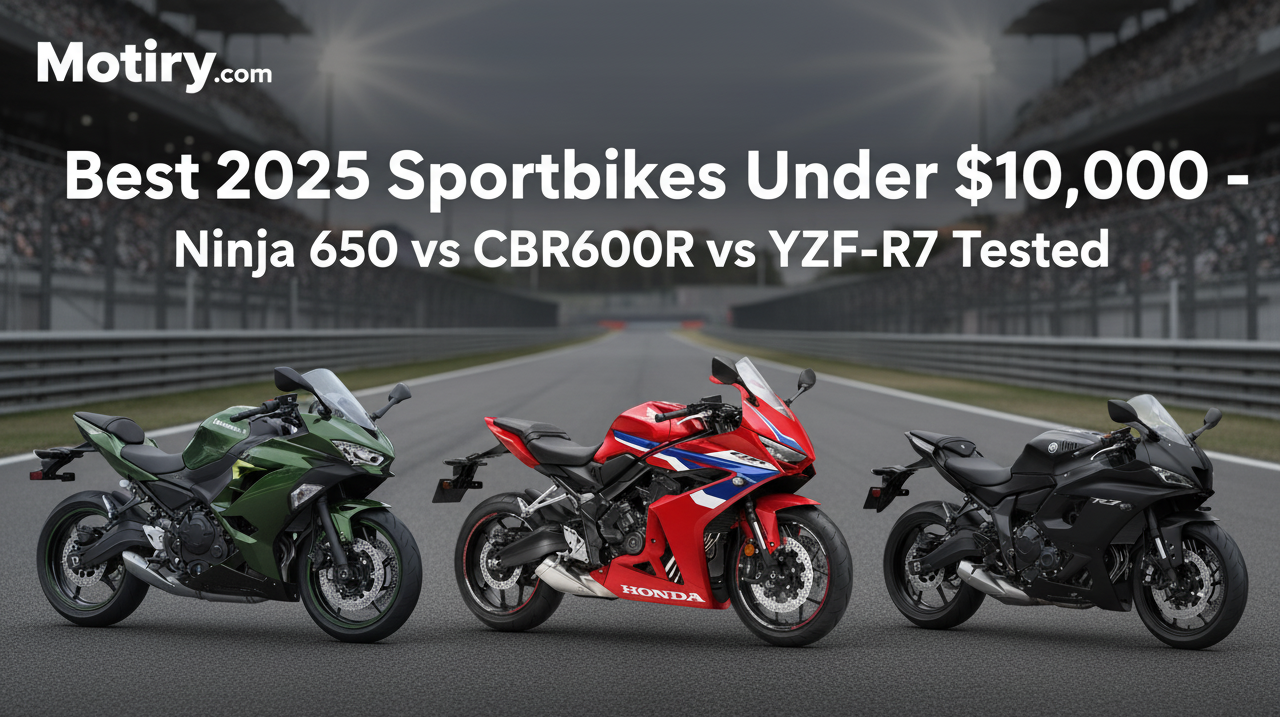
Let me break down how the CB500F compares to the bikes dealers typically push on new riders. This isn’t to bash these bikes – they’re excellent machines for experienced riders – but the comparison reveals why they’re problematic for beginners.
| Feature | Honda CB500F | Kawasaki Ninja 650 | Yamaha YZF-R6 | Suzuki GSX-R600 |
|---|---|---|---|---|
| Engine Displacement | 471cc | 649cc | 599cc | 599cc |
| Horsepower | 47 HP | 68 HP | 117 HP | 126 HP |
| Seat Height | 30.9″ | 31.1″ | 33.5″ | 32.5″ |
| Fuel Economy | 60+ MPG | 50 MPG | 37 MPG | 40 MPG |
| Riding Position | Upright/Neutral | Slightly Forward | Aggressive/Track | Aggressive/Track |
| Best For | Learning & Daily Riding | Sport Touring | Track Days | Track Days |
| Service Intervals | 8,000 miles | 7,500 miles | 4,000 miles | 3,500 miles |
The Ninja 650 deserves a special mention here because it’s actually another excellent beginner option. It makes more power than the CB500F, but delivers it smoothly enough that it’s still manageable. The main downside? Slightly higher insurance costs and a bit more weight to manage at low speeds. If you’re choosing between these two, you honestly can’t go wrong – but the CB500F edges ahead on pure beginner-friendliness and running costs.
The R6 and GSX-R600, however, are in a completely different category. These are race bikes with lights. Their power delivery, riding position, and overall character are designed for the track. Yes, they’re street legal, but that doesn’t mean they’re appropriate for learning. It’s like learning to drive in a Formula 1 car – technically possible, but monumentally stupid.
What the CB500F Does Better Than You’d Expect

Here’s what consistently surprises riders when they actually spend time on the CB500F instead of just dismissing it based on displacement numbers:
Highway Riding
With 47 horsepower and that twin-cylinder torque, the CB500F cruises comfortably at 75-80 MPH all day long. You’re not wringing its neck, you’re not fighting vibration, and you’ve got plenty of power reserve for passing. The windscreen is minimal (it’s a naked bike), so you’ll want to invest in better riding gear for long highway trips, but the bike itself handles sustained high-speed cruising without drama.
Two-Up Riding
I’ve ridden with a passenger on both the CB500F and several 600cc supersports. The CB500F is dramatically better for this. The seat is actually designed for two people (not an afterthought like on most sportbikes), the passenger pegs are positioned reasonably, and the upright riding position makes it easier to handle the extra weight. Most supersports feel like they’re actively fighting you when carrying a passenger.
Real-World Cornering
This is going to upset some people, but I’m going to say it anyway: on public roads, at legal speeds, you will corner just as fast on a CB500F as on a 600cc supersport. The limiting factor on public roads isn’t the bike’s capability – it’s road conditions, visibility, traffic, and your skill level. The CB500F has more than enough cornering clearance and suspension capability for any reasonable public road riding. The supersport’s advantage only appears on the track, where you’re dragging knees and pushing the absolute limits of tire grip.
What Makes the CB500F Perfect for Beginners
- Predictable, linear power delivery that never surprises you
- Comfortable ergonomics for commuting and longer rides
- Low seat height and weight that builds confidence immediately
- Exceptional fuel economy (60+ MPG in mixed riding)
- Minimal maintenance requirements and costs
- Insurance rates that won’t destroy your budget
- Substantial resale value when you’re ready to move up
- You can actually use all the performance on public roads
Where the CB500F Falls Short
- Styling is conservative (though the 2025 model improved this)
- No cutting-edge electronics like a quickshifter or riding modes
- Won’t impress supersport riders at bike nights (but who cares?)
- Limited aftermarket compared to sportbikes
- Basic suspension isn’t adjustable (though it works well)
- You might feel like you’re “settling” until you actually ride it
The Bigger Picture: What Happens After Your First Year

Here’s something that often gets overlooked in the “first bike” conversation: what happens after your first year of riding? If you start on a 600cc supersport, you’ve probably developed some bad habits, spent a fortune on insurance, and possibly scared yourself enough that you’re thinking about selling the bike. Or worse, you’ve crashed and dealt with injury, repair costs, and insurance fallout.
If you start on a CB500F, you’ve probably logged thousands of miles, developed solid fundamentals, and saved enough money to either invest in advanced rider training or start planning your next bike purchase. The CB500F has substantial resale value, so when you do move up to something with more power or track-focused capabilities, you’re not taking a massive financial hit.
And here’s something I hear constantly from riders who started on middleweight bikes like the CB500F: many of them don’t actually feel the need to upgrade. They’re having so much fun riding what they have, exploring new roads, and improving their skills that the displacement number stops mattering. Some of the best riders I know choose to ride smaller, lighter bikes because they’re more fun to ride hard without breaking laws or risking their license.
Common Questions I Get About Starting on the CB500F
My Honest Take After Nearly a Decade Covering Motorcycles
Look, I know this article might disappoint some of you who were excited about starting on a supersport. That wasn’t my intention. But after years of watching new riders struggle, crash, or give up on motorcycling entirely because they started on inappropriate bikes, I had to speak up.
The Honda CB500F isn’t the most exciting bike on paper. It won’t be the fastest thing at your local bike meet. It won’t turn heads like a Ducati or generate the same excitement as a new Suzuki GSX-8R. But you know what it will do? It’ll be there every single time you want to ride. It’ll help you develop proper skills. It’ll save you thousands of dollars. It’ll keep you safe while you learn. And most importantly, it’ll keep you riding instead of scared, broke, or injured.
I’ve ridden hundreds of motorcycles over my career. Some were more powerful, some were more prestigious, some were more technologically advanced. But the CB500F represents something increasingly rare in motorcycling: honest capability matched to real-world needs. It’s the bike that lets you focus on becoming a better rider instead of constantly managing a machine that’s beyond your skill level.
If you’re reading this as a potential first-time buyer in 2025, do yourself a favor: ignore the displacement wars, forget about what looks cool in photos, and actually test ride a CB500F. Spend 30 minutes on it in varied conditions – parking lot, side streets, highway. Then ask yourself honestly: Does this bike feel inadequate, or does it feel like exactly what you need right now? I’m betting it’s the latter. Much like riders who discover the joy of bikes like the KTM 200 Duke or Hero Karizma XMR, you’ll find that the right bike isn’t always the most powerful one.
Where the Honda CB500F Sits in the 2025 Market
The middleweight naked bike segment is becoming increasingly competitive, which is excellent news for buyers. Besides the CB500F, you’ve got the Kawasaki Z500, Yamaha MT-07, and Suzuki SV650 all fighting for attention. Each has its strengths, but the CB500F’s combination of reliability, affordability, and beginner-friendliness keeps it at the top of my recommendation list for new riders.
For 2025, Honda has updated the CB500F with refreshed styling, improved LED lighting, and updated ergonomics. Nothing revolutionary, but thoughtful refinements that make an already excellent bike even better. The MSRP is $7,099, which is an incredible value given what you’re getting. That’s less than half the cost of most 600cc supersports, with arguably more real-world capability for new riders.
Final Thoughts: Choose Growth Over Ego
Here’s my challenge to anyone reading this who’s still convinced they need to start on a 600cc supersport: take a professional riding course (like the MSF Basic RiderCourse), then test ride both a CB500F and a 600cc supersport back-to-back. Be honest with yourself about which one made you feel more confident, more comfortable, and more excited about actually riding.
The goal isn’t to ride the biggest, most powerful bike you can barely handle. The goal is to become a skilled, safe, confident rider who genuinely enjoys being on two wheels. The Honda CB500F gets you there faster and safer than any supersport ever could.
Remember, you’re not settling for the CB500F – you’re making the smart choice that keeps you riding instead of recovering from crashes, struggling with insurance bills, or sitting in traffic with cramping wrists on a bike designed for the track. That’s not a compromise. That’s wisdom.
And trust me, when you’re carving your favorite canyon road on a lightweight, nimble machine that responds instantly to your inputs, hitting every apex with confidence you’ve built through proper skill development, you won’t be thinking about those extra 80 horsepower. You’ll be thinking about when you can ride again tomorrow.
Stay safe out there, ride your own ride, and choose the bike that makes you a better rider – not just one that looks good in photos. The Honda CB500F does exactly that, and that’s why it beats 600cc supersports as your first motorcycle in 2025.