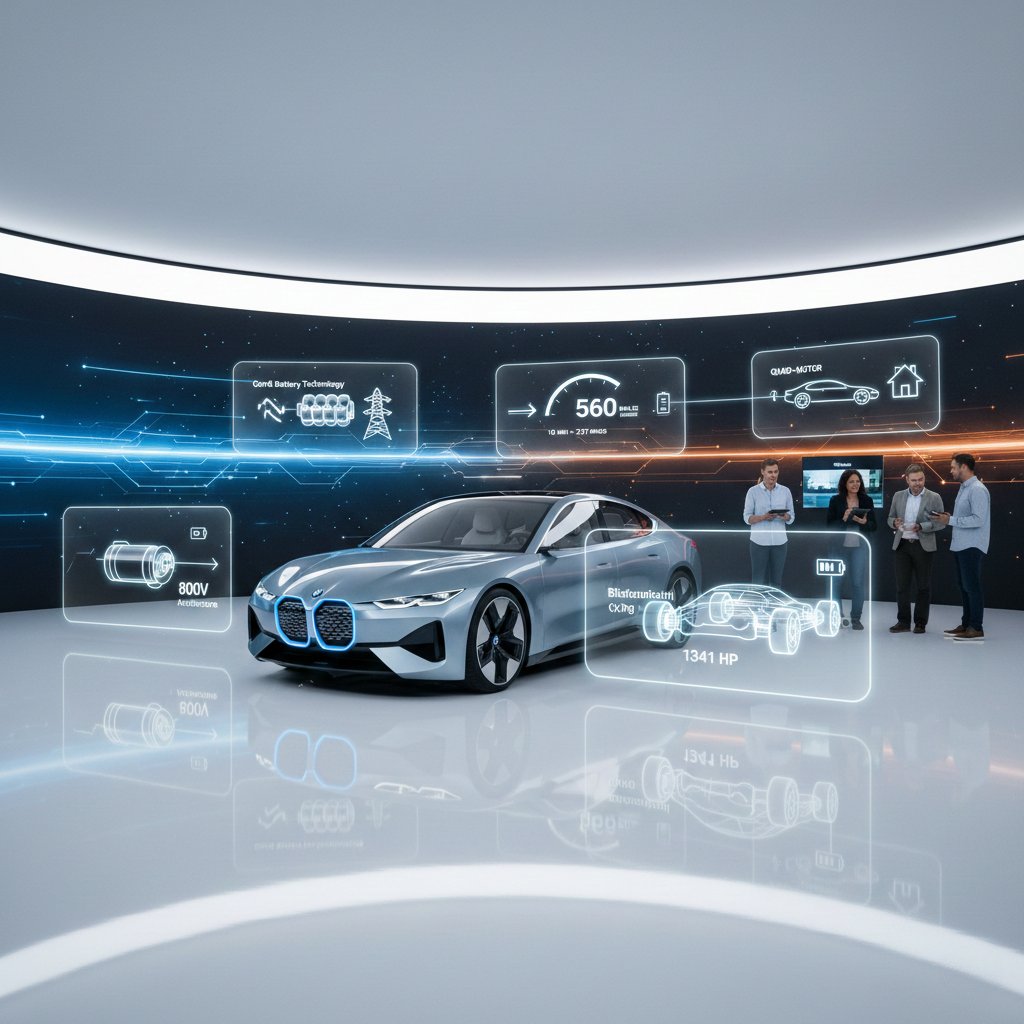
Hey everyone, it’s Dimple back again! Okay, I have a confession — I’ve been obsessing over BMW’s Neue Klasse platform for months now, and I finally have enough confirmed information to share what might be the most significant automotive development of the decade. As a 33-year-old automotive writer who has spent nearly a decade analyzing vehicles across every segment, I’ve witnessed countless manufacturers promise revolutionary changes, but BMW’s Neue Klasse? This is the real deal, and it’s going to reshape how we think about electric vehicles.
What particularly fascinates me about the Neue Klasse platform is how BMW isn’t just building another EV architecture — they’re fundamentally reimagining the entire approach to electric vehicle design, production, and performance. During my research, I discovered technical details that made me genuinely excited about the future of electric mobility. This isn’t incremental improvement; this is a quantum leap forward, and American buyers need to understand exactly what’s coming.
Contents
- 1 What Makes Neue Klasse Different
- 2 The Gen6 Battery Revolution
- 3 The BMW Energy Master: Brains Behind the System
- 4 Electric Motor Technology and Performance
- 5 First Models and Timeline
- 6 Interior Technology and Design Philosophy
- 7 Manufacturing and Sustainability
- 8 The Performance Potential: M Division Goes Electric
- 9 NACS Charging and Infrastructure
- 10 How It Compares to Current EVs
- 11 Pricing and Market Positioning
- 12 What This Means for American Buyers
- 13 The Bottom Line
The Revolution in Numbers:
- 30% faster charging speeds than current BMW EVs
- 30% increase in range with some models exceeding 560 miles
- 800-volt architecture enabling ultra-fast charging
- 20% greater energy density with new Gen6 battery cells
- 40% reduction in energy losses compared to Gen5 systems
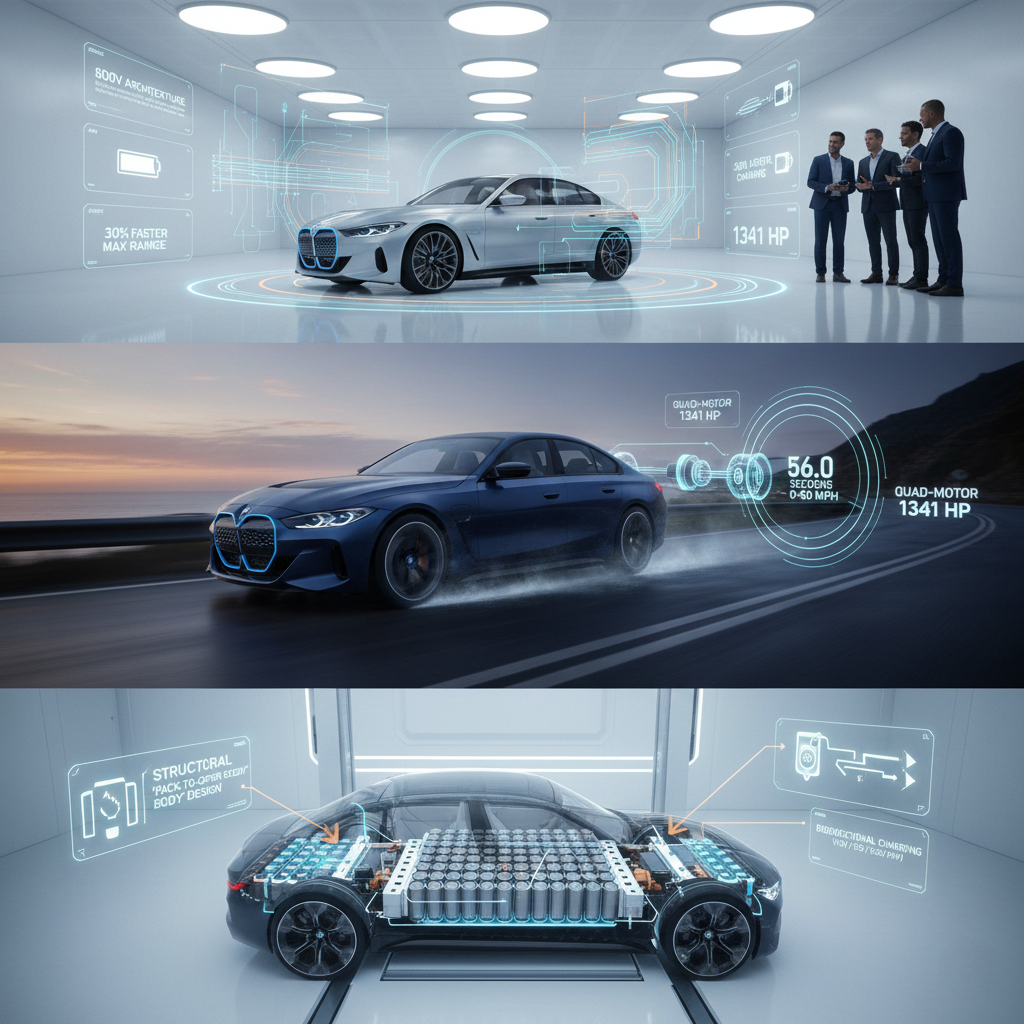
- Up to 1,341 horsepower capability in quad-motor configurations
- First models arrive late 2025 with US deliveries starting 2026
What Makes Neue Klasse Different
The name “Neue Klasse” translates to “New Class,” and it’s a deliberate reference to BMW’s iconic 1960s lineup that saved the company and established its reputation for driver-focused vehicles. This new Neue Klasse platform carries that same weight of expectation, and from everything I’ve learned, BMW might actually deliver on those lofty promises.
Unlike retrofitted EV platforms that adapt existing combustion vehicle architectures, the Neue Klasse platform was designed from day one exclusively for electric propulsion. This fundamental decision allows BMW’s engineers to optimize every aspect of the vehicle without the compromises that plague converted platforms. The battery pack becomes a structural element of the chassis itself through what BMW calls “pack-to-open-body” integration — essentially, the vehicle’s floor doesn’t exist until the battery is installed.
This approach delivers multiple advantages that directly benefit buyers. Lower vehicle weight translates to better efficiency and driving dynamics. A completely flat underbody enhances aerodynamics and increases range. Improved crash safety comes from the battery pack itself contributing to structural integrity. From my perspective as someone who regularly analyzes vehicle architecture, this is brilliant engineering that eliminates unnecessary materials while enhancing performance.
The Gen6 Battery Revolution
The heart of the Neue Klasse platform is BMW’s sixth-generation battery technology, and the numbers here are genuinely impressive. The new cylindrical battery cells — measuring 46mm in diameter with heights of either 95mm or 120mm — deliver 20% greater energy density compared to the prismatic cells used in current BMW EVs. That might sound incremental, but when combined with the 800-volt architecture, the real-world benefits are substantial.
Faster Charging
More Range
Energy Density Increase
Architecture
Miles Maximum Range
Reduced Energy Loss
BMW claims that some Neue Klasse models will achieve over 560 miles of range on a single charge. For context, that’s significantly more than most current electric vehicles and approaches the range of many gasoline vehicles. The 800-volt charging architecture enables peak charging rates potentially exceeding 400 kilowatts, meaning drivers could add substantial range in just minutes rather than hours.
What impressed me most during my research is BMW’s “cell-to-pack” integration approach. The cylindrical cells mount directly into the battery pack housing without the intermediate step of creating modules. This simplifies manufacturing, reduces weight, and improves thermal management — all factors that contribute to better real-world performance and longevity. Similar efficiency-focused approaches have proven successful in other segments, as we’ve seen with advanced powertrains like the 2026 Mazda CX-70 PHEV’s thoughtful engineering.
The BMW Energy Master: Brains Behind the System
One of the most innovative aspects of the Neue Klasse platform is the BMW Energy Master, a centralized control unit that manages all aspects of the vehicle’s electrical system. Unlike previous designs where power management components scattered throughout the vehicle, the Energy Master acts as a central hub, distributing high and low-voltage energy with unprecedented precision.
This system enables bidirectional charging capability across all Neue Klasse vehicles. That means your BMW won’t just consume electricity — it can become a power source for your home during outages (Vehicle-to-Home), feed electricity back to the grid during peak demand (Vehicle-to-Grid), or even charge other electric vehicles when needed (Vehicle-to-Vehicle). This functionality transforms an EV from a consumer of energy into a flexible energy storage solution.
Vehicle-to-Home
Power your house during outages
Vehicle-to-Grid
Sell energy back to utilities
Vehicle-to-Vehicle
Charge other EVs when needed
800V Fast Charging
Ultra-rapid charging capability
The Energy Master also enables over-the-air software updates that can enhance vehicle performance, add new features, or optimize efficiency based on real-world usage patterns. BMW developed both the hardware and software entirely in-house, ensuring they maintain complete control over technological developments and updates. This independence is crucial for long-term vehicle evolution and customer satisfaction.
Electric Motor Technology and Performance
The Neue Klasse platform supports a flexible range of electric motor configurations, from single-motor rear-wheel drive up to quad-motor all-wheel drive setups capable of producing a combined 1,341 horsepower. That’s not a typo — BMW’s new architecture can handle a full megawatt of power, though most mainstream models will use more modest outputs optimized for efficiency and everyday usability.
BMW is employing two different motor technologies across the Neue Klasse lineup. Electrically Excited Synchronous Motors (EESM) mount above the rear axle and feature fully redesigned rotors, stators, and inverters optimized for the 800-volt architecture. These motors don’t use permanent magnets, allowing BMW to precisely adjust magnetic field strength based on driving conditions, improving both efficiency and performance.

For front-axle applications in all-wheel drive models, BMW uses Asynchronous Motors (ASM), which complement the rear EESM perfectly. This combination allows precise torque distribution and enables advanced performance features like torque vectoring at each wheel. The performance potential reminds me of what we’re seeing in other high-performance segments, similar to how modern sportbikes are pushing boundaries with advanced technology.
| Configuration | Motor Setup | Power Range | Best For |
|---|---|---|---|
| Single Motor RWD | EESM rear | 268-350 hp | Efficiency, affordability |
| Dual Motor AWD | EESM rear + ASM front | 400-600 hp | Performance, all-weather capability |
| Quad Motor AWD | Dual EESM + Dual ASM | 700-1,341 hp | Ultimate performance, M models |
First Models and Timeline
The first Neue Klasse vehicle will be the next-generation BMW iX3, an electric crossover that enters production in late 2025 at BMW’s new Debrecen, Hungary facility. American deliveries are scheduled to begin in summer 2026, with the base iX3 50 xDrive starting around $60,000. A more affordable iX3 40 xDrive variant will follow in early 2027, priced under $55,000.
The second Neue Klasse model will be an all-new electric sedan replacing the current 3 Series, internally designated NA0 and likely called the i3. Production begins in July 2026 at BMW’s Munich plant, with U.S.-market vehicles rolling off the line from November 2026 onward. Additional production will come from BMW’s San Luis Potosi plant in Mexico starting in 2027.
iX3 Production Begins – First Neue Klasse vehicle starts production in Debrecen, Hungary
iX3 US Deliveries – American customers receive first Neue Klasse vehicles
i3 Sedan Production – Electric 3 Series enters production in Munich
i3 US Production – US-spec sedans begin rolling off assembly line
Performance Models – First M variants and additional body styles arrive
BMW plans to introduce at least six different models on the Neue Klasse platform by the end of the decade. These will include sedan and SUV variants at multiple price points, from entry-level i1 and i2 models to high-performance M variants capable of sub-3-second 0-60 mph times. The flexibility of the architecture allows BMW to efficiently scale production across its entire lineup.
Interior Technology and Design Philosophy
The cabin experience in Neue Klasse vehicles represents a dramatic departure from current BMW models. The centerpiece is the Panoramic Vision display — a full-width head-up projection system spanning the base of the windshield. This technology, which BMW pioneered two decades ago with the first automotive head-up display, now reaches its ultimate evolution with information projected across the entire width of the windshield.
The new iDrive X operating system integrates artificial intelligence, advanced voice recognition, and gesture control into a cohesive interface that BMW promises will evolve and improve over time through over-the-air updates. The system leverages cloud connectivity for real-time navigation, predictive maintenance alerts, and personalized recommendations based on driving patterns.
BMW is also prioritizing sustainability throughout the Neue Klasse interior, with recycled and renewable materials used extensively. The BMW i Vision Circular concept, which previews this philosophy, uses 100% recycled or renewable materials — and while production models won’t quite reach that level, current BMW vehicles already contain up to 30% secondary materials, a figure that will increase significantly with Neue Klasse.
Manufacturing and Sustainability
BMW’s approach to Neue Klasse production exemplifies the company’s commitment to localized manufacturing and sustainability. The company is establishing five new Gen6 battery production facilities using a “local for local” strategy: Irlbach-Straßkirchen in Germany, Debrecen in Hungary, Shenyang in China, San Luis Potosi in Mexico, and Woodruff near Spartanburg in the United States.
BMW’s Gen6 batteries include 50% recycled cobalt, lithium, and nickel. Total CO₂ emissions per watt-hour are down 42% compared to Gen5 batteries. The Debrecen factory operates entirely on renewable electricity and emits just 0.1 tons of CO₂ per vehicle produced. BMW has partnered with SK tes to recover valuable materials from end-of-life batteries, creating a true circular economy for battery materials.
This distributed manufacturing approach offers multiple advantages beyond sustainability. It reduces transportation-related emissions, strengthens supply chain resilience against geopolitical disruptions, creates local jobs in each region, and ensures BMW can meet demand across global markets efficiently. The Woodruff facility in South Carolina will create over 300 new jobs and supply batteries for electric vehicles assembled at nearby BMW Plant Spartanburg, the company’s largest manufacturing facility worldwide.
The Performance Potential: M Division Goes Electric
Here’s where things get truly exciting for enthusiasts. BMW M GmbH, the company’s legendary performance division, is developing its first all-electric vehicles on the Neue Klasse platform. The first electric M car — likely an M3 sedan codenamed ZA0 — is scheduled to debut in 2027 with approximately 700 horsepower from a quad-motor setup driving all four wheels independently.
The performance potential doesn’t stop there. BMW has confirmed the Neue Klasse platform can support up to 1,341 horsepower in its most extreme configuration, with Competition-spec variants exceeding even the base M model outputs. The quad-motor system enables near-instant torque vectoring and independent wheel control, providing handling dynamics that internal combustion engines simply cannot match.
What particularly impresses me about BMW’s electric M car development is their focus on authentic driving dynamics rather than just straight-line acceleration. The advanced chassis control systems, lower center of gravity from battery placement, and precise torque distribution promise to deliver the engaging driving experience that defines M cars. This attention to driving dynamics reminds me of how premium manufacturers approach performance across all segments, similar to Harley-Davidson’s focus on delivering authentic riding experiences in their motorcycles.
| Model | Expected Power | 0-60 mph | Target Launch |
|---|---|---|---|
| iX3 50 xDrive | 463 hp | 4.7 seconds | Summer 2026 |
| i3 (base) | ~350 hp | ~5.5 seconds | Late 2026 |
| i3 M60 xDrive | ~600 hp | ~3.5 seconds | 2027 |
| M3 Electric | ~700+ hp | Sub 3.0 seconds | 2027 |
| Future M Competition | 800-1,000+ hp | Sub 2.5 seconds | 2028+ |
NACS Charging and Infrastructure
BMW has confirmed that Neue Klasse vehicles destined for North America will feature the NACS (North American Charging Standard) port, giving immediate access to Tesla’s Supercharger network — by far the most extensive and reliable fast-charging infrastructure in the United States. This decision addresses one of the biggest concerns American EV buyers have: charging availability and reliability.
The combination of 800-volt architecture and NACS access creates a compelling charging story. While using Tesla’s Superchargers, Neue Klasse vehicles will charge at the station’s maximum rate, though the full benefit of BMW’s 800-volt system will shine at next-generation charging stations capable of 400+ kW output. BMW claims drivers could add approximately 217 miles of range in just 10 minutes under ideal conditions.
How It Compares to Current EVs
To put the Neue Klasse platform in perspective, let’s compare it to leading electric vehicles currently available in the American market. The Tesla Model 3 and Model Y have dominated EV sales with their combination of range, performance, and charging infrastructure. Mercedes-Benz is developing its own electric architecture for the next C-Class and E-Class. Audi’s upcoming E4 will compete directly with the i3 sedan.
Neue Klasse Advantages
- Superior energy density with Gen6 batteries
- 800-volt architecture for faster charging
- Bidirectional charging standard on all models
- Up to 560 miles range on certain variants
- Quad-motor capability for performance models
- Structural battery integration for better dynamics
- Established BMW driving dynamics and quality
- NACS port for Supercharger access
Potential Challenges
- Won’t arrive until late 2025/2026
- Higher expected pricing than Tesla
- Unproven long-term battery durability
- Complex technology may increase service costs
- Full charging network capabilities won’t be immediate
- Software ecosystem less mature than Tesla
- Limited initial model availability
What sets the Neue Klasse platform apart isn’t any single technology — it’s the comprehensive integration of multiple advances into a cohesive system. The 800-volt architecture, Gen6 batteries, structural integration, advanced motor technology, and intelligent energy management combine to create genuine advantages over current EV platforms.
Pricing and Market Positioning
While BMW hasn’t confirmed final U.S. pricing for all Neue Klasse models, early indications suggest the iX3 will start around $60,000, while the i3 sedan could begin in the $55,000-$65,000 range depending on configuration. Performance variants like the M60 models will likely command premiums of $10,000-$20,000 over base versions.
These price points position Neue Klasse vehicles squarely in premium territory — above Tesla but competitive with other luxury EV offerings. The value proposition depends heavily on whether buyers prioritize BMW’s driving dynamics, interior quality, and brand prestige over Tesla’s more affordable pricing and established charging network.
What This Means for American Buyers
As someone who analyzes the American automotive market extensively, I believe the Neue Klasse platform represents BMW’s most credible challenge to Tesla’s EV dominance yet. Previous BMW electric vehicles, while competent, never quite delivered the combination of range, charging speed, and value necessary to compete with Tesla’s Model 3 and Model Y.
The Neue Klasse changes that calculation. With over 560 miles of maximum range, ultra-fast charging capability, bidirectional power flow, and performance potential reaching 1,341 horsepower in top configurations, these aren’t compromise EVs — they’re vehicles that could legitimately surpass their internal combustion counterparts in desirability.
For American buyers currently driving premium German sedans or SUVs, the Neue Klasse provides a natural evolution path to electric mobility without sacrificing the driving dynamics and luxury that attracted them to BMW in the first place. The NACS charging port eliminates range anxiety by providing access to Tesla’s extensive Supercharger network, addressing one of the key barriers to EV adoption.
The Bottom Line
After spending months researching every aspect of BMW’s Neue Klasse platform, I can confidently say this represents the most significant development in BMW’s 109-year history since the original Neue Klasse saved the company in the 1960s. The technological advances aren’t just incremental improvements — they’re fundamental reimaginings of what electric vehicles can be.
The 800-volt architecture, Gen6 battery technology, structural integration, and advanced motor configurations combine to create EVs that could finally deliver on the promise of electric mobility: superior performance, practical range, rapid charging, and genuine environmental benefits through sustainable manufacturing and materials.
What particularly excites me is how BMW isn’t abandoning its core identity in pursuit of electrification. The Neue Klasse platform promises to deliver the engaging driving dynamics, premium quality, and attention to detail that have defined BMW for generations, just with electric propulsion. This is how traditional automakers successfully transition to electric mobility — by leveraging their strengths rather than trying to become something they’re not.
The first Neue Klasse vehicles arrive in late 2025, with American deliveries beginning in 2026. Based on everything I’ve learned, these vehicles will be worth the wait. BMW is betting its future on Neue Klasse, and from where I’m sitting, that looks like a very smart bet indeed.
For more information on BMW’s electrification strategy and upcoming models, visit BMW Group’s official website or check out BMW USA’s electric vehicle lineup.