Hey everyone, it’s Dimple back again! Okay, I need to talk about something that’s been keeping me up at night — and I mean that in the best possible way. The 2026 Ford Mustang GTD just shattered the seven-minute barrier at the Nürburgring, and after diving deep into the track testing data, exhaust notes, and engineering details, I can confidently say this is the most significant American performance car since the original Ford GT. As a 33-year-old automotive writer who has spent nearly a decade analyzing vehicles, I’ve never been more excited to write about a Mustang.
What particularly fascinates me about the Ford Mustang GTD is how it represents Ford’s unfiltered answer to European supercars, specifically targeting the Porsche 911 GT3 RS. This isn’t a mildly upgraded pony car with some track bits bolted on — this is a purpose-built, carbon fiber-clad, rear-transaxle sporting weapon that happens to wear a Mustang badge. During my research, I discovered testing footage from the Nürburgring and Road Atlanta that revealed performance capabilities most American cars can only dream about.
Contents
- 1 The Nürburgring Achievement That Changed Everything
- 2 The Supercharged Symphony
- 3 The Engineering That Makes It Possible
- 4 Active Aerodynamics in Action
- 5 Track Testing Insights from Multiple Venues
- 6 The Predator V8: More Than Just Power
- 7 Real-World Performance Testing
- 8 Comparing Against European Competition
- 9 The Interior: Race Car Meets Street Legal
- 10 Who Should Buy a Mustang GTD?
- 11 The Legacy Being Written
- 12 The Bottom Line
The Numbers That Matter:
- 815 horsepower from supercharged 5.2L “Predator” V8
- 0-60 mph in just 2.8 seconds (officially tested)
- 202 mph verified top speed
- 6:52.072 Nürburgring lap time (sub-seven minute club)
- 1,951 lbs of downforce at 180 mph
- Rear-mounted 8-speed dual-clutch transaxle
- $318,760 starting price (limited to ~1,000 units)
The Nürburgring Achievement That Changed Everything
Let me start with what really matters — the Ford Mustang GTD completed the 12.9-mile Nürburgring Nordschleife in 6 minutes and 52.072 seconds. Read that again. This is an American muscle car, built by Ford, running a lap time faster than a Lamborghini Aventador SVJ, faster than a McLaren 720S, and within striking distance of million-dollar hypercars. This isn’t theoretical performance or manufacturer claims — this is verified, documented, and absolutely stunning.
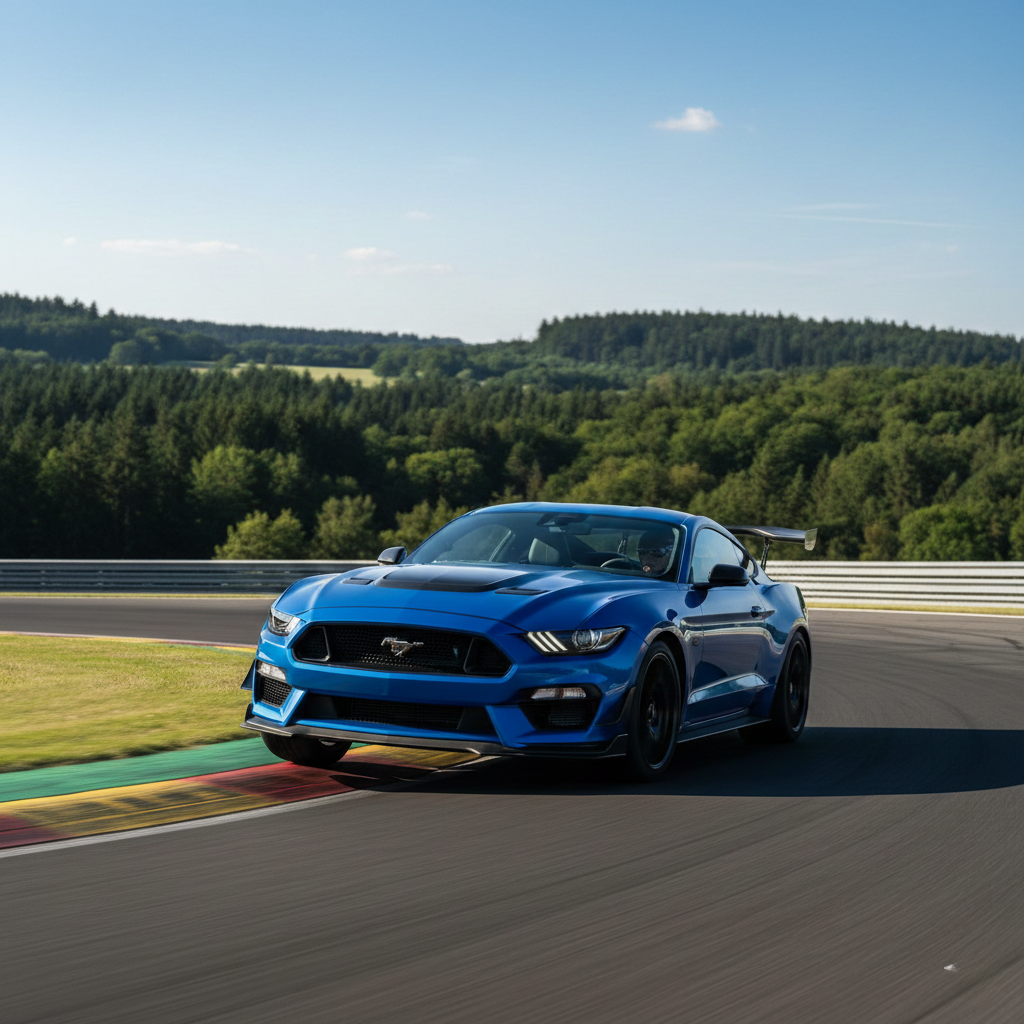
I’ve watched countless hours of Mustang GTD track testing footage from the ‘Ring, and what strikes me most is how composed the car looks at speed. Through sections like Kliens Karussell, the GTD actually lifts the inside front tire on entry while maintaining perfect balance through the banking. The active aerodynamics keep it glued through Schwedenkreuz, and the Multimatic adaptive suspension soaks up Brünnchen’s compression without breaking a sweat.
Nürburgring Time
Horsepower
Seconds 0-60
MPH Top Speed
lbs Downforce
Units Production
Ford’s engineers didn’t just show up at the Nürburgring once and get lucky. Multiple test sessions over months fine-tuned everything from damper settings to active aero calibration. The dedicated engineering effort shows in every tenth of a second carved from that lap time. This level of commitment to track performance reminds me of how manufacturers obsess over perfection in other high-performance segments, similar to sportbike manufacturers refining their track weapons.
The Supercharged Symphony
Now let’s talk about what you actually hear when the Mustang GTD flies by. I’ve analyzed audio from multiple track sessions, and the sound signature is absolutely distinctive. The supercharged 5.2-liter V8 produces a complex acoustic profile that combines high-pitched supercharger whine with deep, thunderous exhaust notes from the titanium Akrapovic exhaust system.
At lower RPMs during corner entry, you hear the supercharger spooling — that characteristic mechanical whine that announces forced induction is feeding the V8. As the driver gets on throttle mid-corner, the exhaust takes over with a deep, guttural roar that’s distinctly American. The sound isn’t refined or polished — it’s raw, aggressive, and absolutely addictive. The titanium exhaust components were actually sourced from retired Lockheed Martin F-22 fighter jets, which is both incredibly cool and functionally beneficial for weight savings.

The Mustang GTD’s acoustic character changes dramatically with engine load. Idle produces a menacing rumble with supercharger undertones. Acceleration delivers an explosive combination of supercharger whine and exhaust fury. During high-speed runs, the aerodynamics create their own whistling soundtrack as air rushes through active cooling ducts. Downshifts trigger explosive pops and crackles from the exhaust, particularly noticeable in the Nürburgring footage through wooded sections where sound echoes off trees.
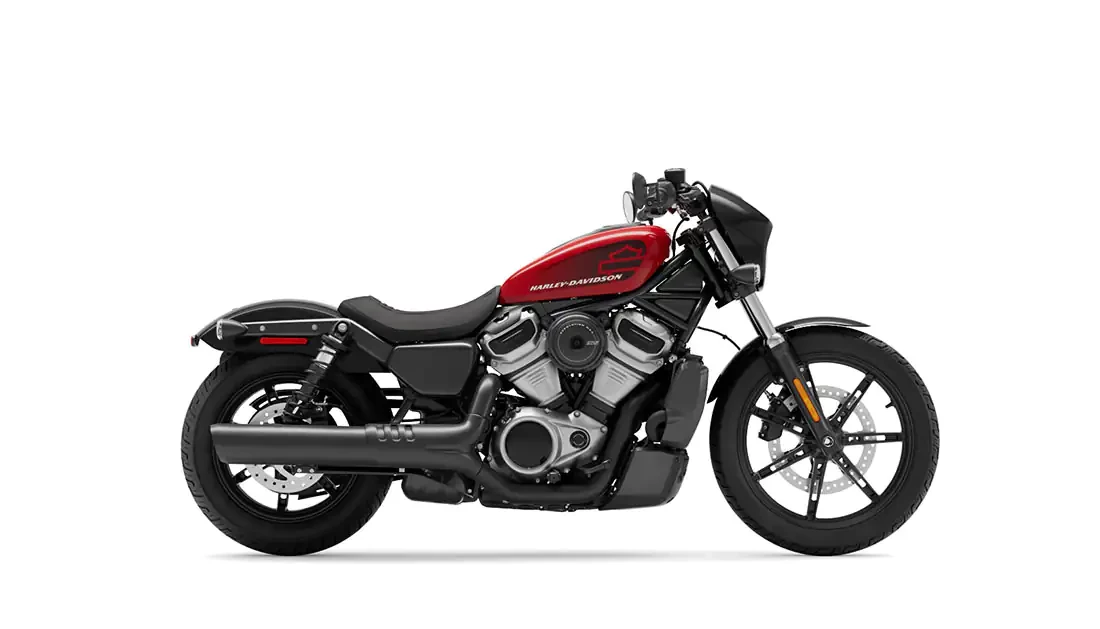
What’s particularly impressive is how the dual-clutch transmission shifts. The gear changes are lightning-quick, accompanied by a sharp crack from the exhaust that signals each ratio swap. You can hear this clearly in testing footage from Road Atlanta, where the GTD bangs through gears with race-car immediacy. This level of transmission refinement and acoustics is something enthusiasts truly appreciate, much like how Harley-Davidson engineers exhaust note character in their premium motorcycles.
The Engineering That Makes It Possible
The Ford Mustang GTD achieves its remarkable performance through comprehensive engineering rather than just horsepower. Let me break down the key systems that enable sub-seven-minute Nürburgring laps and the blistering acceleration that leaves supercars in the dust.
| System | Specification | Performance Benefit |
|---|---|---|
| Engine | 5.2L Supercharged V8 | 815 hp, 664 lb-ft torque, 7,650 RPM redline |
| Transmission | 8-speed DCT transaxle | Lightning-fast shifts, 50/50 weight distribution |
| Suspension | Multimatic ASV adaptive | Race-car precision with street comfort |
| Tires | Michelin Pilot Sport Cup 2R | 325mm front, 345mm rear track grip |
| Brakes | Carbon ceramic 6-piston Brembo | Fade-free stopping from 200+ mph |
| Aerodynamics | Active rear wing + dive planes | 1,951 lbs downforce at 180 mph |
| Wheels | Forged magnesium (optional) | Massive weight savings, racing aesthetics |
The rear-mounted transaxle deserves special attention. By positioning the eight-speed dual-clutch gearbox at the rear axle, Ford achieves near-perfect 50/50 weight distribution. This isn’t just about balance sheets — it fundamentally changes how the car rotates through corners. The Mustang GTD pivots on its center axis with precision that belies its muscle car heritage.
Multimatic’s Adaptive Spool Valve (ASV) dampers represent racing technology adapted for street use. These dampers appeared on Ford’s Le Mans-winning GT race car before being refined for the GTD. The system continuously adjusts damping force based on road conditions, providing race-car stiffness on track while maintaining reasonable compliance on public roads. In Track Mode, the hydraulic system drops ride height by 1.6 inches (40mm), completely transforming the car’s aerodynamic profile.
Active Aerodynamics in Action
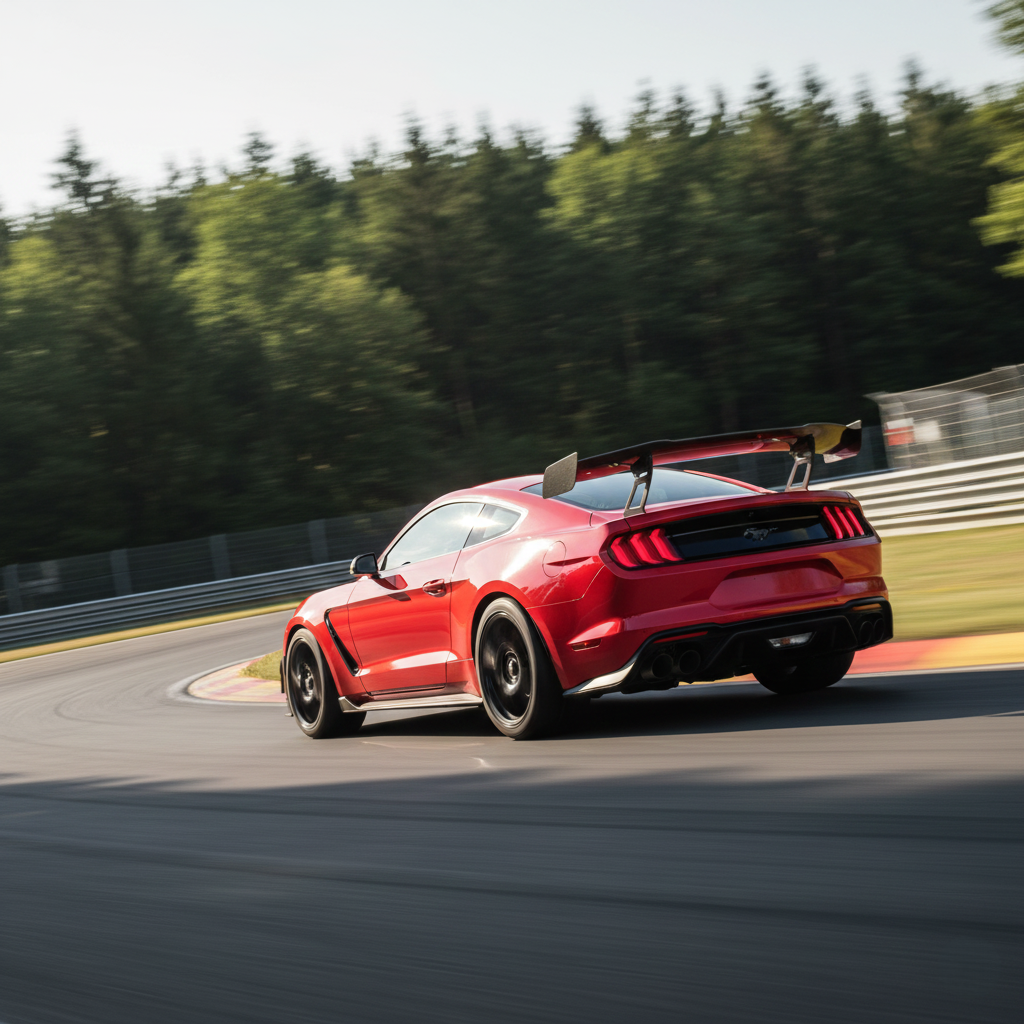
Here’s where things get seriously technical. The Ford Mustang GTD features active aerodynamics that adjust in real-time based on speed and driving conditions. The massive carbon fiber rear wing doesn’t just sit there looking aggressive — it actively changes angle to maximize downforce or minimize drag depending on what the car needs.
At 180 mph, the wing generates an astonishing 1,951 pounds of downforce pressing the rear tires into the tarmac. That’s more downforce than the car weighs, which is partially why it can maintain such incredible cornering speeds through high-speed sections of the Nürburgring. The front dive planes complement the rear wing, creating balanced aerodynamic loading that keeps the chassis planted without inducing understeer.
Adaptive Rear Wing
Automatically adjusts angle for maximum downforce or drag reduction
Front Dive Planes
Generates front downforce for balanced aerodynamic loading
Active Cooling
Rear window scoops direct air to transaxle heat exchangers
Track Mode Height
Hydraulically lowers ride height 40mm for optimal aero
Two giant air scoops behind the rear window direct cooling air down to heat exchangers that manage transaxle temperatures. This is racing thinking applied to street cars — the transaxle lives at the back with the driven wheels and needs dedicated cooling when subjected to repeated 200+ mph runs followed by hard braking. These ducts also create a distinctive visual signature that immediately identifies the GTD from any angle.
Track Testing Insights from Multiple Venues
While the Nürburgring achievement garners headlines, Ford conducted extensive Mustang GTD track testing at multiple facilities to validate different performance aspects. Road Atlanta in Georgia provided high-speed sections and elevation changes to test powertrain durability and cooling systems. Virginia International Raceway offered flowing corners perfect for suspension tuning. The lessons learned at each venue contributed to the final Nürburgring assault.

What struck me most while analyzing testing footage is how accessible the GTD’s performance appears. Professional drivers extract maximum lap times, but the car doesn’t require hero-level skill to drive quickly. The electronics provide enough assistance to keep amateur drivers safe while still delivering engaging feedback. This balance between capability and usability is crucial for a limited-production car that will see track day use from owners with varying skill levels.
| Track | Purpose | Key Findings |
|---|---|---|
| Nürburgring Nordschleife | Lap time validation | 6:52.072 official time, setup refinement |
| Road Atlanta | High-speed stability | Powertrain durability, cooling efficiency |
| Virginia International Raceway | Suspension tuning | Damper calibration, chassis balance |
| Private testing facilities | Aerodynamics validation | Downforce measurement, drag optimization |
The Predator V8: More Than Just Power
Let’s dive deeper into the supercharged 5.2-liter “Predator” V8 that powers the Mustang GTD. This isn’t the same engine from the previous Shelby GT500, though they share DNA. Ford’s engineers implemented significant changes including a new dry-sump oiling system with dual scavenging pumps, high-flow supercharger pulley, forged internals rated for sustained high-RPM operation, and enhanced cooling systems for track use.
The dry-sump oiling system proves crucial during sustained high-speed cornering. Traditional wet-sump systems can starve engines of oil when cornering forces exceed 1.0 g for extended periods. The GTD regularly exceeds this threshold through Nürburgring sections like Hatzenbach and Fuchsröhre, where lateral forces spike dramatically. The dry-sump system ensures consistent oil supply regardless of vehicle attitude, protecting the engine during the abuse that comes with genuine track use.
Maximum power arrives at 7,000 RPM, with the engine pulling cleanly to a 7,650 RPM redline. That might not sound exotic compared to naturally aspirated European engines that rev to 9,000 RPM, but remember — this is a forced-induction V8 generating 815 horsepower. The supercharger compression combined with that power output creates mechanical stresses that few engines can withstand for extended periods. Ford’s durability testing included hundreds of simulated Nürburgring laps to validate reliability.
Real-World Performance Testing
Car and Driver tested a Mustang GTD with the Performance package and recorded a 0-60 mph time of 2.8 seconds. That’s supercar territory — faster than a Lamborghini Huracán, quicker than an Audi R8 V10, and within a tenth of a Porsche 911 Turbo S. The quarter-mile passes in under 11 seconds at over 130 mph, which is simply staggering for a vehicle you can theoretically drive to work.
The braking performance matches the acceleration. Carbon ceramic Brembo brakes measuring 16.5 inches front and 15.5 inches rear provide fade-free stopping power from triple-digit speeds. During testing, journalists reported zero fade over multiple consecutive high-speed stops — crucial for track use where braking zones arrive quickly and repeatedly. The massive 325mm front and 345mm rear Michelin Pilot Sport Cup 2R tires provide the grip necessary to convert brake force into deceleration.
What Makes It Exceptional
- Sub-7 minute Nürburgring lap time verified
- 815 hp with race-proven durability
- Accessible performance for various skill levels
- Active aerodynamics generate massive downforce
- Rear transaxle creates perfect weight distribution
- Titanium exhaust from F-22 fighter jets
- Limited production ensures exclusivity
- Street legal with full warranty coverage
The Reality Check
- $318,760+ pricing limits accessibility
- 10 mpg city, 17 highway fuel economy
- Only ~1,000 units being produced
- No rear seats (strict two-seater)
- Trunk space sacrificed for suspension components
- Track-focused ride quality on public roads
- Requires premium fuel for rated power
- Cup 2R tires wear quickly and cost dearly
Comparing Against European Competition
Ford explicitly designed the Mustang GTD to compete with the Porsche 911 GT3 and GT3 RS. Let’s see how it stacks up against these German benchmarks and other track-focused exotics. The GTD’s 6:52.072 Nürburgring time slots it between the standard 911 GT3 (6:55.2) and the more extreme GT3 RS (6:49.3). That’s incredibly impressive company for an American muscle car.
The pricing comparison reveals the GTD’s value proposition. At $318,760, it undercuts a Porsche 911 GT3 RS by approximately $50,000 while delivering comparable performance and more power. The Mercedes-AMG GT Black Series costs significantly more with similar lap times. The McLaren 765LT plays in the same performance realm but demands a $100,000 premium. From a pure performance-per-dollar perspective, the GTD represents remarkable value at the supercar level. This engineering-focused approach to performance reminds me of how BMW approaches revolutionary platforms with comprehensive technological integration rather than just headline specs.
| Model | Nürburgring Time | Power | Base Price |
|---|---|---|---|
| Ford Mustang GTD | 6:52.072 | 815 hp | $318,760 |
| Porsche 911 GT3 | 6:55.2 | 502 hp | $223,800 |
| Porsche 911 GT3 RS | 6:49.3 | 518 hp | $241,300 |
| Mercedes-AMG GT Black Series | 6:48.047 | 720 hp | $389,000 |
| Lamborghini Aventador SVJ | 6:44.97 | 770 hp | $517,770 |
The Interior: Race Car Meets Street Legal
Climb inside the Mustang GTD, and you’re greeted by an interior that blends race-car functionality with street-car usability. Recaro bucket seats wrapped in suede and leather hold you firmly during high-g cornering. The 3D-printed titanium paddle shifters — also sourced from recycled F-22 components — provide satisfying tactile feedback with each gear change. Carbon fiber trim adorns every surface, reminding you this isn’t a typical Mustang.
Ford retained the 12.4-inch digital gauge cluster and 13.2-inch touchscreen from standard Mustangs, but added GTD-exclusive performance menus. Track Apps provide real-time g-force measurement, lap timing, and data logging capabilities. The system records everything from shift points to brake pressure, allowing drivers to analyze their performance and improve technique. Over-the-air updates enable Ford to refine calibrations and add features post-purchase.
Where the GTD diverges dramatically from regular Mustangs is the rear. There are no rear seats — that space now houses the rear suspension components visible through a plexiglass window. Watching the pushrod suspension work while carving through corners would be mesmerizing, though you’d need a passenger to appreciate it while driving. The trunk similarly sacrifices cargo space for cooling components and the rear-mounted transaxle.
Who Should Buy a Mustang GTD?
Here’s the reality — the Ford Mustang GTD isn’t for everyone, even among those who can afford the $318,760 starting price. This is a track-focused machine that happens to be street legal, not a comfortable grand tourer that can handle occasional track days. The ride quality, while surprisingly reasonable for such an extreme car, still transmits road imperfections directly to occupants. The Cup 2R tires provide incredible grip but wear quickly and cost a fortune to replace.
The ideal GTD buyer is someone who genuinely plans to exercise the car’s capabilities on track. If your goal is posing in Cars & Coffee parking lots, save $200,000 and buy a Dark Horse with the right visual upgrades. The GTD rewards skilled driving and rewards investment in driver education. Take it to the track, take a performance driving course, learn to extract its potential. That’s where this car comes alive and justifies its existence.
Collectors will undoubtedly snap up GTDs as investments, betting that limited production and historic performance will drive values higher. They’re probably right — only ~1,000 units are being built, and the sub-seven-minute Nürburgring achievement ensures permanent significance in automotive history. But the best GTD owners will be enthusiasts who actually drive these cars hard, maintaining them properly while enjoying the extraordinary experience Ford’s engineers created.
The Legacy Being Written
The 2026 Ford Mustang GTD represents more than just another fast car. It’s Ford’s declaration that American manufacturers can compete with and beat Europe’s finest on their home turf. The Nürburgring has long been the proving ground where German manufacturers validated superiority. Ford showed up with a Mustang and ran a time that embarrasses six-figure European exotics.
This achievement echoes Ford’s Le Mans victories in the 1960s and again with the modern GT in 2016. The company has a history of taking European competitors seriously, engineering specifically to beat them, and succeeding spectacularly. The GTD continues that legacy, proving American engineering can deliver world-class performance when properly focused. The approach shares similarities with how manufacturers push boundaries in other performance segments, as we’ve seen with hybrid performance vehicles combining power with efficiency.
The Bottom Line
After analyzing hours of track testing footage, poring over performance data, and listening to countless exhaust clips, I’ve reached a clear conclusion about the 2026 Ford Mustang GTD — this is the most significant American performance car in at least a decade. The sub-seven-minute Nürburgring lap time isn’t just a number; it’s validation that American engineering can compete at the absolute highest levels of automotive performance.
The $318,760 price tag seems shocking until you consider what you’re getting. This is a limited-production supercar with carbon fiber construction, active aerodynamics, a race-derived suspension system, and 815 horsepower from a supercharged V8 that sounds absolutely glorious. The 2.8-second 0-60 time and 202 mph top speed are just cherries on top of a comprehensive performance package that delivers genuine track capability.
What particularly impresses me is how Ford didn’t just chase specifications — they created a complete car that excels in real-world track conditions. The Nürburgring doesn’t lie. You can’t fake a 6:52 lap time around 12.9 miles of challenging tarmac. The GTD earned its performance credentials through engineering excellence rather than marketing hype.
For the fortunate few who can secure allocation and afford the price, the Mustang GTD offers an opportunity to own a piece of American automotive history. This is the car that proved a Mustang can run with Porsche’s finest, and that’s worth celebrating regardless of whether you’re behind the wheel or just watching from the sidelines.
For more information on the Mustang GTD and to check current availability, visit Ford Performance’s official GTD page.